


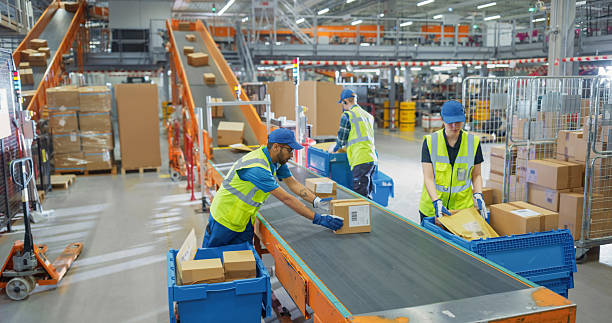
A consolidation and deconsolidation warehouse in Lagos helps businesses combine smaller cargo shipments, receive larger shipments, sort them and prepare them for onward delivery.
For importers, exporters, manufacturers, distributors and logistics companies, this type of warehouse can simplify cargo movement between ports, suppliers, warehouses and final customers.
In a consolidation operation, goods from different suppliers or shipments are combined into a larger shipment. Deconsolidation is the reverse process, where cargo arriving together is separated according to individual customers, destinations or delivery requirements. Logistics providers in Lagos currently offer both services alongside storage, inventory handling and transportation. (Smartplus Logistics)
How Consolidation Works in Lagos
Imagine a Nigerian business buying products from five different suppliers.
Instead of shipping each small consignment separately, the goods can be sent to a consolidation warehouse where they are:
- Received from different suppliers
- Counted and inspected
- Weighed or measured
- Labelled
- Sorted
- Packed or palletised
- Combined into one shipment
- Prepared for transportation
The combined cargo can then move as one shipment to its destination.
This can be particularly useful for businesses that regularly purchase smaller quantities from several suppliers.
How Deconsolidation Works
Deconsolidation takes place when one larger shipment arrives but contains goods belonging to different customers or destinations.
The warehouse receives the shipment and separates the cargo according to the delivery plan.
For example, a container arriving in Lagos could contain goods for customers in:
- Lagos
- Ibadan
- Abuja
- Port Harcourt
- Benin City
- Kano
Instead of sending the entire container to one location, the warehouse can unload, identify and separate the individual consignments before arranging onward transportation.
This process can also be combined with cross-docking, where goods are transferred from inbound transport to outbound vehicles with little or no long-term storage. (Maersk)
Where Consolidation Warehouses Are Located in Lagos
Location matters because consolidation warehouses often sit between suppliers, ports, airports and inland delivery destinations.
Apapa and Tin Can Corridor
Apapa and the Tin Can area are important for businesses handling sea freight and containerised cargo.
A warehouse around this corridor can reduce unnecessary movement between the port and the cargo handling facility.
Ikeja and Airport Corridor
Businesses handling air freight or smaller high-value shipments may prefer warehouse locations around Ikeja and the airport corridor.
This can make receiving, sorting and onward movement easier for airport-related cargo.
Ilupeju and Mainland Industrial Areas
Ilupeju can be useful for businesses serving manufacturers, distributors and retailers across Mainland Lagos.
Large logistics operators currently list consolidation and deconsolidation among warehouse services available from Lagos facilities in areas including Ilupeju and Ogba. (Maersk)
What a Consolidation Warehouse Should Have
A suitable facility needs more than ordinary storage space.
Important features include:
- Adequate loading and unloading areas
- Container access
- Wide doors and circulation space
- Pallet storage
- Sorting areas
- Weighing equipment
- Packaging stations
- Labelling facilities
- Forklifts or material-handling equipment
- Secure cargo areas
- CCTV
- Reliable inventory records
- Adequate power
- Truck access
- Dispatch staging space
The facility should be designed around the movement of cargo, not just the number of square metres available.
Consolidation Warehouse vs Standard Storage Warehouse
A standard warehouse may primarily hold inventory until the owner needs it.
A consolidation warehouse is more operational.
Cargo may arrive in the morning, be sorted and combined during the day, and leave shortly afterwards.
This means the warehouse needs efficient receiving, sorting and dispatch procedures.
For businesses with frequent shipments, reducing the time cargo spends sitting inside the warehouse can also help improve overall supply-chain efficiency.
LCL Cargo and Consolidation
Consolidation is especially relevant to LCL shipments.
LCL means Less than Container Load. Instead of paying for an entire container when your cargo does not fill one, your shipment can share container space with other cargo.
At the consolidation point, different shipments are grouped together before being transported.
At the destination, the container is deconsolidated and the individual shipments are separated for delivery.
This approach is commonly used for smaller commercial shipments that do not justify a full container on their own.
What Happens When a Container Arrives?
A typical deconsolidation workflow may look like this:
- Container arrival is confirmed.
- Required documentation is checked.
- Cargo is moved to the appropriate handling facility.
- The container is opened and unloaded.
- Individual consignments are identified.
- Goods are counted and checked.
- Cargo is sorted by customer or destination.
- Damaged or questionable items are documented.
- Goods are repacked or palletised where necessary.
- Individual consignments are dispatched.
Good inventory records are important because several customers may have goods inside the same container.
Documentation and Cargo Identification
Every consignment should have clear identification before it enters the consolidation process.
Depending on the shipment, this can include:
- Commercial invoice
- Packing list
- Bill of Lading
- Air Waybill
- Purchase order
- Delivery instructions
- Customer reference number
- Carton or pallet labels
- Customs documentation
The exact documents required depend on the cargo, route and nature of the transaction.
For imported cargo, customs clearance and other regulatory requirements should be confirmed before the shipment is moved into the next stage of the supply chain.
Security During Consolidation and Deconsolidation
A warehouse may handle cargo belonging to several customers at the same time.
Security therefore needs to cover both the physical facility and the inventory records.
Look for:
- CCTV coverage
- Controlled warehouse access
- Visitor records
- Secure loading areas
- Staff identification
- Cargo counting procedures
- Barcode or reference-number systems
- Proof of receipt
- Proof of dispatch
- Regular stock reconciliation
High-value cargo may require additional security arrangements.
Temporary Storage Between Shipments
Not every shipment will leave immediately after being received.
A consolidation warehouse may temporarily hold goods while waiting for:
- Other supplier shipments
- Container space
- Customs processing
- A scheduled vessel
- A scheduled flight
- Customer instructions
- A suitable delivery vehicle
However, businesses should establish clear storage terms before cargo arrives.
Ask whether charges are calculated by pallet, cubic metre, weight, carton, container or number of days.
Truck Access Matters in Lagos
A warehouse can have excellent storage capacity but still create problems if trucks cannot access it efficiently.
Before choosing a facility, check:
- Road width
- Container truck access
- Turning space
- Loading bay availability
- Parking arrangements
- Loading restrictions
- Security procedures
- Peak-period traffic
- Distance from the port or airport
For container operations, confirm that the facility can safely handle the type and size of truck required for your cargo.
Consolidation for Nigerian Distributors
A distributor importing goods for several branches can use consolidation to organise shipments before sending them across Nigeria.
For example, a Lagos warehouse could receive imported goods, separate them according to destination and prepare individual consignments for Abuja, Ibadan, Port Harcourt or other markets.
This gives the business greater control over inventory before the cargo leaves Lagos.
Deconsolidation for E-Commerce and Retail
Deconsolidation can also support e-commerce and retail distribution.
A large inbound shipment can be separated into smaller orders or batches before being sent to:
- Retail stores
- Regional warehouses
- Fulfillment centres
- Delivery hubs
- Corporate customers
- Individual customers
The warehouse therefore becomes part of the distribution process rather than simply a place where goods are stored.
Choosing Between Bonded and Non-Bonded Warehousing
The customs status of the facility matters when dealing with imported goods.
Some logistics operators provide bonded and non-bonded warehousing options, but the appropriate arrangement depends on the cargo and customs requirements. (Smartplus Logistics)
Before moving imported cargo into a facility, confirm:
- Whether the warehouse is bonded or non-bonded
- What cargo can legally be stored there
- Who handles customs procedures
- When duties become payable
- What documentation is required
- How cargo is released
Do not assume that every warehouse advertising “cargo storage” can handle every type of imported shipment.
Tribal and Cultural Considerations in Lagos
Lagos has customers, workers, suppliers and transport operators from many ethnic and cultural backgrounds.
Consolidation operations should therefore rely on clear documentation and professional procedures rather than assumptions about particular communities.
Use precise delivery addresses, clear customer references and proper communication with drivers and warehouse staff. When dealing with busy commercial areas and markets, understanding local operating patterns can also help with loading schedules, access and customer collection arrangements.
Using Travo.ng for Consolidation and Deconsolidation Logistics
Travo.ng can support businesses that need practical coordination around cargo movement, warehouse handling, transportation, delivery and related logistics requirements.
For a business receiving several shipments in Lagos, the objective is to create a smooth flow from supplier or port through warehouse handling and onward delivery.
This can include coordinating cargo movement, arranging transportation and supporting the final distribution process once goods have been sorted and released.
Questions to Ask Before Choosing a Lagos Consolidation Warehouse
Before committing your cargo to a warehouse, ask:
- Can the facility handle my cargo type?
- Does it provide both consolidation and deconsolidation?
- Is it bonded or non-bonded?
- How close is it to my port or airport?
- Can 20ft and 40ft containers access the facility?
- What handling equipment is available?
- How are individual consignments identified?
- How are damaged goods recorded?
- How are storage charges calculated?
- What security measures are in place?
- Can the warehouse arrange onward transportation?
- How quickly can cargo be released after sorting?
A good consolidation warehouse should make cargo movement more organised, not create another bottleneck in the supply chain.
