

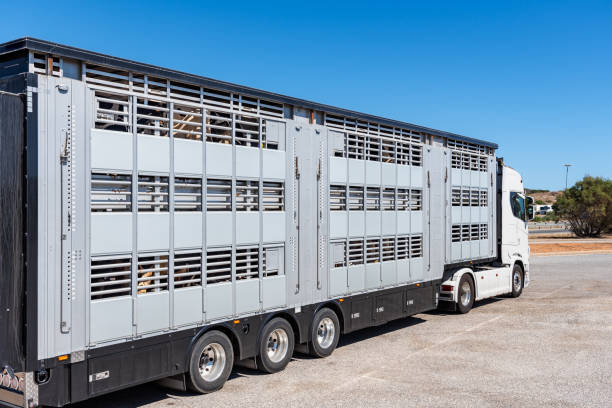
Choosing an animal transport vehicle in Nigeria starts with the animals and the journey, not the vehicle’s advertised size. A livestock truck, horse trailer, pet van and live-fish transport system solve different problems. Describe the species, number and sizes, handling needs, loading facilities and route so a provider can assess an appropriate arrangement.
Match the vehicle or container to the consignment
| Request | What to establish | Useful related guide |
|---|---|---|
| Livestock truck or trailer | Usable animal area, secure structure, floor, partitions and loading method. | Livestock truck hire and quotes |
| Horse transporter | Actual stall arrangement, loading access, horse dimensions and competent handling. | Horse transport in Nigeria |
| Animal transport van | Species, secure carriers, separation, ventilation and supervision arrangements. | Pet pickup and delivery |
| Poultry transport | Live-bird crate suitability, arrangement, airflow and loading/unloading plan. | Live poultry delivery |
| Live-fish system | Species and biomass, transport equipment and specialist water/oxygen-management plan. | Live fish and catfish delivery |
A proposed vehicle should be assessed in its configured condition. For example, adding internal equipment changes usable space. Ask for clear images or specifications and confirm whether the offered equipment is the same equipment that will arrive. A stock photograph on a website is not a vehicle inspection.
Ventilated livestock transport: ask about the whole journey
Ventilation must remain effective during loading, travel and delays. Ask how the provider assesses airflow when the vehicle is stationary, how openings are kept clear and who notices a problem. “Open-sided” and “air-conditioned” are descriptions, not a complete animal-care plan. The animals, route conditions and actual equipment all matter.
Confirm who is responsible for observing the animals and deciding what to do if the journey changes. Discuss road delays, a breakdown, a closed receiving gate and the arrangements for obtaining professional help. A plan that depends on unloading wherever the truck stops may be unsuitable or unsafe. Identify appropriate contingency arrangements before departure.
Temperature-controlled animal transport is not ordinary cold-chain freight
Tell the provider that the consignment is alive. Do not order a standard refrigerated-food truck simply because a search result mentions temperature control. The species and its care requirements must determine the proposed environment, ventilation, monitoring and supervision. Ask a qualified professional to specify any special conditions for the actual animals rather than copying a temperature intended for food, medicines or another species.
If a provider offers controlled conditions, ask what is measured, where it is measured, how an alert is handled and what happens if the system fails. Request the scope in writing. This guide does not claim that every animal needs refrigeration, that a sealed container is acceptable or that Travo has an immediately available temperature-controlled livestock fleet.
Pet crates, animal containers and crate delivery
A crate should suit the actual animal and transport method. Give the animal’s dimensions and weight and confirm the carrier’s usable internal dimensions, door and fastening arrangement. Ask whether the supplier, owner or transporter provides it and who checks suitability before collection. An empty pet crate delivery is a goods-delivery job; moving an animal inside it is a separate service with care and supervision responsibilities.
For a pet moving by air, use the airline’s current acceptance process. IATA’s pet-travel guidance is a reference for airline animal transport, but a generic “airline approved” sales label does not confirm that a particular carrier will accept the crate, animal or route. Obtain carrier confirmation for the actual booking. Road-journey equipment should be assessed for that road journey rather than relying solely on an airline-style label.
Livestock trailer and horse trailer checks
Request the trailer’s usable configuration, loading arrangement and compatibility with the intended towing vehicle. Ask who operates it and whether that team has experience with the species. Specify the collection ground, turning room and receiving facilities; a suitable trailer can still be unable to reach a narrow or unstable farm entrance.
For horses, explain each animal’s size, handling history and any specialist instructions. A conventional cargo trailer is not a substitute for an assessed horse-transport arrangement. For cattle, goats, sheep or pigs, agree how animals will be grouped and identified. Do not infer a safe loading number from a trailer’s advertised tonnes alone.
Cleaning, equipment ownership and handover
Establish whether the same vehicle or crate carries other animals between jobs and how the provider manages cleaning and reusable equipment. Record any species-specific preparation required by the attending professional. Agree who collects hired crates afterwards and whether cleaning, damage deposits or a return trip are separately charged.
At pickup, check the actual equipment against the booking. If an unsuitable substitute arrives, resolve the mismatch before loading. Record the transporter’s contact, the named responsible handler and receiving person. At delivery, confirm the consignment identity, count or other agreed records and the return of owner-supplied equipment.
Open the vehicle and crate selection checklist
What changes the vehicle-hire quotation?
A specialist trailer, an attendant, crates, additional collections, waiting time or a return equipment run can change the cost. Ask for the complete movement price rather than comparing vehicle hire alone. If you require several trucks, the bulk livestock and fleet planning guide explains how to define collection windows and receiving capacity. For city-to-city jobs, use interstate animal transport planning to set out the route.
Ask Travo about a suitable animal vehicle in Lagos
Tell us whether you need a livestock truck, horse transporter, pet vehicle, crates or specialist live-fish arrangement. We can discuss the requirement and check available coordination options. An appropriate provider must confirm the actual equipment and acceptance for your animals. Send Travo your animal-transport enquiry with the species, number and sizes, collection and receiving locations, date and handling requirements. We offer animal-transport enquiry and logistics coordination in Lagos and can assess requested routes elsewhere in Nigeria. The actual transporter, suitable vehicle, care arrangements, route availability and quotation must be confirmed before booking.
Browse Travo’s services for related transport, driver and logistics support. An enquiry is not a confirmed booking, veterinary service or promise of immediate nationwide dispatch.
Reviewed 19 October 2026. Confirm the species-specific care plan, movement requirements, operator acceptance and service quotation for the actual journey.
Live animal cargo, commercial shipping and mobile pickup
For animal cargo or commercial live-animal shipping, specify whether you mean a road journey or an airline shipment. Air acceptance, routing and container requirements must be confirmed with the actual carrier; a domestic livestock truck booking does not secure cargo space on a flight. IATA’s live-animal information is an air-transport reference, not a promise that a particular airline accepts your animal.
For mobile livestock transport or an animal van coming to your farm or home, identify the actual pickup conditions and the equipment needed there. A mobile service does not mean veterinary treatment is included. For a clinic move or an urgent animal concern, use veterinary transport planning to coordinate professional advice and the receiving facility first.
