


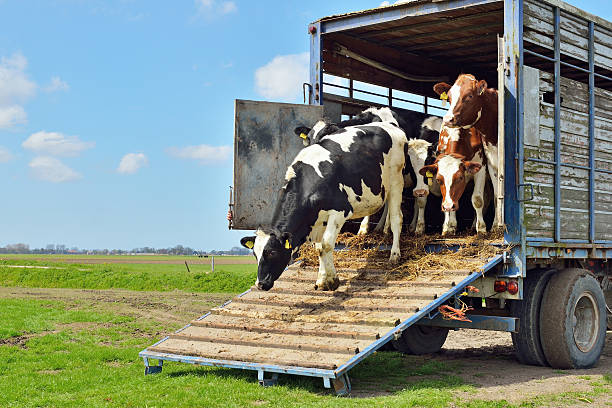
Livestock moving in Nigeria involves transporting animals such as cattle, goats, sheep, pigs and other farm animals between farms, ranches, markets, abattoirs and commercial destinations.
Because livestock are living cargo, moving them requires more planning than ordinary goods transportation. The vehicle, route, loading arrangements, documentation and receiving location should all be considered before the animals begin their journey.
How Livestock Moving Works in Nigeria
The process usually starts by confirming the type and number of animals, pickup location, destination and preferred delivery time.
A suitable livestock vehicle is then selected based on the animals being moved and the distance involved. The route should account for traffic, road conditions and possible delays.
Proper loading is also important. Animals should have appropriate space and ventilation, while handlers should take care to minimise unnecessary stress and injuries during loading and unloading.
Moving Livestock Between Nigerian States
Interstate livestock movement connects farms and livestock-producing areas with markets, abattoirs and commercial buyers across the country.
A journey from Kano to Lagos, Kaduna to Abuja or another long-distance route requires more preparation than a short local trip. Travel time can be affected by traffic congestion, road conditions, vehicle problems and unexpected stops.
Nigeria’s Agricultural Quarantine Service states that trade animals are inspected at interstate veterinary control posts and are accompanied by veterinary movement and loading permits. (National Agricultural Quarantine Service)
Livestock owners should therefore confirm the applicable veterinary and movement requirements before departure.
Moving Cattle in Nigeria
Cattle may be moved between ranches, farms, livestock markets, breeding facilities and abattoirs.
Due to their size, cattle require vehicles with adequate carrying capacity and suitable loading arrangements. Overcrowding can make transportation more difficult and increase the risk of injuries.
The destination should also be ready before the cattle leave the origin so that unloading can take place without unnecessary waiting.
Moving Goats and Sheep
Goats and sheep are commonly moved for farming, breeding, livestock trading and market sales.
Although smaller than cattle, they still require appropriate transportation. The vehicle should provide secure containment, adequate ventilation and sufficient space for the number of animals being moved.
During periods of high livestock demand, arranging transportation ahead of time can help traders avoid last-minute problems with vehicle availability.
Long-Distance Livestock Moving
Long-distance livestock transportation requires careful route planning. The estimated driving distance does not always reflect the actual journey time in Nigeria.
Traffic, road repairs, weather, security checks and vehicle breakdowns can extend the journey. The owner and transporter should therefore agree on a realistic delivery window.
Watering, feeding and other animal-care arrangements should also be considered according to the species and length of the journey.
Livestock Moving Documentation
Documentation depends on the type of movement and whether the animals are being transported domestically or internationally.
For international animal movements, NAQS handles health inspection and quarantine-related functions for live animals, including cattle, sheep and goats. Its requirements for international animal movements can include permits, health certificates, laboratory testing, inspection and quarantine procedures. (National Agricultural Quarantine Service)
For domestic livestock movements, owners should confirm the relevant veterinary and movement documentation before transporting the animals.
Common Livestock Moving Problems
Poor planning can create avoidable problems during livestock transportation. These can include:
- Overcrowded vehicles
- Poor ventilation
- Unsafe loading
- Vehicle breakdowns
- Traffic delays
- Missing documentation
- Poor route planning
- Delayed unloading
- Weak communication with the receiving party
Planning the journey before loading the animals can help reduce many of these issues.
How Travo.ng Can Help With Livestock Moving
Travo.ng can help coordinate transportation and delivery logistics for livestock movements where suitable vehicle arrangements and route planning are required.
For farmers, livestock traders and businesses moving animals between Nigerian cities, logistics coordination can cover pickup arrangements, transportation scheduling and final delivery.
Where veterinary inspection, movement permits or other regulatory requirements apply, these should be confirmed with the relevant authorities before the livestock begins its journey.
Planning Livestock Moving in Nigeria
Successful livestock moving requires more than finding a truck. The animals, vehicle, route, documentation, handlers and destination should all be considered together.
Whether livestock is being moved between nearby farms or transported across several Nigerian states, early preparation can make the journey easier to coordinate, reduce avoidable delays and support better handling throughout transportation.
