


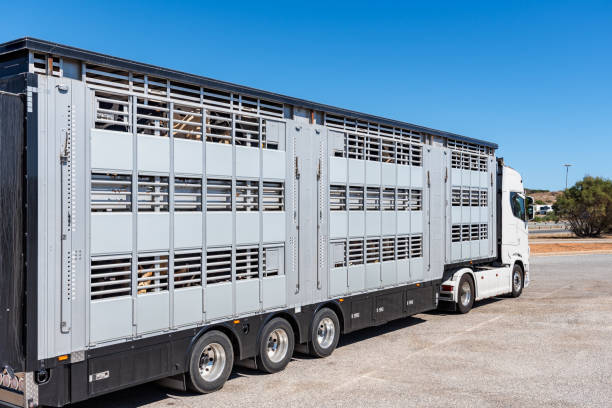
Animal haulage in Nigeria involves the transportation of live animals by road from farms, ranches and livestock markets to other farms, markets, abattoirs, breeding facilities and commercial destinations. It can cover cattle, goats, sheep, pigs, poultry and other animals requiring specialised transportation.
Unlike ordinary freight, live animals require suitable vehicles, careful handling and journey planning. Nigeria’s Federal Ministry of Livestock Development has highlighted efficient and humane livestock transportation as an important part of improving the country’s livestock value chain.
How Animal Haulage Works in Nigeria
Animal haulage normally starts with confirming the type and number of animals, pickup location, destination and preferred delivery time.
The transporter then selects a suitable vehicle and plans the route. For long-distance movements, the plan should account for traffic, road conditions, loading and unloading, and possible delays.
The vehicle should provide adequate ventilation and enough space for the animals. Proper loading is also important because overcrowding and rough handling can increase stress and injuries.
Livestock Haulage Between Nigerian States
Interstate livestock haulage is common where animals move from farms and livestock-producing areas to major markets and commercial centres.
A shipment from Kano to Lagos, Kaduna to Abuja or another long-distance route requires more preparation than a short local movement.
Before loading, traders should confirm applicable veterinary and movement requirements. Nigerian agricultural quarantine legislation provides for inspection of trade animals and veterinary movement and loading permits at interstate veterinary control posts.
Choosing a Vehicle for Animal Haulage
The vehicle should be appropriate for the species, number and size of animals being transported.
Important considerations include:
- Adequate ventilation
- Sufficient floor space
- Secure sides and doors
- Safe loading and unloading access
- Suitable flooring
- Protection from harsh weather
- Easy access for inspection and handling
- Capacity appropriate for the number of animals
Using a vehicle simply because it is available can create problems if it is not designed or adapted for transporting live animals.
Long-Distance Animal Haulage
Long-distance journeys require additional planning because animals may spend many hours on the road.
The route should be planned around realistic driving conditions rather than the theoretical distance alone. Traffic congestion, road repairs, security checks and vehicle breakdowns can all extend journey times.
Watering, feeding and rest arrangements should be considered according to the animals being transported and the applicable requirements.
Cattle Haulage in Nigeria
Cattle haulage is an important part of the livestock supply chain. Animals can be moved from farms and ranches to livestock markets, breeding facilities and abattoirs.
Large cattle movements require suitable vehicles and experienced handlers. Loading should be organised to prevent animals from falling, becoming trapped or being subjected to unnecessary force.
The receiving location should also be prepared before departure so that unloading can happen promptly after arrival.
Goat and Sheep Haulage
Goats and sheep are also transported extensively for farming, breeding and market sales.
Although these animals are smaller than cattle, the same basic principle applies: the vehicle must provide suitable space, ventilation and secure containment.
Seasonal periods of high livestock demand can increase transportation requirements, so traders may need to arrange vehicles and delivery schedules ahead of time.
Animal Haulage Documentation
Documentation depends on the type of animal movement and whether it is domestic or international.
For international animal exports, Nigeria Agricultural Quarantine Service requirements can include export permits, inspection, quarantine, laboratory analysis and certification.
NAQS also states that live-animal imports are subject to quarantine inspection and certification at designated quarantine stations.
For domestic commercial movements, transporters and livestock owners should confirm the applicable veterinary requirements before the journey.
Common Animal Haulage Problems
Several problems can make livestock transportation more expensive or risky, including:
- Overcrowded vehicles
- Poor ventilation
- Unsafe loading
- Inadequate route planning
- Vehicle breakdowns
- Traffic delays
- Missing documentation
- Delayed unloading
- Poor communication between the transporter and receiver
Planning the entire journey before loading can help reduce these problems.
How Travo.ng Can Help With Animal Haulage Logistics
Travo.ng can help coordinate transportation and logistics for animal movements where suitable vehicle arrangements, route planning and delivery coordination are required.
For businesses moving livestock between farms, markets or Nigerian cities, the logistics process can include coordinating pickup, transportation schedules and final delivery.
Where veterinary permits, inspections or other regulatory requirements apply, these should be confirmed with the relevant authorities before the animals are transported.
Planning Animal Haulage in Nigeria
Successful animal haulage requires more than finding a truck. The animals, vehicle, route, documentation, handlers and receiving location all need to be considered before departure.
For long-distance movements, early planning can help reduce delays and make transportation more predictable while giving greater attention to the condition and welfare of the animals throughout the journey.
