


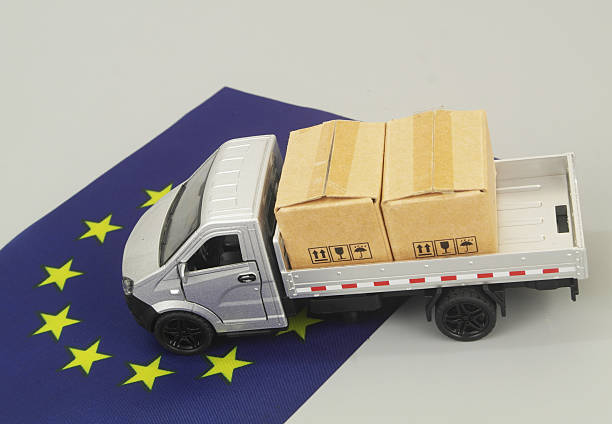
Not every shipment needs an entire truck.
A business might have 12 cartons going from Lagos to Abuja, several pallets of products going to a distributor in Ibadan, or construction materials that occupy only part of a vehicle. Paying for a dedicated truck in these situations can leave a business paying for transport capacity it does not actually use.
That is where less than truckload (LTL) shipping comes in.
LTL allows different shipments to share available truck space, with the transportation cost distributed according to the cargo being moved and the route involved.
For Nigerian businesses, this can be a practical option when the shipment is too large for ordinary courier delivery but too small to justify hiring an entire truck.
What does less than truckload actually mean?
Less than truckload means your shipment does not fill the entire truck.
Instead of hiring a vehicle exclusively for your cargo, your goods may travel alongside compatible shipments belonging to other customers.
For example, imagine a Lagos-based distributor needs to send 15 cartons of packaged products to Abuja.
Those 15 cartons may not require a whole truck.
With an LTL arrangement, the shipment can be consolidated with other compatible cargo travelling along the same corridor.
The important distinction is:
Full truckload: One customer effectively books the truck’s capacity for a shipment.
Less than truckload: Smaller shipments share available truck capacity.
Courier delivery: Generally designed for smaller parcels and individual packages.
The right option depends on the size, weight, urgency and nature of the cargo.
When does LTL make more sense than hiring a whole truck?
The simplest question is:
“Do I actually have enough cargo to justify an entire vehicle?”
If the answer is no, LTL may be worth considering.
It can make sense when you are:
- Sending several cartons to another city
- Restocking a branch or distributor
- Moving moderate quantities of merchandise
- Shipping non-urgent business inventory
- Sending equipment that is too large for ordinary courier service
- Moving goods between warehouses
- Replenishing retail stock
- Sending part of an order to a customer
For example, a retailer in Lagos may have 20 cartons going to a customer or distributor in Abuja. Booking a dedicated truck for those cartons may not be the most economical approach if the cargo occupies only a small portion of the vehicle.
What types of businesses use LTL shipping?
LTL is particularly relevant to businesses that regularly move cargo but do not always have enough volume to fill a truck.
This can include:
Retailers
A retailer may need to replenish stock in another city without moving an entire truckload.
E-commerce businesses
Online sellers can use freight arrangements when orders become too large or numerous for ordinary parcel delivery.
Manufacturers
A manufacturer may need to send components, finished products or supplies to another location without filling a complete vehicle.
Distributors
Distributors often move products between warehouses, branches and customers in different cities.
Construction businesses
Some construction materials and equipment may require larger transport than a standard courier vehicle but may not justify a dedicated truck.
Importers
After goods arrive through Lagos ports or warehouses, smaller portions may need to be moved to customers or distribution points in other parts of Nigeria.
The key is matching the transport arrangement to the actual cargo volume.
How LTL works on a Lagos-to-Abuja shipment
Consider a business operating in Lagos that needs to send 10 cartons to Abuja.
The process may look something like this:
1. Cargo is prepared in Lagos
The cartons are packed, labelled and made ready for collection.
2. Shipment details are provided
The logistics provider needs information such as the number of packages, dimensions, weight, pickup location and Abuja delivery address.
3. Cargo is collected or dropped off
Depending on the service arrangement, the goods may be collected from the business premises or taken to an agreed logistics point.
4. Cargo is consolidated
The shipment can be grouped with other compatible cargo travelling along the same route.
5. The truck travels toward Abuja
The cargo moves along the Lagos–Abuja corridor as part of the consolidated load.
6. The shipment is delivered or made available for collection
The final arrangement depends on the service booked.
This is different from booking a dedicated truck that leaves Lagos specifically for your shipment.
Does LTL mean your goods will take longer?
Not necessarily, but consolidation can affect timing.
When cargo is sharing vehicle space with other shipments, the logistics process may involve additional collection, sorting, loading or delivery stages.
That is why LTL is generally most useful when cost efficiency matters more than having a dedicated vehicle on the road immediately.
If you have a shipment that must arrive at a specific time — for example, materials needed at a construction site before work begins the following morning — a dedicated transport option may be more appropriate.
Always communicate the required delivery date before booking.
Do not simply tell a logistics provider that the shipment is “urgent” without explaining the actual deadline.
What information is needed for an LTL quote?
A proper quotation should be based on the actual shipment rather than simply saying, “I have some cartons.”
Prepare details such as:
- Number of cartons or packages
- Weight of each package
- Approximate dimensions
- Type of goods
- Pickup location
- Delivery location
- Whether the goods are fragile
- Whether the cargo requires special handling
- Preferred delivery timeframe
- Whether loading or unloading assistance is required
For larger shipments, information about pallets, crates or other packaging may also be important.
The more accurate the information, the more useful the quotation is likely to be.
Why cargo dimensions matter as much as weight
One common mistake is focusing only on kilograms.
Two shipments can weigh exactly the same but occupy very different amounts of truck space.
For example, 500 kg of compact packaged products may take considerably less space than 500 kg of bulky lightweight materials.
Truck capacity therefore involves more than simply asking how many kilograms a vehicle can carry.
The physical dimensions of the cargo, how it is packaged and how it can be loaded all matter.
When requesting an LTL quotation, provide both weight and dimensions where possible.
How much does less than truckload shipping cost in Nigeria?
There is no reliable single LTL price for every Nigerian route.
The cost can vary based on:
- Origin
- Destination
- Cargo weight
- Cargo volume
- Number of packages
- Type of goods
- Handling requirements
- Delivery timeframe
- Pickup requirements
- Final delivery location
A shipment from Lagos to Abuja will have different operational requirements from one moving from Lagos to Port Harcourt or Kano.
Likewise, 2 pallets and 10 cartons should not automatically be priced the same way simply because they are travelling on the same route.
For this reason, businesses should request a shipment-specific quotation instead of relying on a generic “price per truck” figure.
LTL versus full truckload: which should you choose?
The decision becomes easier when you compare the actual requirement.
| Situation | More suitable option |
|---|---|
| Small parcel or document | Courier |
| Several cartons | LTL may be suitable |
| Moderate cargo volume | LTL or dedicated vehicle |
| Enough goods to fill most of a truck | Full truckload |
| Extremely time-sensitive shipment | Dedicated transport may be preferable |
| Heavy or oversized cargo | Appropriate freight vehicle |
| Multiple business shipments on the same corridor | Consolidated freight may help |
These are general guidelines rather than fixed rules.
The cargo itself should determine the transport method.
What happens to fragile goods in consolidated freight?
This is an important question before choosing LTL.
Your shipment may share truck space with other customers’ goods, so proper packaging becomes especially important.
Use appropriate cartons, pallets, crates or protective materials for the type of product being transported.
For fragile goods, clearly communicate the handling requirements before the shipment is accepted.
Depending on the item, additional protective packaging or a different transport arrangement may be more appropriate.
Do not simply write “FRAGILE” on a poorly packed carton and assume the label will solve the problem.
The packaging itself needs to protect the product.
What should businesses avoid putting into LTL shipments?
Not every item is suitable for ordinary consolidated freight.
Restrictions can apply to hazardous, illegal, highly sensitive or otherwise regulated goods.
Before booking, disclose the nature of your cargo.
This is particularly important for:
- Chemicals
- Flammable products
- Certain batteries
- Perishable goods
- Hazardous materials
- Valuable items
- Oversized equipment
- Goods requiring temperature control
A logistics provider can then determine whether the shipment requires specialised handling or another transport solution.
How LTL can help businesses manage inventory
One advantage of consolidated freight is that businesses do not always have to wait until they have enough stock to fill a truck.
Suppose a distributor in Abuja needs a moderate quantity of products from Lagos.
Waiting until enough goods accumulate to fill an entire truck could delay the replenishment.
An LTL arrangement may allow the business to move a smaller quantity as part of an existing freight movement.
This can help businesses balance transportation costs against inventory needs.
For retailers, the ability to replenish stock without always paying for a dedicated truck can be particularly useful.
LTL is not always the cheapest option
This is worth emphasising.
People sometimes hear “shared truck space” and assume it will automatically be the cheapest possible transportation method.
Not necessarily.
If your cargo is extremely large, has special handling requirements, needs several delivery stops or requires urgent dedicated transportation, another option may provide better overall value.
The right question is not:
“What is the cheapest way to move this?”
It is:
“What transport arrangement gives me the best value for this particular shipment?”
A slightly higher transportation cost may be worthwhile if it reduces delays, handling complications or additional trips.
How Nigerian road conditions can affect freight movement
Freight planning in Nigeria has to account for real road conditions.
The Lagos–Abuja corridor, for example, involves a long-distance road journey where traffic, road conditions, vehicle issues, weather and other operational factors can affect transit.
Within Lagos, congestion can also delay the initial collection of cargo before the truck even begins the interstate journey.
This is why businesses should avoid promising customers an exact delivery time without allowing for operational variables.
If a shipment is critical to a production schedule or construction project, build some contingency into the plan.
What businesses should do before handing over cargo
Before your goods leave the warehouse or shop, check:
- The shipment has been properly packaged.
- Every package is labelled correctly.
- The number of packages has been recorded.
- The weight and dimensions are available.
- The recipient’s details are correct.
- The delivery address is complete.
- Special handling requirements have been communicated.
- The shipment documentation is accurate.
- You understand the expected delivery process.
- You have the shipment reference or relevant tracking information.
These simple checks can prevent avoidable problems later.
When courier delivery is better than LTL
Not every small shipment needs freight transportation.
If you are sending one document, a small parcel, a few clothing items or another lightweight package, a courier service may be more practical.
LTL becomes more relevant as the shipment becomes larger, heavier or more difficult to handle as an ordinary parcel.
Think of it as a middle ground between conventional parcel delivery and hiring an entire truck.
When full truckload is the better choice
A dedicated truck may make more sense when:
- Your cargo occupies most of the vehicle.
- You need direct transportation.
- The shipment is highly time-sensitive.
- The cargo requires specialised handling.
- You need greater control over the vehicle and route.
- The shipment contains goods that should not be consolidated with other cargo.
For example, a manufacturer moving a full load of products from Lagos to Abuja may gain little from an LTL arrangement because the cargo already requires most of the truck.
In that situation, booking the appropriate full truckload service is more logical.
How Travo.ng can support your freight movement
For businesses that need to move cargo without automatically committing to an entire truck, Travo.ng can help assess the logistics requirement and coordinate an appropriate delivery solution.
The important part is giving accurate shipment information: what you are moving, how much space it occupies, where it is going and when it needs to arrive.
Travo.ng’s wider logistics capabilities can also be useful when a shipment requires more than basic point-to-point delivery, including cargo logistics, freight coordination, delivery services and transport arrangements.
For businesses moving goods regularly between Nigerian cities, having a logistics partner that can look at the shipment as a complete movement rather than simply quoting a vehicle can make planning easier.
A practical LTL checklist for Nigerian businesses
Before booking less than truckload transportation, ask:
What am I shipping?
Know the exact type of goods.
How much am I shipping?
Have the number of cartons, pallets or packages.
How heavy is it?
Use actual weights rather than estimates where possible.
How much space does it occupy?
Record dimensions, especially for bulky items.
Where is it going?
Provide the complete delivery address.
When does it need to arrive?
Give a realistic deadline.
Does it need special handling?
Mention fragile, hazardous, temperature-sensitive or unusually valuable cargo before booking.
Do I need collection and final delivery?
Clarify whether you are arranging only transportation or a more complete door-to-door service.
Would a dedicated truck actually be better?
Compare the options based on your cargo volume and urgency.
The simplest way to decide
If you have a few cartons, pallets or other cargo that needs to travel between Nigerian cities but does not justify an entire truck, less than truckload shipping may be the practical middle ground.
It can help businesses avoid paying for unused truck capacity while still moving more cargo than a standard courier service is designed to handle.
But the cheapest option on paper is not always the best operational choice. Consider the cargo size, route, urgency, handling requirements and final delivery arrangement before booking.
For businesses moving goods from Lagos to Abuja, Port Harcourt, Ibadan, Kano or other Nigerian destinations, Travo.ng can help coordinate the logistics around the shipment and identify a transport arrangement suited to the actual cargo.
The goal is simple: move the right amount of cargo using the right transport capacity, without paying for more vehicle space than you need.
