


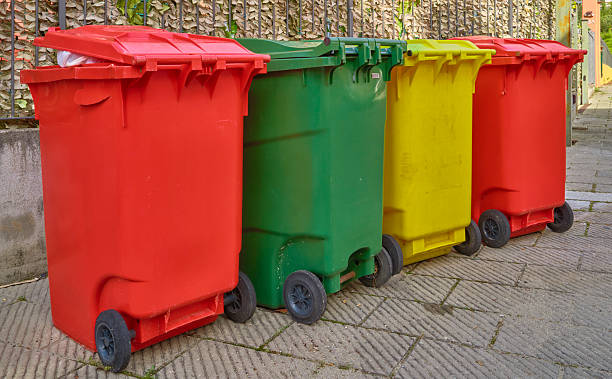
Commercial waste bins should match the waste your business produces and the way a collector can access your premises. Before asking for cheap commercial waste collection, identify your waste streams, weekly volume and storage space. A low collection price is poor value if bins overflow, the truck cannot reach them or important waste types are excluded.
For a business bin collection enquiry in Nigeria, give Travo your address, business type, expected quantity and preferred collection days through the contact page. Its service catalogue includes rubbish collection and skip hire. Ask the team to confirm coverage, accepted waste and the actual collection arrangement for your site.
Choose the waste service before choosing the bin
Separate general rubbish, dry recyclables, food waste and specialist materials in the enquiry. An office may need secure paper handling alongside ordinary waste; a restaurant may need frequent food collection; a factory can produce materials that require separate assessment. A general commercial bin should not be treated as permission to mix sharps, chemicals or unidentified hazardous waste into the load.
In Lagos, check the collection arrangements applicable to your address and the relevant LAWMA PSP coverage. In Abuja or another city, confirm the relevant local authority and permitted collector arrangements. Availability is address-specific, so searching for commercial waste collection near me should lead to a postcode or district check and an itemised quote.
Small bins, wheelie bins and 1100-litre containers
Choose capacity from actual waste generation between collections. Record how quickly existing bins fill over a normal working week and at busy periods. Ask the supplier for dimensions, safe loading limits and the lifting system required. Capacity in litres describes volume; it does not establish how much heavy waste the container or vehicle can handle.
| Bin decision | What to check |
|---|---|
| Office and retail bins | Segregated streams, placement, staff labels and collector acceptance. |
| Commercial wheelie bin | Wheel condition, lid, manoeuvring space and lifting compatibility. |
| 1100-litre wheelie bin | Access width, firm storage surface, collection equipment and loading limits. |
| Food waste container | Leak control, closure, cleaning and pickup frequency. |
| Skip or bulky-waste booking | Accepted items, space, loading arrangements and collection date. |
What affects the 1100-litre wheelie bin collection cost?
Ask for a quote that separates bin supply or hire, collection frequency, disposal charges, transport, tax where applicable and any weight allowance. Confirm charges for overfilled bins, contaminated recycling, extra visits, missed access and cancellation. There is no universal 1100-litre collection rate covering every location and waste type.
Compare proposals over the same period. For example, calculate monthly cost using the stated number of lifts, rental charge and expected extras; do not compare one supplier’s price per lift with another supplier’s full monthly contract as if they are equivalent. Request a written explanation of what is included before accepting a waste subscription.
Commercial bin hire and business contracts
For bin hire, establish who owns the container, who maintains it, how damaged bins are replaced and who cleans them. Ask whether a deposit applies and what happens when the contract ends. A business needs a practical process for overflowing waste during peak activity, not merely a regular schedule on paper.
Review our scheduled waste collection guide for service frequency and escalation questions. For an office, plan a named contact for access and a backup when that person is absent. Keep the collection schedule where staff can find it.
Restaurants, hotels, factories and agricultural waste
Restaurants and hotels should assess food preparation, guest waste and packaging separately. Use closed storage and a collection schedule suited to actual production. Factories should identify the material composition and any contamination before a collector classifies the load. Agricultural waste can include crop residues, containers and other very different streams; describe each rather than requesting one blanket disposal service.
For organic material, see food waste collection and composting options. A recycling route is only workable when the receiving facility accepts the actual material and contamination level.
Office recycling and confidential paperwork
Place simple labels beside bins and agree what goes into each stream. Cardboard can be kept dry and flattened where the collector accepts it. Confidential documents need a controlled disposal process rather than an open paper bin. Confirm collection, destruction and evidence arrangements before releasing sensitive records.
For collection services, retain the invoice, waste description, date and destination or treatment information supplied. Ask who handles service complaints and how missed collections are corrected. Good waste management for business depends on the collection chain, not only the bin at the premises.
Commercial collection quote checklist
Use this checklist to prepare your enquiry. Selections stay in this page only.
Frequently asked questions
Are commercial bins supplied with collection?
Sometimes supply or hire is part of the proposal, and sometimes it is separate. Ask for both costs and ownership terms.
Can I put all business waste into one bin?
No. Confirm segregation and acceptance with the collector; hazardous, clinical and confidential streams need their own assessment and arrangements.
How can Travo assist?
Send your waste profile and preferred collection plan to Travo’s team. Ask for an address-specific proposal covering containers, collection and any separate transport or recycling logistics required. Confirm specialist services and authorisations before booking.
Related guides
Commercial waste bin sizes: use litres and loading limits together
Suppliers may offer formats described as 120, 240, 660 or 1100 litres, but the sizes and service equipment actually available must be confirmed locally. These are examples to ask about, not a verified Travo stock list. Measure the location and access route before choosing a container: capacity alone does not tell you whether it will pass through a gate or suit the collection vehicle.
As a simple planning example, 180 litres produced each working day over three days is 540 litres before allowing for peaks or imperfect packing. This does not mean a 660-litre bin automatically solves the job: heavy material may exceed the loading limit before that volume is reached. Ask the collector to specify both permitted volume and weight.
DMR bins, FEL bins and roll-off dumpsters
DMR usually means dry mixed recycling. Get a written acceptance list; food, glass, films and other materials may need separate routes depending on the collector. FEL means front-end loader in this context, describing a container and lifting arrangement. Confirm the truck, overhead clearance and safe access, rather than assuming any rubbish truck can lift it.
A roll-off dumpster is a large container loaded and removed using suitable vehicle equipment. For a Nigerian bin-rental enquiry, describe the material, approximate volume and weight, placement space, ground conditions and loading method. Ask whether a skip or another vehicle arrangement is more practical at the address. Hire prices should separate delivery, rental duration, lift or exchange, destination charges and extra visits.
Overflowing bins: fix the cause
Record whether the overflow follows a missed visit, a seasonal peak, contamination or a container that is too small. Keep the collection route clear and request an authorised extra service. Do not transfer an overloaded bin onto a public pavement or burn the excess. The practical response may be more frequent collections or better separation, not just a bigger general-waste bin.
See what goes into a recycling bin and scheduled pickup planning.
Further waste and recycling guides
- What Does Recycle Mean? A Practical Guide to Glass, Aerosols, Batteries and Recycling Bins
- Waste Disposal Regulations for Businesses in Nigeria: Collector Checks, Records and Waste Plans
660-litre wheelie bins: capacity and collection checks
A 660L wheelie bin describes nominal volume, not a universal safe loading weight or an all-material acceptance rule. Ask the supplier for dimensions, lid clearance, movement requirements and the permitted load for the intended waste. Check access from the storage point to the collection vehicle, including slopes, doors and surfaces. Confirm whether rental, maintenance and replacement are included.
For a 660L restaurant bin, food residues and frequency can matter more than filling the container to its brim. Confirm which materials and liners are accepted and how missed collections are handled. For office dry mixed recycling, use the receiver’s acceptance list; “DMR” does not mean every dry object is recyclable. See plastic-code and polystyrene checks.
A roll-off dumpster or skip for construction material requires a separate access and loading assessment. Keep oils, chemicals and batteries out unless the actual operator explicitly accepts them through an appropriate route. Use garage waste collection planning for workshop streams and food-waste measurement for restaurants. Request a quote based on material, quantity, site and schedule rather than only a bin size.
