


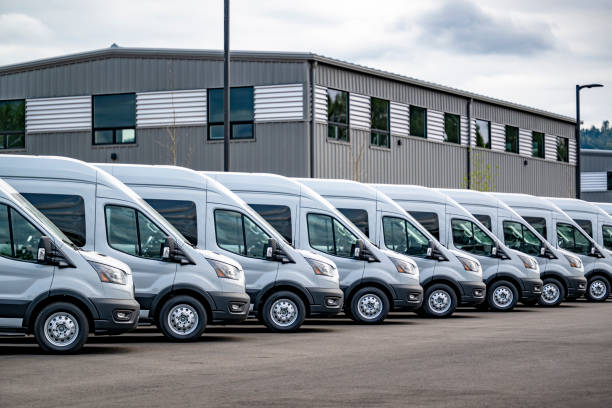
Searching for van driving jobs near me usually means you want something more specific than a general driving job.
You may already have driving experience and want regular work. You may own a van and be looking for delivery contracts. Or perhaps you are trying to move from informal driving work into a more stable logistics role.
In Nigeria, van drivers are needed across several parts of the logistics and transport industry. Businesses need drivers to move stock between warehouses and shops, e-commerce companies need delivery support, distributors need people to move products, and logistics companies need drivers who can handle scheduled routes.
But finding the right opportunity is not simply about locating an advert that says “van driver wanted.” You also need to understand the type of vehicle, route, working hours, licence requirements, pay structure and responsibilities attached to the job.
What kind of van driving jobs are available?
Van driving can cover several different types of work.
Depending on your experience and location, you may find opportunities involving:
- Parcel and courier delivery
- E-commerce deliveries
- Retail distribution
- Warehouse-to-store transportation
- Food and beverage distribution
- Pharmaceutical distribution
- Moving company support
- Corporate deliveries
- Event logistics
- Airport-related transportation
- Interstate delivery work
A driver working for a courier company may spend the day making multiple short deliveries around a city.
A distribution driver may instead collect goods from a warehouse in the morning and deliver them to several shops or business locations.
The work can therefore look very different depending on the employer.
Where can you find van driving jobs in Nigeria?
The phrase “near me” matters because driving jobs are highly location-dependent.
A company may need a driver who lives reasonably close to its depot because the driver’s day starts and ends there.
For example, someone living in Lagos may find opportunities around:
- Ikeja
- Isolo
- Oshodi
- Apapa
- Surulere
- Lekki
- Victoria Island
- Maryland
- Yaba
In Abuja, opportunities may be concentrated around areas such as:
- Garki
- Wuse
- Jabi
- Gwarinpa
- Utako
- Lugbe
- Kubwa
Other commercial cities such as Port Harcourt, Ibadan, Benin City, Kano and Enugu also have logistics and distribution operations that require drivers.
When searching for work, use your actual location rather than searching only for “van driving jobs in Nigeria.” A job on the other side of the city may not be practical if the employer expects you at a depot every morning.
What qualifications do you need to drive a van?
The exact requirements depend on the employer and the type of vehicle.
Common requirements can include:
- A valid Nigerian driver’s licence appropriate for the vehicle
- Previous driving experience
- Knowledge of local roads
- Basic vehicle safety knowledge
- Ability to use navigation applications
- Good communication skills
- Reliability and punctuality
- Ability to complete delivery paperwork
- Clean or acceptable driving history, depending on the employer
Some employers may also request references or previous employment information.
If the job involves transporting commercial goods, the employer may have additional requirements based on its insurance, vehicle type and operating procedures.
Do not assume that having a driver’s licence automatically qualifies you for every van-driving position.
Do you need previous van-driving experience?
Not always, but experience can make you more competitive.
Driving a van is different from driving a small saloon car. The vehicle may be longer, wider or heavier, and you need to understand how its size affects turning, parking and manoeuvring.
Experience is particularly useful if the job involves:
- Frequent deliveries
- Loading and unloading
- Driving in busy commercial areas
- Long-distance routes
- Handling customer orders
- Operating on tight schedules
If you have previously driven a commercial vehicle, include that experience clearly when applying.
Instead of simply writing “I am an experienced driver,” explain what you actually did.
For example:
“Handled daily delivery routes between a warehouse and retail outlets, completed delivery documentation and maintained the vehicle.”
Specific experience is much more useful to an employer.
How much do van driving jobs pay?
There is no single salary for van drivers in Nigeria.
Pay can vary depending on:
- Location
- Employer
- Vehicle type
- Experience
- Working hours
- Number of deliveries
- Local or interstate routes
- Whether the driver owns the vehicle
- Fuel arrangements
- Maintenance responsibilities
- Salary versus per-trip payment
A full-time employed driver may receive a regular salary, while an independent driver may be paid per trip, per delivery or under a contract arrangement.
Some opportunities may also involve allowances for fuel, feeding, accommodation or interstate travel.
Before accepting a job, understand the entire compensation arrangement rather than focusing only on the advertised monthly figure.
Ask who pays for fuel and vehicle maintenance
This is one of the most important questions to ask before accepting a driving job.
Suppose an employer offers what looks like a good monthly salary but expects you to pay for fuel, servicing and repairs yourself.
The actual value of the job could be considerably lower.
Ask:
- Who provides the van?
- Who pays for fuel?
- Who handles servicing?
- Who pays for repairs?
- Who covers tyres?
- Is there a daily transport allowance?
- Are interstate trips paid differently?
- Is accommodation provided for overnight routes?
These details can significantly change what you actually earn.
Company van or your own van?
There are two very different opportunities in the market.
Driving a company-owned van
The employer provides the vehicle and you operate it as part of your job.
This can be attractive if you do not own a commercial vehicle because you are not responsible for purchasing the van.
However, you should still understand your responsibilities if the vehicle develops a fault or is involved in an accident.
Using your own van
Some businesses and logistics operators may work with drivers or vehicle owners who provide their own vehicles.
This can offer greater flexibility, but your expenses are higher.
You need to consider:
- Fuel
- Maintenance
- Insurance
- Tyres
- Depreciation
- Repairs
- Registration and compliance costs
Do the mathematics before accepting a contract.
A high per-trip payment does not necessarily mean high profit if your van is consuming significant fuel and requiring frequent repairs.
What does a typical van driver’s day look like?
It depends on the role, but a delivery driver’s day can start early.
You might arrive at a warehouse, inspect the vehicle, receive a delivery manifest and load several packages.
From there, you may travel through several parts of the city.
For example, a Lagos delivery route could involve multiple stops around Ikeja, Maryland, Yaba and Surulere.
In Abuja, a driver might move between Garki, Wuse, Jabi and Gwarinpa.
The number of stops matters.
A driver making ten deliveries in a day has different responsibilities from someone making one long-distance delivery.
At each stop, you may need to:
- Confirm the delivery address.
- Contact the recipient.
- Unload the correct package.
- Obtain confirmation of receipt.
- Update the delivery status.
- Continue to the next location.
That means organisation and communication are just as important as driving ability.
Why road knowledge still matters when you have Google Maps
Navigation apps are useful, but professional drivers cannot rely on them blindly.
Road closures, traffic diversions, construction, flooding and access restrictions can affect the route shown on a map.
A driver who knows the area can often recognise when the suggested route is impractical.
This is particularly relevant in cities where traffic conditions can change significantly throughout the day.
Good drivers learn their regular routes and understand alternative roads.
For delivery work, that knowledge can make the difference between completing a route efficiently and spending hours stuck in avoidable traffic.
What employers look for beyond driving skills
A company hiring a van driver is trusting that person with more than a vehicle.
The driver may also be responsible for:
- Customer packages
- Company documents
- Cash or payment collections
- Delivery records
- Vehicle condition
- Customer interactions
- Meeting delivery deadlines
That is why reliability matters.
If an employer has customers waiting for deliveries, repeatedly arriving late or failing to communicate can create problems for the entire business.
A strong driving candidate should therefore demonstrate punctuality, responsibility and basic customer service.
How to make your CV stronger for van driving jobs
Your CV does not need to be complicated.
Make the relevant information easy to find.
Include:
Driving experience:
State how many years you have been driving and what types of vehicles you have operated.
Commercial experience:
Mention delivery, logistics, distribution or transport work.
Routes:
If you have experience driving long-distance or interstate routes, mention it.
Vehicle experience:
State the types of vans or commercial vehicles you have driven.
Licence:
Include your valid licence details where appropriate.
Additional skills:
Mention navigation, delivery documentation, vehicle inspections and customer service if applicable.
Instead of:
“I can drive and I am hardworking.”
Use something more specific:
“Five years’ driving experience with regular city and interstate routes, including commercial deliveries and customer order handling.”
The second statement gives an employer something they can actually assess.
Be careful with “van driving jobs near me” scams
Job seekers should be cautious when an alleged employer asks for money before offering work.
Be especially careful if someone asks you to pay a large “registration fee,” “processing fee,” “training fee” or “uniform fee” before you have verified the company and job.
Before accepting an opportunity:
- Verify the company.
- Confirm the job location.
- Ask for the actual job responsibilities.
- Understand the payment structure.
- Get important terms in writing.
- Do not hand over original personal documents unnecessarily.
- Be cautious about jobs that promise unusually high earnings for very little work.
A legitimate job should be clear about what you will be doing and how you will be paid.
Could van driving lead to other logistics jobs?
Yes.
Driving can be an entry point into the wider logistics industry.
With experience, a driver may move into roles involving:
- Fleet operations
- Dispatch coordination
- Delivery supervision
- Route planning
- Transport management
- Warehouse operations
- Logistics coordination
For someone who enjoys working in transport, learning how the wider delivery operation works can create opportunities beyond simply driving.
Understanding delivery records, route planning, vehicle maintenance and customer requirements can be valuable as your career develops.
What businesses need from reliable van drivers
From the company’s perspective, a reliable driver protects more than the vehicle.
A delayed delivery can mean an unhappy customer.
A poorly handled package can create a replacement cost.
An unexplained absence can disrupt an entire delivery route.
That is why businesses often value drivers who communicate early when something goes wrong.
If traffic is unusually heavy, the vehicle develops a fault or a customer cannot be reached, reporting the problem promptly allows the logistics team to make another arrangement.
Silence creates bigger problems.
Finding driving opportunities through logistics companies
One practical way to find van-driving work is to look beyond traditional job boards.
Logistics, courier, distribution and transport companies may have ongoing requirements for drivers as their delivery networks expand.
Travo.ng operates within the travel, transport and logistics space, supporting delivery and transport requirements for customers and businesses.
For drivers looking to understand how the logistics industry works, companies operating in this space can also provide insight into the types of delivery and transport roles available.
If you already have driving experience, it is worth preparing a CV that clearly shows your vehicle experience, routes and commercial responsibilities before approaching employers.
What to ask before accepting a van-driving job
Before saying yes to an offer, make sure you understand:
- Where you report for work
- Your working hours
- The vehicle you will drive
- Your daily responsibilities
- Expected delivery volume
- Local versus interstate routes
- Salary or per-trip payment
- Fuel arrangements
- Maintenance responsibilities
- Overtime arrangements
- Accommodation for long-distance trips
- What happens when the vehicle breaks down
These questions can prevent disagreements later.
A job that looks attractive on paper may not be suitable once you discover that you are expected to cover several expenses yourself.
Start your search with the job, not just the location
When searching for van driving jobs near me, location is important, but it should not be your only filter.
Think about the kind of driving work you actually want.
Do you prefer:
- Regular local deliveries?
- Long-distance driving?
- Warehouse distribution?
- E-commerce deliveries?
- Corporate transport?
- Independent contract work?
- Driving a company vehicle?
- Using your own van?
Once you know this, your search becomes much more focused.
For example, someone looking for stable local work should search for van delivery driver, dispatch driver, delivery van driver or logistics driver roles in their city.
Someone with their own commercial vehicle might instead look for van delivery contracts, logistics driver contracts or independent delivery driver opportunities.
The right search terms can save you time.
Build a professional reputation as a driver
In logistics, your reputation can become an important career asset.
If you consistently arrive when expected, handle packages properly, communicate with customers and keep the vehicle in good condition, employers are more likely to trust you with bigger responsibilities.
Keep records of your work where possible.
If you have successfully handled regular delivery routes, interstate trips or high-volume customer deliveries, those experiences can strengthen future applications.
Driving is not just about getting from one place to another. In commercial logistics, it is part of the service a customer is paying for.
A driver who understands that can stand out.
Final checklist before applying
Before applying for a van-driving position, make sure you have:
- A valid driver’s licence
- An updated CV
- Details of your previous driving experience
- Information about the vehicles you have driven
- References where available
- Knowledge of your local routes
- A clear idea of your preferred work arrangement
- Questions ready about salary, fuel and maintenance
- Relevant delivery or logistics experience clearly listed
Whether you are looking for a van driving job near you in Lagos, Abuja, Port Harcourt, Ibadan or another Nigerian city, focus on opportunities that match your actual experience and the type of work you want.
Van driving can provide an entry into the wider logistics industry, but the best opportunities are those where the responsibilities, routes, vehicle arrangements and payment terms are clear from the beginning.
For companies that need dependable transport, delivery and logistics support, Travo.ng provides services designed around moving people and goods efficiently. For individuals exploring the logistics sector, understanding how these operations work is a useful first step toward building a sustainable career in transport.
