


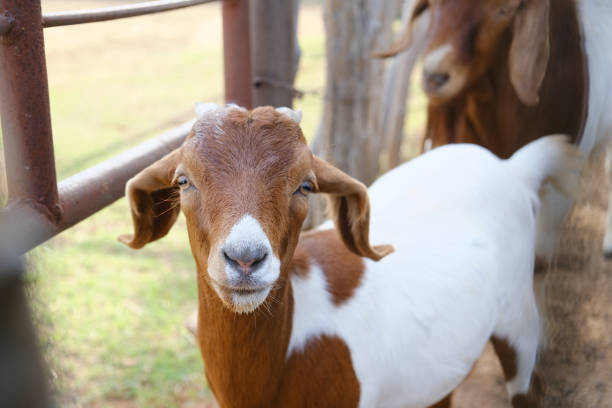
If you are moving goats from a farm to a livestock market, relocating animals between states or buying goats from another part of Nigeria, transportation is an important part of the total budget.
Goat transport cost in Nigeria depends on the number of goats, distance, vehicle type, route, fuel expenses, loading arrangements and current demand for livestock transportation.
There is no single price that applies to every goat transport journey. Moving five goats within one state is very different from transporting a large consignment from Kano or Katsina to Lagos.
What Affects Goat Transport Cost in Nigeria?
Before giving a quotation, a transporter will normally need to know:
- Number of goats
- Pickup location
- Delivery location
- Approximate size of the goats
- Travel date
- Vehicle required
- Loading and unloading arrangements
- Driver and handler requirements
- Veterinary or movement documentation
- Expected journey duration
- Whether the vehicle is making a return trip
Providing these details upfront makes it easier to calculate the actual cost of the journey.
How Much Does It Cost to Transport Goats in Nigeria?
There is no reliable nationwide price per goat because transporters price journeys differently.
For example, a small local delivery may require a smaller vehicle, while a large consignment travelling from Northern Nigeria to Lagos may require a dedicated livestock truck and several days of planning.
As a useful indication of how much livestock transport can fluctuate, Lagos traders reported in May 2026 that transporters were charging up to ₦1.2 million to bring trucks of rams from Northern Nigeria to Lagos, compared with about ₦600,000 to ₦700,000 previously. This was a reported market rate for truckloads of rams, not a fixed price for transporting individual goats. (News Agency of Nigeria)
Local Goat Transport Can Cost Less
Moving goats over a short distance generally involves fewer kilometres, less fuel and less driver time than an interstate journey.
For example, transporting goats between farms and markets within the same area can be arranged with a smaller suitable vehicle where available.
However, local transport can still become more expensive when there are difficult loading conditions, heavy traffic, multiple pickup points or a requirement for door-to-door delivery.
Long-Distance Goat Transport Costs More
Interstate goat transportation requires more planning because of the distance and time involved.
A journey from Kano, Katsina, Sokoto or Kaduna to Lagos can involve significant fuel expenses and vehicle operating costs. Traffic, road conditions and unexpected delays can also affect the final quotation.
For a large goat consignment, the transporter may quote for the entire livestock truck rather than simply charging a fixed amount for every animal.
Does the Number of Goats Affect the Price?
Yes.
The number of goats determines the amount of space and vehicle capacity required.
Transporting three or five goats may require a completely different arrangement from moving 50 or 100 goats. For larger consignments, a suitable livestock truck may be more practical than several small vehicles.
Do not assume that multiplying a small “price per goat” gives the actual cost of a large shipment. Ask for a quotation based on the complete consignment.
The Vehicle Matters
Goats should be transported using a vehicle that is appropriate for live animals.
The vehicle should provide suitable ventilation, secure sides, safe flooring and enough space for the animals. The loading area should also allow goats to be loaded and unloaded without unnecessary stress or injury.
The cheapest available vehicle is not necessarily the most suitable option. A properly planned livestock journey should balance transportation cost with the safety and condition of the animals.
Veterinary Requirements Can Add to the Budget
When goats are moved as trade animals, applicable veterinary and movement requirements should be checked before transportation.
Nigerian law provides for a movement permit for trade animals, with the permit applying to a specific journey and requiring an authorised officer to be satisfied that the animals are fit to travel. (Nigerian LawCompass)
The Nigeria Agricultural Quarantine Service also identifies goats among the live animals subject to its veterinary inspection functions and inspects trade animals at designated quarantine control posts. (National Agricultural Quarantine Service)
For international movement, additional quarantine, health certification and permit requirements can apply.
Loading and Unloading Costs
The location of the goats can also affect the transport quotation.
If the truck can park directly beside the farm’s loading area, the process may be straightforward. If goats have to be moved a significant distance to the vehicle, additional labour may be required.
The same applies at the destination. Having the receiving farm, market or livestock facility ready before arrival can reduce waiting time and additional charges.
What Other Costs Should You Consider?
The transporter’s main quotation may not include every expense connected with the journey.
Depending on the route and arrangement, you may need to consider:
- Loading labour
- Unloading labour
- Livestock handlers
- Veterinary documentation
- Feeding and watering arrangements
- Waiting time
- Temporary holding
- Vehicle cleaning
- Emergency expenses
Ask the transporter what is included before confirming the booking.
How to Get an Accurate Goat Transport Quote
Give the transporter complete information rather than asking only for the price of moving a goat.
Provide:
- Number of goats
- Pickup location
- Delivery location
- Approximate size of the goats
- Preferred travel date
- Loading requirements
- Whether door-to-door delivery is required
- Any veterinary documents already obtained
- Special handling requirements
- Whether the journey is one-way or return
For example, “I need to transport 40 goats from Kano to Lagos” gives a transporter much more useful information than simply asking, “How much does goat transport cost?”
How to Keep Goat Transport Costs Under Control
Planning the journey early can help prevent unnecessary expenses.
Confirm the number of goats before booking, prepare applicable documentation, make sure the receiving location is ready and provide accurate pickup information.
If you have a large consignment, ask whether a dedicated livestock truck is more economical than arranging several smaller trips.
You should also compare quotations based on the same requirements. One transporter may include loading and unloading while another may charge for them separately.
Arranging Goat Transport With Travo.ng
Travo.ng can help coordinate goat transportation and related logistics where an appropriate livestock transport service is available.
When requesting a quotation, provide the number of goats, pickup location, destination and preferred travel date. Mention any special loading, unloading or handling requirements so the transport arrangement can be planned around the animals.
For interstate movements, confirm applicable veterinary and movement requirements before the goats are loaded. This helps reduce avoidable delays during the journey.
Get a Route-Specific Goat Transport Price
Goat transport cost in Nigeria depends on the actual journey rather than a universal price per animal.
Distance, number of goats, vehicle capacity, fuel costs, road conditions, handling and documentation can all affect the final amount.
Whether you are a farmer, livestock trader, breeder or buyer, get a quotation based on your exact route and number of goats before arranging the movement. This gives you a clearer picture of the full logistics cost and helps you plan your livestock purchase or delivery properly.
