


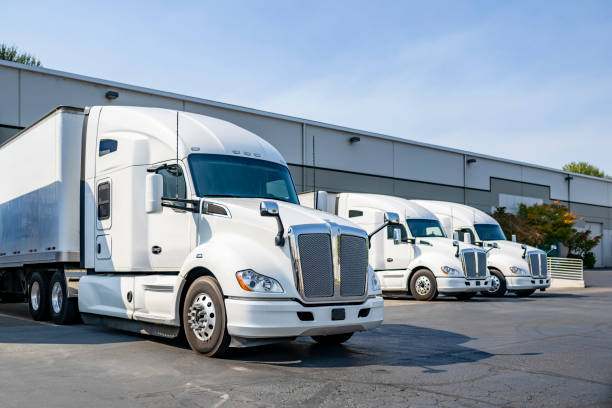
Road freight is one of the most widely used ways to move goods across Nigeria. Businesses rely on trucks, vans and other commercial vehicles to transport products between cities, warehouses, factories, markets, ports and distribution centres.
It is particularly important for domestic and interstate logistics because road transport can connect cargo directly from a pickup point to its final destination. Research on Nigeria’s freight system has also found road transport to be highly flexible because cargo can originate from many different locations rather than being restricted to specific rail or port nodes. (DOI)
How Road Freight Works in Nigeria
A road freight shipment normally starts with identifying the cargo, pickup location, destination, vehicle type and required delivery timeframe.
The logistics provider then assigns an appropriate vehicle and driver, loads the goods and moves them along the planned route. Depending on the shipment, the cargo may be tracked during transit and delivered directly to a warehouse, shop, factory or customer.
Road freight can also form part of a larger supply chain. For example, imported goods may arrive at a Nigerian seaport before being transported by truck from the port to a warehouse in Lagos, Abuja, Kano, Ibadan or another city.
Types of Road Freight
The appropriate vehicle depends on the cargo being transported.
Common road freight arrangements include:
- Full truckload shipments
- Less-than-truckload shipments
- Container haulage
- General cargo transportation
- Heavy and oversized equipment
- Agricultural products
- Perishable goods
- Retail and FMCG distribution
- Port-to-warehouse transportation
- Interstate deliveries
For smaller shipments, sharing available truck capacity can be more practical than paying for an entire vehicle. Larger consignments may require a dedicated truck.
Road Freight Routes in Nigeria
Road freight connects major commercial centres such as Lagos, Ibadan, Abuja, Benin City, Onitsha, Enugu, Port Harcourt, Kano and Kaduna.
Lagos is particularly important because large volumes of imported cargo move from the port areas into the wider Nigerian distribution network. Road freight can then carry those goods towards inland markets.
The major road corridors can experience traffic congestion, poor road conditions and other operational disruptions, so route planning is an important part of freight management. (Trade.gov)
How Much Does Road Freight Cost in Nigeria?
Road freight prices vary considerably depending on the shipment.
Factors that can affect the cost include:
- Pickup and delivery locations
- Distance
- Cargo weight and dimensions
- Vehicle type
- Fuel costs
- Tolls and other route charges
- Loading and unloading requirements
- Road conditions
- Delivery urgency
- Security requirements
- Port-related delays for imported cargo
For this reason, businesses should request a shipment-specific quote rather than relying on a single standard price for an entire route.
Port-to-Door Road Freight
A common use of road freight is moving imported goods from Nigerian ports to their final destination.
For example, a container arriving through Lagos may need to travel from the port area to a warehouse in Ikeja, a distribution centre in Ogun State or an onward destination outside Lagos.
The road movement should be planned alongside customs clearance and cargo release. This helps prevent situations where a truck is arranged without considering whether the cargo is actually ready to leave the port.
Challenges Affecting Road Freight
Road freight operators in Nigeria have to manage several operational challenges.
Traffic congestion can increase delivery times, particularly around major commercial areas and port corridors. Poor road conditions can also increase vehicle wear and affect transit times. Security considerations on some interstate routes may require additional planning.
Nigeria’s logistics sector continues to face infrastructure and operational constraints, including road-network limitations and high logistics costs. (Trade.gov)
For businesses, this means that the cheapest-looking transport option may not always have the lowest total cost if delays, vehicle downtime or additional handling expenses occur.
Road Freight vs Sea and Air Freight
Road freight is primarily useful for inland movement and domestic distribution.
Sea freight is generally used for international shipments involving large volumes, while air freight is better suited to urgent international cargo where speed is more important.
In practice, these modes can work together. An importer might use sea freight to bring goods into Nigeria and then use road freight to move the cargo from the port to its warehouse.
How Travo.ng Can Help With Road Freight in Nigeria
Travo.ng can help businesses coordinate road transportation and delivery logistics based on the cargo, route and final destination.
For example, a business importing goods through Lagos may need transportation from the port to its warehouse, while a manufacturer may need regular movement of products between different states.
Planning the pickup, vehicle requirements, route and final delivery together can make the movement easier to manage and help businesses avoid unnecessary delays.
Planning a Road Freight Shipment
Before booking road freight, provide accurate information about the cargo, pickup address, delivery address, dimensions, weight and preferred delivery timeframe.
It is also useful to confirm whether the shipment requires special handling, a particular vehicle type or additional security arrangements.
For regular business deliveries, keeping consistent records of routes, delivery times and freight costs can help identify more efficient ways to manage future shipments.
With proper planning, road freight can provide a flexible connection between Nigerian ports, warehouses, businesses and customers across the country.
