


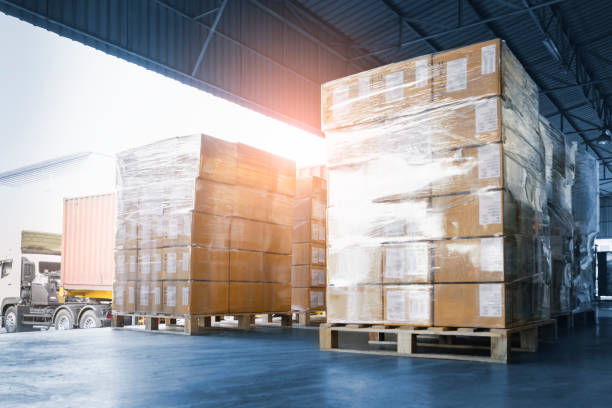
Freight consolidation in China is a practical way for importers to combine goods from multiple suppliers into one international shipment. Instead of paying to ship every supplier’s order separately, the goods are sent to a consolidation warehouse, where they can be received, checked, repacked and combined before being forwarded to the destination.
This can be especially useful for businesses buying from Alibaba, 1688, Taobao, Yiwu markets or several Chinese manufacturers at the same time.
How Freight Consolidation China Works
The process usually follows a simple sequence:
- Purchase from different suppliers
You place orders with your chosen Chinese suppliers and provide them with the address of a consolidation warehouse. - Cargo arrives at the warehouse
Each supplier delivers your cartons or packages to the warehouse. The cargo can be recorded by supplier, order number, weight and dimensions. - Goods are checked
The warehouse can verify carton quantities and inspect the external condition of packages. Additional inspection can be arranged when required. - Cargo is consolidated
Suitable packages are combined into one shipment. Repacking may also be carried out to improve space usage or strengthen packaging. - Choose your freight method
The consolidated cargo can then be prepared for air freight or sea freight, depending on the shipment size, urgency and destination. - International shipping begins
Once documentation and freight arrangements are completed, the combined shipment leaves China for the destination country.
Why Consolidation Can Reduce Shipping Costs
Shipping several small orders individually can create repeated handling, minimum freight charges and separate international shipments. Consolidating compatible cargo can reduce the number of international bookings and make better use of available freight space.
However, consolidation does not automatically guarantee the cheapest option. Storage, domestic collection, handling, packaging, cargo volume and the final destination can all affect the total cost.
Air Freight or Sea Freight?
Air freight is generally suitable when the cargo is relatively small, valuable or time-sensitive. Consolidated air shipments can be useful when several supplier orders need to move together quickly.
Sea freight is usually more practical for larger or heavier cargo. LCL allows importers to share container space when they do not have enough goods to fill a complete container, while FCL may be appropriate for larger volumes.
What to Check Before Choosing a Consolidation Service
Look for a service that can:
- Receive goods from multiple suppliers
- Record and identify each shipment correctly
- Provide accurate weight and volume measurements
- Offer suitable repacking and consolidation
- Explain storage and handling charges clearly
- Support both air and sea freight where appropriate
- Provide shipment documentation and tracking
- Handle cargo according to destination requirements
Good coordination is particularly important when suppliers are located in different Chinese cities or have different production schedules.
How Travo.ng Can Help
Travo.ng can help coordinate freight consolidation for businesses importing from China by helping organise cargo movement, shipment planning and international logistics. Instead of managing multiple supplier deliveries and freight arrangements separately, businesses can plan their cargo around one coordinated shipment.
Whether you are buying wholesale products, sourcing from several factories or combining smaller orders, proper freight consolidation can make the shipping process easier to manage and potentially more efficient.
For larger shipments, Travo.ng can also help you consider whether air freight, LCL or FCL sea freight is more suitable for your cargo and delivery requirements.
