


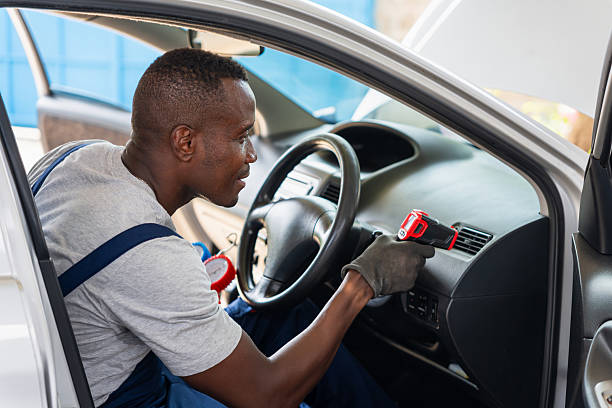
Managing a fleet of vehicles is about much more than repairing cars when they break down. Companies operating delivery vans, trucks, buses and service vehicles need proper maintenance schedules, inspections, driver monitoring and cost controls to keep vehicles productive.
Fleet maintenance training in Nigeria can help mechanics, fleet officers, transport managers and logistics professionals understand how to reduce breakdowns, control maintenance costs and keep vehicles available for daily operations.
Current Nigerian training programmes cover areas such as preventive maintenance, workshop management, fuel control, vehicle replacement, fleet safety and performance measurement.
What Does Fleet Maintenance Training Cover?
A practical programme can teach participants how to manage:
- Preventive maintenance schedules
- Vehicle inspections
- Workshop operations
- Breakdown response
- Repair records
- Spare-parts management
- Fuel consumption
- Vehicle downtime
- Driver-related maintenance issues
- Fleet safety
- Maintenance budgets
- Vehicle replacement planning
- Fleet performance KPIs
The objective is to prevent avoidable breakdowns rather than waiting until a vehicle fails on the road.
Why Preventive Maintenance Matters
Imagine a logistics company operating 30 delivery vehicles between Lagos, Ibadan, Benin and Abuja.
If maintenance is handled only when vehicles develop faults, several vehicles could end up off the road at the same time. That can mean delayed deliveries, emergency repairs and additional towing or recovery expenses.
A preventive maintenance system can schedule inspections, servicing and component replacement before minor problems become expensive failures.
Fleet-management courses in Nigeria specifically teach participants how to develop preventive maintenance programmes and monitor fleet performance.
What Does a Fleet Maintenance Officer Actually Do?
Depending on the company, a fleet maintenance professional may:
- Monitor vehicle service intervals
- Schedule routine inspections
- Record vehicle faults
- Coordinate mechanics and workshops
- Approve or monitor repairs
- Track spare-parts usage
- Monitor vehicle downtime
- Review fuel consumption
- Check repair invoices
- Maintain vehicle records
- Investigate recurring faults
- Report fleet performance to management
This makes fleet maintenance a combination of technical knowledge, organisation and cost management.
Understanding Fleet Maintenance Costs
Maintenance training should also teach you how to identify where a company’s money is going.
Important areas include:
- Fuel consumption
- Tyre replacement
- Spare parts
- Labour
- Repairs
- Vehicle downtime
- Towing and recovery
- Insurance-related costs
- Vehicle depreciation
A fleet manager needs to know when continuously repairing an ageing vehicle no longer makes financial sense and when replacement should be considered.
Diagnostics Can Improve Fleet Maintenance
Modern fleet vehicles increasingly rely on electronic systems, so diagnostic skills are becoming important.
Technicians and fleet officers can benefit from understanding:
- OBD diagnostics
- Electronic fault codes
- Battery and charging systems
- Engine-management systems
- Vehicle tracking
- Telematics
- Fuel monitoring
- Vehicle performance data
Fleet technology can combine maintenance scheduling, vehicle tracking, driver monitoring and operational reporting to give companies better visibility over their vehicles.
Who Should Take Fleet Maintenance Training?
The training can be useful for:
- Fleet managers
- Fleet maintenance officers
- Workshop managers
- Transport managers
- Logistics managers
- Mechanics
- Automotive technicians
- Drivers moving into supervisory roles
- Business owners operating vehicle fleets
The Nigerian Institute of Transport Technology also lists Fleet Management in Road Transport Operations among its professional short-term transport courses.
What Training Options Are Available?
Training formats vary from short professional courses to longer technical programmes.
For example, Piston & Fusion currently lists a three-day Fleet Management Course with classroom training in Lagos and virtual options for participants elsewhere in Nigeria. Its listed professional package is ₦300,000.
Impact Consulting also offers vehicle fleet management training covering maintenance planning, fuel management, fleet performance and workshop requirements. Its listed physical fee is ₦250,000.
The Nigerian Institute of Transport Technology lists fleet-management courses with scheduled sessions in Nigerian cities, including Lagos.
What Should You Look for in a Training Programme?
Before enrolling, check whether the programme covers actual fleet problems rather than only theoretical management concepts.
Look for training that includes:
- Preventive maintenance planning
- Workshop management
- Vehicle inspection
- Maintenance budgeting
- Fleet KPIs
- Fuel management
- Driver safety
- Vehicle replacement analysis
- Breakdown management
- Practical case studies
Training that uses real fleet scenarios can help you understand how the concepts apply to transport and logistics businesses.
What Jobs Can Fleet Maintenance Training Lead To?
With relevant technical or management experience, fleet maintenance training can support careers such as:
- Fleet Maintenance Officer
- Fleet Manager
- Workshop Manager
- Transport Manager
- Fleet Supervisor
- Automotive Technician
- Fleet Operations Officer
- Logistics Coordinator
- Maintenance Planner
A mechanic can also use fleet-management knowledge to move from individual vehicle repairs into managing maintenance operations for an entire fleet.
What Should You Put on Your CV?
If you’re applying for fleet maintenance or technical training opportunities, highlight both mechanical and organisational skills.
Include:
- Automotive qualifications
- Mechanical experience
- Fleet experience
- Workshop experience
- Preventive maintenance knowledge
- Vehicle diagnostic skills
- Maintenance scheduling
- Spare-parts management
- Driver or fleet supervision
- Vehicle inspection experience
- Relevant certifications
If you’ve managed maintenance for several vehicles, mention the approximate fleet size and the type of vehicles involved.
Applications and CV Submission
Candidates interested in fleet maintenance training and related technical opportunities should prepare an updated CV showing their education, practical experience, fleet knowledge and willingness to learn.
Applications and CVs should be sent to jobs@wigmoretrading.com.
Use Fleet Maintenance Training Application as the email subject and include your phone number, qualifications and relevant automotive or fleet experience in your CV.
Preparing for the Interview
You may be asked questions such as:
- What is preventive maintenance?
- How would you reduce vehicle downtime?
- How would you handle a vehicle that repeatedly develops the same fault?
- How can fuel consumption be monitored?
- When should a company consider replacing a vehicle?
- What information should be included in a vehicle maintenance record?
- How would you prioritise several vehicles requiring repairs at the same time?
Think practically. Fleet employers want people who understand that keeping vehicles available is directly connected to business operations.
Building a Career in Fleet Maintenance
Fleet maintenance training in Nigeria can help professionals move beyond individual vehicle repairs into organised fleet operations. Combining mechanical knowledge with maintenance planning, diagnostics, cost control and fleet technology can make you more valuable to transport and logistics companies.
For anyone entering this field, focus on learning how to prevent breakdowns, control maintenance costs and keep vehicles safely available for work.
