


A flat battery, coolant warning or damaged windscreen can disrupt a journey, but each needs a different assessment. Before buying a part or asking for repair, identify the vehicle, symptoms and any warning messages. This guide helps drivers in Nigeria prepare a practical enquiry and understand when professional assistance is needed.
Travo’s service catalogue includes breakdown response. Give the team your location, vehicle and problem through the official contact page and ask what assistance is available. Roadside attendance, parts and repair scope need confirmation for the actual job.
Car battery charger: check compatibility first
Check the battery voltage, chemistry and the charger’s supported modes using the vehicle and charger instructions. Do not choose a setting based only on the connector or the charger’s size. CTEK’s guidance explains why lithium and lead-acid charging modes must not be mixed.
A battery charger and a jump-start device serve different purposes, and the product instructions determine how they should be used. If you are unsure which battery your vehicle uses or whether it is safe to charge, have it inspected rather than improvising. Follow the specific manual for connection, charging location and precautions.
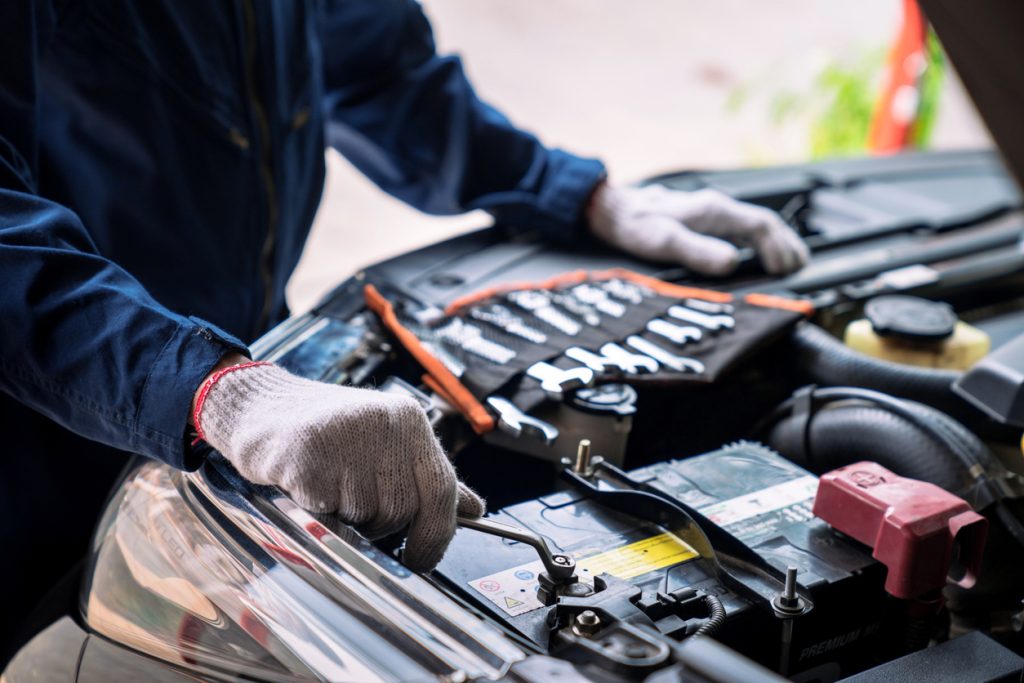
Car battery replacement
Ask for a battery and charging-system assessment before assuming replacement is the only solution. Describe slow starting, repeated discharge, warning lights and how long the vehicle has been parked. A replacement enquiry should identify the vehicle model and year, existing battery specification and any start-stop system.
Request the proposed replacement specification, warranty, fitting cost and disposal arrangements for the old battery. Some vehicles require a registration or reset procedure after fitting; ask whether the technician has checked the requirements for your model. Our car battery buying guide gives a related preparation checklist.
Engine coolant and overheating
Use the coolant specification in your vehicle’s manual rather than choosing solely by colour. For example, Toyota’s model-specific instructions state the required coolant and warn against removing coolant caps while hot. Your own model’s instructions control the product and procedure.
If overheating or a warning occurs, follow the vehicle’s emergency instructions and get help. Do not open a hot pressurised cooling system. Recurring coolant loss needs investigation; repeated topping-up is not a diagnosis or a repair. Give the technician the warning text and observed symptoms.
Windscreen repair, chip repair or replacement?
A technician should assess the damage, position, size, glass type and effect on visibility. Ask whether repair is possible and what happens if the damage spreads during assessment or repair. A quotation should identify the replacement glass where needed and whether cameras, sensors or other features require additional work.
Use the chipped windscreen guide and windscreen replacement guide for enquiry preparation. Do not promise that every chip can be repaired or that a repaired screen will be visually perfect.
Alloy-wheel repair and safe assessment
Describe whether the problem is cosmetic scuffing, suspected bending, a crack or repeated pressure loss. Ask for a structural assessment before choosing a cosmetic finish. Clarify tyre removal, balancing, finish, repair limitations and warranty in the quote. A cosmetic repair should not hide damage that affects roadworthiness.
If the car cannot be driven safely, arrange recovery instead of trying to reach a workshop. Confirm whether the provider can transport the vehicle type and what destination is included.
| Problem | Details to provide |
|---|---|
| Flat battery | Vehicle, warning lights, starting behaviour and previous attempts. |
| Coolant warning | Exact message, temperature indication and any visible leak. |
| Windscreen damage | Location and description of damage, model and glass features. |
| Wheel damage | Impact history, vibration, pressure loss and visible damage. |
Breakdown cover across African countries
For breakdown cover in Nigeria, Ghana, Kenya or South Africa, confirm the service territory, operator and contract. Cross-border recovery is not automatic. Ask about call-outs, towing distance, home assistance, excluded repairs, commercial use and payment obligations. A one-off rescue booking differs from an annual cover policy.
Read our Nigeria breakdown cover guide and request actual local availability from the proposed provider. Do not infer nationwide or multi-country cover from a generic article.
Vehicle assistance enquiry checklist
Use this checklist to prepare your enquiry. Selections stay in this page only.
How Travo can assist
Send the vehicle and journey details to Travo’s team to discuss breakdown response, recovery coordination or an alternative driver and transport booking. Confirm provider availability and the scope before accepting a quote. Keep the repair record and any replaced-part warranty for future reference.
Related guides
- Driving Tests, Licence Renewal and Road Rules: A UK Guide for Nigerian Travellers
- UK Car Insurance, Tax and Small SUV Buying: A New Driver Checklist
