


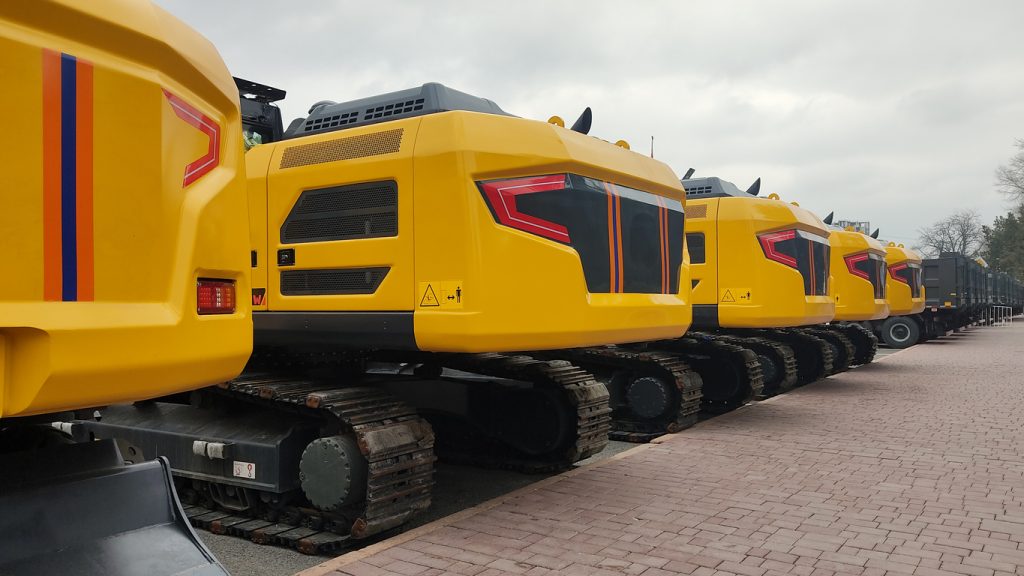
Booking heavy equipment transport in Lagos starts with the machine, not a trailer name. An excavator, factory generator or industrial vessel may need a lowbed, flatbed or another specialist configuration. The complete loaded vehicle must fit the proposed route and both sites.
Oversized cargo and abnormal loads: what changes?
Weight is only one consideration. A light but wide fabrication can be harder to move than a compact heavy machine. Height, width, length, axle loading and the ability to negotiate turns all affect feasibility. Give dimensions in transport condition, including packaging and attachments that will remain fitted.
For oversized cargo transport in Lagos or an abnormal load transport request, ask who assesses the route, confirms applicable approvals and arranges escorts when required. Do not assume an escort vehicle grants permission to use any road. Requirements and restrictions must be checked for the actual movement.
What a machinery quote needs
| Detail | Why the transporter needs it |
|---|---|
| Manufacturer, model, weight and dimensions | Vehicle, deck clearance and load distribution assessment |
| Running or non-running condition | Ramp, winch or lifting plan |
| Photos and lifting information | Securing points and suitable handling equipment |
| Both site entrances and ground conditions | Turning space, access and unloading feasibility |
| Collection readiness and receiving window | Vehicle, crew and site coordination |
Use the manufacturer’s transport instructions where available. Declare loose attachments, fluids and any batteries or hazardous contents for assessment. The loading team should agree the method and securing plan before the vehicle arrives; the transport article cannot replace that assessment.
Heavy equipment transport in Nigeria is one of the most sensitive and high-risk logistics operations. It is not about moving regular goods—it is about relocating machines that build roads, power industries, and drive construction projects across the country.
From excavators to generators, bulldozers to cranes, most of these movements start around major logistics entry points like Apapa Port Complex and Tin Can Island Port before being carefully transported to project sites across Nigeria.
One mistake in handling, loading, or routing can damage expensive machinery or delay entire construction projects.
What Heavy Equipment Transport Actually Means
Heavy equipment transport refers to the movement of large industrial or construction machinery using specialized haulage systems.
In practical terms, it includes:
- Excavators and bulldozers
- Cranes and lifting equipment
- Generators and power systems
- Industrial compressors and pumps
- Road construction machinery
- Oil and gas field equipment
These machines are not just heavy—they are often expensive, sensitive, and project-critical.
Why Heavy Equipment Transport Is Different in Nigeria
Unlike standard cargo, heavy equipment transport requires extra planning because:
- Equipment cannot be easily loaded or unloaded without machinery
- Roads in some areas cannot support heavy loads
- Urban congestion affects movement timing
- Permits may be required for oversized or overweight loads
- Equipment must be protected from vibration and damage
- Delivery timing is tied to project schedules
In many cases, delays in transport can stop entire construction projects.
Where Heavy Equipment Movement Usually Starts
Most heavy equipment enters Nigeria through Lagos due to port and industrial activity:
- Apapa Port Complex
- Tin Can Island Port
- Industrial zones in Ikeja, Lekki, and Ogun axis
From there, equipment is distributed to construction sites, factories, and infrastructure projects nationwide.
How Heavy Equipment Transport Works
A properly managed heavy equipment logistics process usually follows this flow:
- Equipment arrival at port or warehouse
- Inspection and condition assessment
- Selection of suitable transport trailer
- Loading using cranes or lifting equipment
- Secure fastening and stabilization
- Route planning and approval
- Interstate or local transport
- Delivery and offloading at project site
Every stage must be carefully controlled to prevent damage.
Types of Equipment Used for Transport
Different machines require different transport solutions:
- Low-bed trailers for tall and heavy machinery
- Flatbed trailers for standard heavy loads
- Multi-axle trailers for extreme weight distribution
- Extendable trailers for long industrial equipment
- Crane-assisted loading systems for safe handling
The wrong equipment choice can lead to serious transport risks.
Real Challenges in Heavy Equipment Transport in Nigeria
This sector faces practical challenges such as:
- Poor road conditions on interstate routes
- Traffic congestion in Lagos and urban centers
- Fuel cost fluctuations affecting long-distance haulage
- Security checkpoints on highways
- Delays in loading or unloading at project sites
- Permit requirements for oversized machinery movement
These factors make coordination more important than speed.
Why Timing Matters in Equipment Logistics
Heavy equipment is often tied to active projects, so delays can cause:
- Construction downtime
- Financial losses for contractors
- Missed project deadlines
- Idle workers and equipment
- Contract penalties
In many cases, transport delays cost more than the actual logistics fee.
Common Mistakes in Heavy Equipment Transport
Many problems occur due to avoidable errors such as:
- Using standard trucks instead of specialized trailers
- Poor securing of equipment during loading
- No route survey before movement
- Ignoring weight restrictions on bridges
- Late coordination with project site teams
- Lack of backup plans for breakdowns
These mistakes can damage equipment or delay projects significantly.
Who Uses Heavy Equipment Transport in Nigeria
This service is essential for:
- Construction companies
- Road and infrastructure contractors
- Oil and gas operators
- Manufacturing industries
- Power and energy projects
- Government development agencies
Any large infrastructure or industrial project depends on it.
How Travo.ng Supports Heavy Equipment Transport in Nigeria
Travo.ng provides structured logistics coordination for heavy equipment transport designed to ensure safe, timely, and well-managed movement across Nigeria.
Support typically includes:
- Equipment pickup coordination from Apapa and Tin Can ports Apapa Port Complex and Tin Can Island Port
- Low-bed and specialized trailer arrangement
- Route planning and transport feasibility checks
- Crane and loading coordination support
- Interstate transport and real-time tracking
- Delivery to construction or industrial sites
- Backup logistics for delays or breakdowns
The focus is on ensuring heavy equipment moves safely, efficiently, and without disrupting project timelines.
For businesses in Nigeria, this means reduced downtime, better planning, and more reliable project execution.
Compare the whole machinery movement cost
A useful quote separates the trailer, mobilisation, survey, required approvals or escorts, crane or winch work, loading crew, waiting and offloading. Confirm cargo value and insurance scope, including whether loading and unloading are covered. A cheaper trailer-only price may exclude the work needed to complete delivery.
For imported machines, coordinate release and collection with the customs-cleared cargo delivery checklist. For production-site moves, use factory logistics and warehouse transfers; for site supplies, see construction material haulage. A long journey also needs the interstate haulage planning checks.
Project cargo haulage Lagos: plan the project sequence
Project cargo may involve several machines, components or deliveries that must arrive in a particular order. Give each item an identifier, transport weight, dimensions and destination position. Separate transport from installation: delivering a generator to the gate is different from lifting it onto its final base.
Agree the sequence with the receiving team before dispatch. A trailer arriving before ground preparation, access clearance or lifting equipment can create waiting costs and disrupt other work. Record who signs off readiness at origin and destination, and who can approve a revised delivery slot.
Crane transport and equipment hauling
For crane transport Lagos enquiries, identify whether you mean moving a crane as cargo or hiring a crane to load another item. Those are different services. A mobile crane’s transport condition, counterweights and attachments affect the vehicle plan; a lifting job also requires an assessment of the load and work area by the responsible operator.
For non-running equipment, state that it cannot be driven onto a trailer. Ask the team to confirm the loading and recovery method before mobilisation. Disconnecting services, dismantling, draining fluids and securing loose parts should be assigned to competent personnel rather than left for the driver to decide at collection.
Industrial logistics Nigeria: control the handover
Record serial numbers, visible condition, loose accessories and collection authority. Identify the loading supervisor and authorised receiver. Ask about cargo insurance terms, exclusions and the process for reporting damage. Keep the transport record separate from any acceptance test or commissioning record at the destination.
Route planning must consider the loaded dimensions, access restrictions and the receiving site, not only the shortest map distance. Ask which surveys, permissions or escort arrangements apply to the actual movement and who will obtain them. A quoted departure date should remain subject to these preparations being completed.
Our flatbed and lowbed hire guide explains vehicle questions, while construction logistics planning covers phased site supply. For cargo arriving by ship or barge, multimodal logistics Nigeria connects the transfer points. Send Travo a complete equipment schedule through its heavy equipment transport enquiry before confirming your project programme.
Request a machinery transport assessment from Travo.ng
Use Travo’s haulage quote page or contact the coordination team with the cargo, exact addresses and required date. Ask for the recommended vehicle, confirmed availability, loading support, goods-in-transit cover terms and full charges in writing. The website’s indicative price becomes a firm booking only after the load and route are assessed.
Can Travo quote an abnormal load from its weight alone?
No. Provide transport dimensions, machine condition, addresses, access information and loading requirements. Vehicle and route suitability must be assessed before confirming the movement.
