


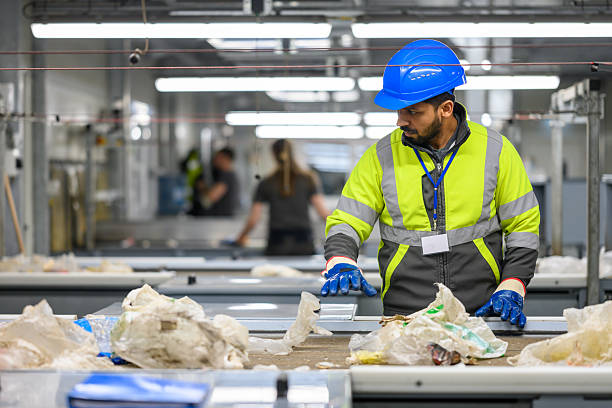
EPR recycling in Nigeria connects producer responsibility with the recovery and management of products or packaging after use. For brands, collectors and recycling startups, a credible programme needs defined responsibilities, suitable receivers and evidence of what happened to the material.
A funded collection campaign is not automatically proof of regulatory compliance or completed recycling. Travo can discuss collection and recycling-logistics enquiries, while obligations, scheme recognition and technical reporting requirements should be confirmed with the responsible authority and qualified advisers.
What is extended producer responsibility?
Extended producer responsibility, often shortened to EPR, places responsibility for end-of-life management within the product’s wider life cycle. The applicable obligations depend on the sector and current framework; a packaging programme should not simply copy an electrical-waste checklist.
NESREA publishes Nigerian guidance for EPR packaging. Use the current official guidance and ask which registration, programme, reporting and recovery requirements apply to your business. Do not rely on a collector’s brochure as evidence that a scheme is recognised.
If working through a producer responsibility organisation or another collective arrangement, confirm its current status, accepted scope and allocation of obligations. A membership payment or waste pickup invoice should not be treated as completing every responsibility.
Brand-funded recycling: define what the sponsor buys
A brand-funded programme may pay for community collection, aggregation, transport, processing or verified recovery outcomes. Define the deliverable and payment basis before announcing targets. Material collected and material recycled are different measures.
| Programme element | Question to resolve |
|---|---|
| Target material | Which product, polymer or packaging stream is covered? |
| Collection activity | Who operates the route and which locations are authorised? |
| Acceptance | What contamination and grade limits apply? |
| Payment | Is funding based on collection, accepted weight or confirmed processing? |
| Evidence | Which weighing, custody and receiving records support the claim? |
| Reporting | Who validates outcomes and prevents duplicate counting? |
Agree whether the sponsor receives a service report, an independently verified outcome or evidence for a particular compliance process. Avoid using those descriptions interchangeably. Recovery claims should identify the period, geography, materials and limitations.
Plastic recovery and recycling supply chains
Map the chain from households, businesses or collection points to aggregators and processors. Identify each handover, accepted grade and rejection process. Confirm that downstream capacity exists before collecting more than the programme can manage.
For PET bottles and scrap, use our plastic recycling and buy-back guide to compare specifications, weighing and payment terms. A quoted buyer rate is not a permanent revenue guarantee.
Travo can discuss transport coordination for a defined material stream. Ordinary bulk logistics should not be assumed to cover regulated-waste authorisations; confirm the provider and handling route for the actual load.
Community and neighbourhood recycling
Start with an accepted stream and a receiver, then create supervised collection points and understandable sorting instructions. Agree collection frequency, access, storage limits and who deals with rejected material.
Record who owns the material and how any incentive is calculated. A community programme should not depend on residents believing every bag will earn cash. Explain whether collection is free, paid, sponsored or credited, and keep complaints and weighing disputes manageable.
Consider the people already collecting and aggregating material. Clear roles, safe working arrangements and traceable records are more useful than replacing an existing network with a campaign that has no continuing destination or funding.
Starting a recycling or waste-management business
Choose the service model first: collection, aggregation, sorting, processing or recycled-product manufacture. Each has different equipment, site, staffing, permits and customer requirements. A processing machine alone does not create a complete business.
Before leasing a site or buying equipment, confirm feedstock quality and supply, prospective buyers’ specifications, local operating requirements and residue management. Review NESREA’s permit information and the relevant state authority, then establish which approvals apply to the actual facility and activities.
Test a small, lawful operating model and record real quantities, rejection rates, transport costs and payment cycles. Scaling a poorly understood stream can magnify storage and cash-flow problems.
Recycling investment: what should a proposal show?
- Credible material supply, with grades and collection volumes supported by records.
- Offtake or customer interest tied to defined output specifications.
- Site, environmental and operating requirements reviewed.
- Equipment capacity distinguished from measured throughput and uptime.
- Sorting losses, residues, maintenance, utilities and transport included in costs.
- Working-capital needs and realistic payment timing.
- Sensitivity to buying rates, selling rates and rejected loads.
- Accountable management, record controls and reporting responsibilities.
Separate signed agreements from expressions of interest. A large waste-generation statistic does not establish that your business can obtain suitable feedstock at an economic cost. Nor does a proposed brand partnership guarantee continuing funding.
Investment decisions need project-specific technical, legal and financial review. This guide provides due-diligence questions rather than promises of returns, grants or guaranteed funding.
Circular economy, waste-to-value and zero-waste claims
A circular-economy approach can include avoiding waste, extending product use, reuse and appropriate material recovery. Selling collected plastic is one activity within that wider system. It does not automatically prove a closed-loop product or zero-waste operation.
Define terms used in your report. State whether figures represent collection, accepted processing input or verified recycled output. Account for residues and do not count one load twice because two partners reported the same handover.
For a premises programme, connect recovery planning to routine waste collection, manufacturing recovery and contractor comparison.
EPR and recycling project checklist
Use this checklist to prepare your enquiry. Selections stay in this page only.
How Travo can assist
Send Travo the material stream, locations, estimated quantities, collection model and intended reporting requirement. Ask for the proposed logistics scope, named receiving arrangements and itemised quotation. Regulatory advice, scheme administration and independent verification should be explicitly assigned where needed.
Common EPR questions
Does paying for collection prove EPR compliance?
Not by itself. Confirm the relevant obligations and the evidence required for your sector and programme.
Does Travo guarantee buyers, brand funding or investment?
Those arrangements need separate confirmation. A collection or transport enquiry is not a guaranteed sale, sponsorship or financing offer.
