


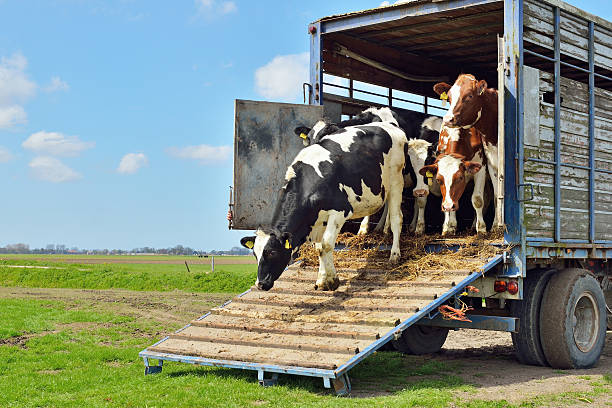
Exporting live animals from Nigeria requires much more planning than ordinary domestic transportation. Animals may need to travel from a farm, ranch, breeding facility or holding location to an airport, seaport or designated export point before continuing to another country.
Animal transport for export Nigeria involves coordinating the animals, suitable transportation, veterinary requirements, export documentation and the destination country’s import conditions. A problem at any stage can cause delays, additional costs or rejection of the shipment.
Which Animals Can Be Prepared for Export?
The type of animal being exported affects the transportation and documentation requirements. Nigeria’s Agricultural Quarantine Service carries out health inspections for export and import of live animals including cattle, horses, sheep, goats, dogs, cats, parent stock and pet birds. (National Agricultural Quarantine Service)
The requirements for livestock may therefore differ from those for pets, breeding animals, birds or wildlife. Exporters should establish the exact requirements for their particular species before arranging transportation.
Start With the Destination Country’s Requirements
Before moving an animal toward an international departure point, the exporter should understand what the destination country requires.
This can include import permits, veterinary health documentation, laboratory test results, quarantine conditions and other certificates. NAQS states that international veterinary health certificates, quarantine documentation and laboratory test results can form part of the requirements for exporting animals and animal products. (National Agricultural Quarantine Service)
The destination country’s requirements should be confirmed before transportation is booked. This prevents a situation where animals arrive at the export point but cannot proceed because an important document or condition is missing.
Veterinary Inspection and Export Documentation
Animal exports from Nigeria are subject to quarantine inspection and certification.
NAQS’s current animal export procedure includes applying for an export permit, notifying NAQS, presenting the animals or consignment for inspection, completing applicable quarantine and laboratory procedures, and obtaining quarantine clearance for export. (National Agricultural Quarantine Service)
The exporter should therefore treat documentation as part of the transport plan rather than something to arrange after the animals have already started travelling.
Moving Animals From the Farm to the Export Point
The domestic journey may begin hundreds of kilometres from the airport, seaport or border through which the animals will leave Nigeria.
For example, livestock could need to move from a farm in northern Nigeria toward an international departure point, while horses, breeding stock or other animals may be collected from farms and transported to facilities closer to the export location.
The vehicle should be appropriate for the species and number of animals. Good ventilation, secure containment, suitable flooring and careful loading are particularly important for longer journeys.
Preparing Animals for a Long Journey
Animals should be assessed before transportation, particularly when the journey involves multiple stages.
The exporter should consider the animal’s health, age, species, physical condition and ability to tolerate the planned journey. Feeding, watering and rest arrangements should also be planned according to the species and veterinary guidance.
The receiving party and transport team should know when the animals are expected to arrive so they are not left waiting unnecessarily at an airport, port or holding facility.
Airport and Port Coordination
International animal transport often involves more than one logistics provider. The local transporter may handle the journey from the farm to an airport or other departure point, while a specialist carrier or freight operator may handle the international leg.
This makes communication particularly important.
The pickup time, export point, documentation status, handling requirements and expected arrival time should be confirmed in advance. Any delay on the domestic leg can affect check-in, inspection or other scheduled export procedures.
Wildlife and Protected Animals Require Extra Attention
Wildlife and endangered species should not be treated like ordinary livestock shipments.
NAQS specifically states that CITES export permits are required for wildlife and endangered species as part of its animal export requirements. (National Agricultural Quarantine Service)
CITES requirements can vary according to the species and type of international trade involved. Exporters dealing with wildlife should therefore establish the applicable permits and restrictions before making transportation arrangements.
Managing Heat, Traffic and Delays in Nigeria
Domestic transportation to an export point can be affected by Nigerian road traffic, weather, poor road conditions and unexpected vehicle delays.
Heat is an additional consideration for live animals. A vehicle should provide appropriate ventilation, and unnecessary delays should be avoided where possible.
For long-distance movements, the transport plan should include contingencies for vehicle problems, traffic disruptions and changes to the expected journey time.
How Much Does Animal Export Transport Cost in Nigeria?
There is no single price for transporting animals for export. The total cost can depend on:
• Animal species and number
• Farm or collection location
• Export airport, seaport or border
• Domestic transport distance
• Vehicle type and capacity
• Veterinary inspection and certification requirements
• Quarantine arrangements
• Loading and unloading requirements
• Waiting time and delays
• International freight arrangements
• Destination-country requirements
For this reason, exporters should provide complete shipment information before requesting a transport quotation.
Arranging Animal Transport for Export With Travo.ng
Travo.ng can help coordinate the domestic transportation side of an animal export movement where the requested service is available.
Exporters can provide the pickup location, animal species, number of animals, destination country, intended export point and preferred date. This information helps establish the appropriate transportation requirements and coordinate the movement toward the airport, seaport or other approved departure point.
For international animal shipments, transportation should be planned alongside veterinary and quarantine requirements from the beginning. Proper coordination can reduce avoidable delays and help ensure the animals reach the export point in suitable condition.
