


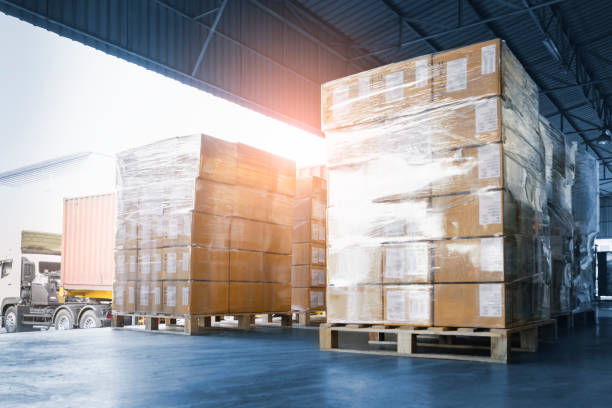
A warehouse with a sprinkler system and fire hydrants in Ilupeju can be a valuable option for businesses storing large volumes of goods, particularly where fire protection is an important part of the warehouse specification.
For FMCG distributors, manufacturers, importers, e-commerce businesses and logistics operators, fire protection should be assessed alongside storage capacity, truck access, power supply and the overall condition of the building.
Current Ilupeju listings include industrial warehouses ranging from smaller facilities to large warehouses in the industrial estate. One current listing, for example, advertises a 32,000 sq ft warehouse with attached offices and a self-compound at ₦4,500 per sq ft per year. (Private Property Nigeria)
What Does a Sprinkler System Do?
A warehouse sprinkler system is designed to discharge water when heat activates the relevant sprinkler head.
In a properly designed warehouse, sprinklers can help control a fire during its early stages and limit the spread of flames while emergency response takes place.
When inspecting a warehouse, don’t simply accept the statement that it has “sprinklers.”
Ask about:
- Number and location of sprinkler heads
- Water supply
- Pump capacity
- Storage tank capacity
- Pressure
- Automatic activation
- Maintenance records
- Inspection history
- Alarm integration
- Areas covered by the system
The system should be appropriate for the warehouse’s size, layout and stored goods.
What Are Fire Hydrants?
Fire hydrants provide connection points for firefighting hoses and equipment.
In a large warehouse, hydrants can form part of the wider fire-protection infrastructure alongside sprinklers, extinguishers, alarms and emergency exits.
During inspection, check that hydrants are:
- Clearly marked
- Accessible
- Properly positioned
- Connected to an adequate water supply
- Free from obstruction
- Maintained
- Supported by appropriate firefighting equipment
Ask the property owner for maintenance and inspection records rather than assuming that installed equipment is operational.
Why Fire Protection Matters in a Warehouse
Warehouses can contain large quantities of combustible materials, including cartons, packaging, plastics, textiles, furniture and other products.
A fire can therefore affect not only the building but also:
- Inventory
- Vehicles
- Equipment
- Business records
- Customer orders
- Supply chains
A proper fire-protection system can form an important part of the risk-management plan.
Check the Water Supply
Sprinklers and hydrants are only useful if there is sufficient water available when they are needed.
Ask whether the warehouse has:
- Dedicated fire-water tanks
- Fire pumps
- Backup pumps
- Pressure systems
- Reliable water storage
- Automatic pump activation
- Emergency power
Find out whether the fire-water system shares its water supply with ordinary warehouse operations.
Check the Fire Pump
The pump is an important part of a warehouse fire-protection system.
Ask for information about:
- Pump capacity
- Pump condition
- Maintenance schedule
- Automatic starting system
- Backup arrangements
- Generator connection
- Recent testing
A warehouse may have visible sprinkler pipes and hydrants while still having an inadequate or poorly maintained water-delivery system.
Inspect the Sprinkler Layout
Look up at the ceiling during the inspection.
Check whether sprinkler heads are properly positioned and whether anything has been installed that could interfere with their operation.
For example, new racking, high stacks or suspended structures can change the warehouse’s fire-protection requirements.
If the warehouse has recently been modified, ask whether the fire system was reassessed after the changes.
Check Fire Exits and Emergency Access
Sprinklers and hydrants are not the entire fire-safety system.
Also inspect:
- Emergency exits
- Exit signage
- Emergency lighting
- Fire alarms
- Fire extinguishers
- Evacuation routes
- Fire doors
- Assembly areas
- Emergency vehicle access
Make sure stored goods and pallets do not block emergency routes.
Consider Your Type of Inventory
The appropriate fire-protection setup depends partly on what you are storing.
Tell the landlord or facility manager exactly what your business will keep inside the warehouse.
For example, requirements can differ for:
- FMCG
- Paper products
- Textiles
- Plastics
- Electronics
- Furniture
- Chemicals
- Food products
- Packaging materials
Do not assume that a system designed for one type of inventory is automatically suitable for another.
Warehouse Rent in Ilupeju
Ilupeju has an established industrial property market, but warehouse rents vary substantially according to size, condition and specification.
Current listings include an 8,000 sqm warehouse advertised at ₦40,000 per sqm per year, while other Ilupeju facilities are being marketed at different rates depending on the property. (Nigeria Property Centre)
A warehouse with a functioning sprinkler and hydrant system may command a different price from a basic warehouse because of the additional infrastructure and maintenance involved.
When comparing properties, consider the complete occupancy cost rather than rent alone.
Check Truck Access
Fire protection should not distract from the warehouse’s daily logistics requirements.
Inspect whether trucks can easily access the property and whether emergency vehicles can also reach the building.
Check:
- Entrance width
- Truck turning space
- Loading bays
- Yard space
- Parking
- Road condition
- Clearance around the building
A warehouse can have excellent internal facilities but still create operational problems if delivery vehicles struggle to access it.
Power and Fire-Safety Systems
Ask whether the fire pumps and related systems have reliable backup power.
A warehouse should have a clear plan for maintaining its fire-protection systems when normal electricity is unavailable.
Ask:
- Is there a generator?
- Does the fire pump connect to backup power?
- Is there automatic changeover?
- Who pays for diesel?
- How frequently is the system tested?
- Who maintains the equipment?
Keep documentation of inspections and maintenance rather than relying solely on verbal assurances.
Warehouse Insurance
Before storing valuable inventory, discuss insurance requirements with your insurer.
The insurer may want information about:
- Building construction
- Fire protection
- Sprinkler systems
- Hydrants
- Security
- Electrical installations
- Inventory value
- Fire-risk controls
Having sprinklers installed does not automatically mean every insurance requirement has been satisfied.
Check the Warehouse Before Signing
Before committing to an Ilupeju warehouse, physically inspect:
- Sprinkler system
- Fire hydrants
- Fire-water tanks
- Fire pumps
- Fire alarms
- Fire extinguishers
- Emergency exits
- Emergency lighting
- Generator
- Electrical system
- Drainage
- Roof
- Floor
- Loading bays
- Truck access
- Security
Ask to see maintenance and inspection records for critical fire-protection equipment.
Tribal and Cultural Considerations
Ilupeju’s industrial environment includes businesses, workers, landlords, transporters and communities from different ethnic and cultural backgrounds.
When dealing with property owners, agents and local stakeholders, base decisions on verified documentation, safety requirements and contractual terms rather than assumptions about someone’s tribe or background.
Where local arrangements affect access or warehouse operations, establish the actual requirements and document important agreements.
Warehouse Logistics With Travo.ng
Fire protection is important, but the warehouse still needs to function efficiently as part of the wider supply chain.
Travo.ng can support related delivery, cargo movement, transportation coordination and logistics requirements for businesses operating warehouses in Lagos.
For a warehouse handling significant inventory, plan fire protection, storage, receiving, dispatch and transportation as parts of the same operation.
Questions to Ask the Landlord
Before renting a warehouse with sprinklers and hydrants in Ilupeju, ask:
- Are the sprinklers currently operational?
- When were they last tested?
- How much fire-water storage is available?
- What is the fire-pump capacity?
- Are the hydrants functional?
- Is there backup power for the fire system?
- Are fire alarms installed?
- Are emergency exits properly marked?
- Can I see maintenance records?
- Does the system cover the entire warehouse?
- Can my type of inventory be stored safely?
- Are there additional service or maintenance charges?
- Who is responsible for maintaining the fire-protection system?
- Is there adequate access for fire-service vehicles?
A warehouse with sprinklers and hydrants should be evaluated as a complete fire-protection system, not simply as a building with pipes and firefighting equipment. The condition, capacity, maintenance and suitability for your inventory are what matter when deciding whether the facility works for your business.
