


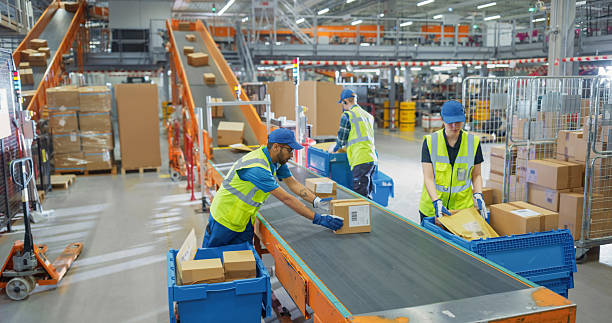
An overflow storage warehouse in Lagos is useful when your main warehouse is full but you are not ready to commit to a larger permanent facility.
This type of storage can help retailers, importers, distributors, e-commerce businesses and manufacturers handle temporary increases in inventory without disrupting their main operations.
When Do You Need Overflow Warehouse Space?
Overflow storage becomes useful when your normal warehouse cannot comfortably accommodate incoming stock.
Common situations include:
- Seasonal inventory increases
- Large import shipments arriving at once
- Promotional or festive-season stock
- Temporary relocation
- Warehouse renovations
- Unexpected increases in customer orders
- Business expansion
- Delayed distribution
- Excess packaging or equipment
- Short-term project materials
Instead of immediately renting a much larger warehouse, a business can use additional storage space for the period it actually needs.
Short-Term vs Long-Term Warehouse Storage
Not every overflow requirement needs a traditional annual warehouse lease.
Depending on your volume, you may need storage for:
- A few weeks
- One to three months
- Six months
- A full year
Flexible storage providers in Lagos offer different arrangements, including pallet storage, private units and short-term business storage. Some facilities also provide pickup and delivery services. (Hugel Storage)
The right arrangement depends on how quickly the additional stock will move.
How Much Does Overflow Storage Cost in Lagos?
The cost depends on the location, storage format, security, accessibility and duration.
For conventional warehouse space, published 2026 Lagos market estimates show substantial differences between locations, with indicative annual rates ranging from about ₦18,000 per sqm in parts of the Mowe corridor to ₦120,000 per sqm in premium Apapa locations. (Rent in Lagos)
For smaller businesses, pallet or unit-based storage can sometimes be more practical than leasing hundreds of square metres.
For example, some Lagos storage providers advertise pallet-based pricing and private storage units rather than requiring customers to rent an entire warehouse. (Hugel Storage)
What Should Be Stored in Overflow Space?
Overflow warehouses are particularly useful for goods that do not require specialised temperature control.
Examples include:
- Packaged FMCG products
- Clothing
- Shoes and accessories
- Household products
- Electronics
- Furniture
- Packaging materials
- Spare parts
- E-commerce inventory
- Business equipment
If the goods are temperature-sensitive, pharmaceutical, hazardous or highly perishable, confirm that the facility has the appropriate environmental controls and handling procedures before moving stock.
Security Should Be a Priority
Temporary storage does not mean compromising on security.
Before moving inventory into an overflow warehouse, check for:
- Perimeter security
- CCTV
- Security personnel
- Controlled access
- Visitor records
- Fire protection
- Adequate lighting
- Inventory access procedures
- Insurance arrangements
Some Lagos storage facilities specifically advertise 24-hour security, CCTV, insurance and controlled access for stored goods. (Nigeria PhoneBook)
Ask whether your business will have direct access to the goods or whether every collection requires advance booking.
Check Vehicle Access
Your overflow warehouse should be convenient to reach when stock needs to be moved.
For larger inventory volumes, inspect:
- Entrance width
- Loading area
- Truck access
- Parking space
- Forklift availability
- Loading and unloading procedures
- Operating hours
If stock will be moved frequently between your main warehouse and the overflow facility, calculate the additional transport cost before choosing a location.
A cheaper warehouse farther away may cost more overall if trucks have to make frequent long-distance trips.
Consider Location Carefully
The best location depends on where your customers and main warehouse are located.
For example, a business distributing across Lagos may consider industrial and logistics corridors around Ikeja, Oshodi, Isolo, Amuwo-Odofin, Apapa or the Lagos-Ogun corridor.
Businesses handling port-related inventory may place greater importance on proximity to the port corridors, while an e-commerce business serving mainland customers may prioritise access to major distribution routes.
Inventory Management Matters
Overflow storage should not become a place where products disappear into piles of unsorted stock.
Before moving inventory, establish:
- Stock identification
- SKU records
- Quantity records
- Receiving procedures
- Dispatch procedures
- Stock rotation
- Damage reporting
- Regular inventory checks
For short-term overflow, clearly label which goods belong to the main warehouse and which are being held temporarily.
This makes it easier to retrieve products when customer orders increase.
Calculate the Full Cost
Do not compare warehouses using rent alone.
Consider:
- Storage rent
- Security
- Service charges
- Loading and unloading
- Transportation
- Forklift charges
- Pallet charges
- Insurance
- Power
- Handling fees
- Collection charges
- VAT or other applicable charges
A flexible storage provider may be more economical for a small volume, while a conventional warehouse lease may make more sense for a business storing large quantities continuously.
Tribal and Cultural Considerations in Lagos
Lagos storage and logistics operations involve people from many different backgrounds.
Businesses should avoid assumptions about particular ethnic or cultural groups and instead establish clear rules for drivers, warehouse workers, security staff and contractors.
Confirm practical matters such as operating hours, loading schedules, parking arrangements, security procedures and relationships with neighbouring businesses or the surrounding community.
Using Travo.ng for Overflow Logistics
Finding additional storage is only one part of solving an inventory overflow problem.
Travo.ng can support the logistics side through relevant delivery, cargo movement, transport coordination and business logistics services.
This can help connect your main warehouse, overflow facility and customers so that temporary storage does not create unnecessary delays in your distribution process.
Overflow Warehouse Inspection Checklist
Before committing to a facility, confirm:
- How much usable storage space is available?
- Is short-term storage accepted?
- What is the minimum rental period?
- Is pricing based on sqm, pallet, container or unit?
- Can trucks access the facility?
- Is loading and unloading included?
- Is forklift handling available?
- How is inventory recorded?
- What security systems are installed?
- Is insurance available or compulsory?
- What happens if goods are damaged?
- Can you access your stock when needed?
- Are there additional handling or collection fees?
- How quickly can additional space be added?
For businesses in Lagos, overflow storage can provide useful flexibility when inventory temporarily exceeds the capacity of the main warehouse. The key is choosing a facility whose cost, access, security and handling arrangements match how quickly the stock needs to move.
