


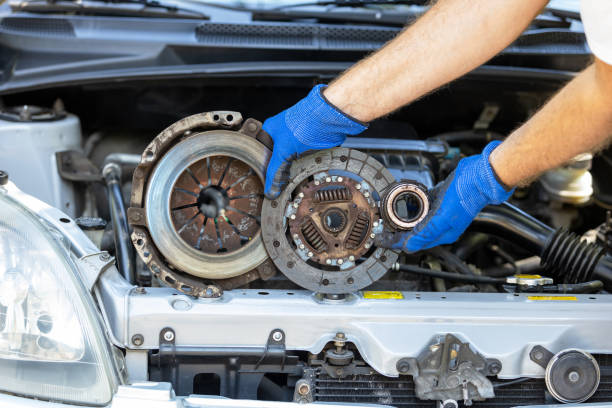
A clutch replacement is the process of changing worn-out clutch components in a manual transmission vehicle so the engine can properly connect and disconnect power from the gearbox.
The clutch is what allows you to change gears smoothly and control power delivery while driving.
What the Clutch System Does
The clutch helps to:
- Connect engine power to the gearbox
- Allow smooth gear changes
- Prevent engine stalling when stopping
- Control vehicle movement from a standstill
Parts Usually Replaced in a Clutch Job
A full clutch replacement may include:
- Clutch disc
- Pressure plate
- Release bearing (throw-out bearing)
- Flywheel (sometimes resurfaced or replaced)
Signs You Need Clutch Replacement
1. Slipping Clutch
- Engine revs increase but car speed doesn’t match
2. Hard Gear Shifting
- Difficult to engage gears
- Grinding sound when changing gears
3. Burning Smell
- Smell from overheating clutch plates
4. High Clutch Pedal
- Pedal feels too high before engagement
5. Loss of Power
- Vehicle struggles to climb or accelerate
6. Vibrations or Jerking
- Car shakes when starting or shifting
Causes of Clutch Wear
- Heavy traffic driving (common in Lagos/Abuja)
- Riding the clutch (keeping foot on pedal)
- Aggressive driving habits
- Overloading vehicle
- High mileage use
Clutch Replacement Process
1. Gearbox Removal
- Transmission is removed from engine
2. Inspection
- Old clutch components are checked
3. Replacement
- Worn parts are replaced with new ones
4. Flywheel Check
- Resurfaced or replaced if damaged
5. Reassembly & Testing
- Gearbox is reinstalled
- Vehicle is tested for smooth shifting
Clutch Replacement Cost in Nigeria (2026 Estimate)
1. Small Cars
- ₦120,000 – ₦300,000
2. Mid-Size Cars / SUVs
- ₦250,000 – ₦600,000
3. Luxury Vehicles
- ₦500,000 – ₦1,500,000+
4. Trucks / Commercial Vehicles
- ₦700,000 – ₦2,000,000+
Labour Cost (Separate)
- ₦50,000 – ₦200,000 depending on engine complexity
Clutch Replacement vs Clutch Repair
| Replacement | Repair |
|---|---|
| Full system change | Minor adjustments |
| Long-term solution | Temporary fix |
| Higher cost | Lower cost |
| More reliable | Less durable |
How Long a Clutch Lasts
- 80,000 – 200,000 km on average
- Shorter in heavy traffic cities
- Depends on driving habits and vehicle load
Risks of Driving with a Bad Clutch
- Complete vehicle breakdown
- Damage to gearbox
- Increased fuel consumption
- Unsafe driving conditions
- Costly transmission repairs
Clutch Replacement for Fleet & Logistics Vehicles
For logistics operators, clutch health is very important because:
- Trucks and vans operate in heavy traffic daily
- Frequent stopping and starting increases wear
- Failure causes delivery delays
- Repairs can take vehicles off the road for long periods
That’s why fleets often use:
- Preventive maintenance schedules
- Driver training on clutch usage
- Regular inspections
How to Extend Clutch Life
- Do not rest foot on clutch pedal
- Avoid aggressive acceleration
- Use handbrake on hills instead of clutch holding
- Avoid overloading vehicles
- Shift gears smoothly
Conclusion
Clutch replacement is a major but necessary vehicle repair that ensures smooth gear shifting and proper power delivery. In Nigeria, frequent traffic conditions make clutch wear common, especially in manual transmission vehicles used for transport and logistics.
