


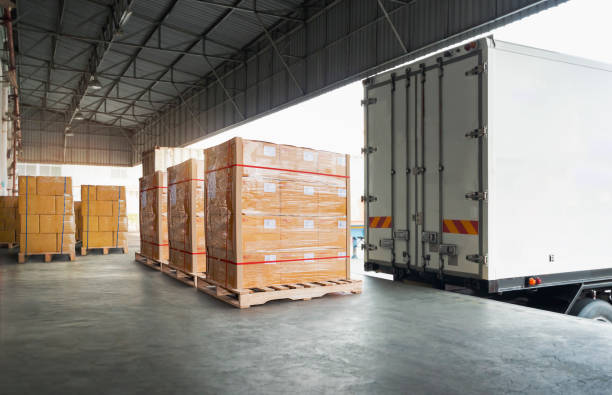
Shipping sounds straightforward until you actually have something important to move.
A business in Lagos needs to send customer orders to Abuja. A manufacturer needs to move goods from a warehouse to another state. Someone relocating wants to send personal belongings ahead of a journey. An online seller needs several packages collected from different locations and delivered to customers.
Each situation involves shipping, but the right solution can be very different.
The biggest mistake is treating every shipment as if it needs the same vehicle, route, delivery speed or handling process. A small document, a 20 kg parcel and several tonnes of commercial goods should not be handled in exactly the same way.
For Nigerians and businesses that regularly move goods, understanding how shipping works can help you choose the right service, control costs and avoid unnecessary delays.
What does shipping actually involve?
Shipping is the process of moving goods or items from one location to another through a transport and logistics network.
Depending on the shipment, this can involve:
- Pickup from the sender
- Packaging and labelling
- Sorting
- Transportation
- Warehousing or temporary storage
- Cargo handling
- Documentation
- Customs processing for international shipments
- Final-mile delivery
- Delivery confirmation
For a simple local parcel, most of these stages may happen quickly.
For commercial cargo moving between cities or across international borders, there can be considerably more coordination involved.
That difference is important when deciding what type of shipping service you need.
Which type of shipping do you actually need?
Before requesting a shipping quote, identify what you are sending and where it is going.
Local parcel shipping
This is suitable for smaller items moving within the same city.
For example, an online business in Lekki may need to send an order to a customer in Ikeja.
A courier or dispatch service may be sufficient.
Interstate shipping
This involves moving goods between Nigerian cities or states.
Common routes include:
- Lagos to Abuja
- Lagos to Port Harcourt
- Lagos to Benin City
- Lagos to Ibadan
- Abuja to Kaduna
- Abuja to Kano
- Port Harcourt to Lagos
The appropriate transport method depends on the shipment’s weight, size, urgency and destination.
Commercial cargo shipping
Businesses moving larger quantities may require cargo logistics, freight forwarding, haulage or other specialised transportation.
This could involve pallets, cartons, equipment, inventory or bulk goods.
International shipping
When goods cross international borders, additional considerations come into play, including customs documentation, prohibited items, destination-country regulations and international transportation arrangements.
The first step is therefore not simply asking, “How much is shipping?”
It is asking, “What kind of shipment am I moving?”
What actually determines the cost of shipping?
There is no universal shipping price in Nigeria.
A quote can depend on several factors.
Weight
A 2 kg parcel and a 30 kg shipment obviously place different demands on transportation.
Dimensions
A lightweight but unusually large package can still require additional space.
Distance
Moving a package from Ikeja to Surulere is completely different from moving it from Lagos to Abuja.
Delivery speed
Urgent or same-day deliveries may cost more than standard delivery.
Pickup requirements
A shipment requiring collection from a warehouse, office or multiple locations may involve additional coordination.
Nature of the goods
Fragile, valuable, temperature-sensitive, oversized or otherwise specialised items may require specific handling.
Destination accessibility
Delivering to a major commercial area can be easier than reaching a remote location with limited road access.
This is why you should provide accurate shipment details when requesting a quote.
Why Lagos-to-Abuja shipping needs proper planning
Lagos and Abuja are two of Nigeria’s biggest commercial centres, making the route important for businesses and individuals.
A typical shipment might start from a warehouse in Lagos, be collected by a logistics provider, transported along the interstate corridor and eventually delivered to a business or residential address in Abuja.
But “Lagos to Abuja” is not enough information to determine the logistics requirements.
The shipper needs to know:
- Where in Lagos?
- Where in Abuja?
- How heavy is the shipment?
- How large is it?
- How urgently is it needed?
- Is it fragile?
- Does it require special handling?
- Is it one package or several?
A carton collected from a business in Ikeja is a different operational job from several pallets collected from a warehouse on the outskirts of Lagos.
How long does shipping take in Nigeria?
Delivery time depends on the route, transport method, shipment type and operating conditions.
A local delivery within Lagos may be completed the same day where the service and route allow it.
An interstate shipment may take longer because it involves longer distances and additional handling.
You should also account for factors such as:
- Traffic
- Road conditions
- Weather
- Vehicle availability
- Loading and unloading
- Weekends and public holidays
- Destination accessibility
- Security and route considerations
Do not plan a critical business operation around an unrealistic delivery promise.
If a customer needs an item by Friday, for example, leaving the shipment until Friday morning is risky.
Build some time into the schedule.
Same-day shipping is useful, but it is not for everything
Same-day delivery makes sense when speed is genuinely important.
A business may need an urgent document delivered across Lagos. A customer may need an order before an event. A replacement component may be required quickly to prevent downtime.
But same-day delivery is not automatically the best choice for every shipment.
If you are moving 500 kg of non-urgent goods between cities, paying a premium for speed may not make financial sense.
The better question is:
How quickly does this shipment genuinely need to arrive?
Once you answer that, you can choose the appropriate service level.
How businesses can make shipping more efficient
For businesses, shipping costs can become a significant operating expense.
The problem becomes more obvious when a company starts receiving dozens of orders every week.
A few practical changes can make the process easier.
Prepare packages before collection
If a rider or vehicle arrives and staff are still looking for products, preparing invoices and searching for packaging materials, valuable time is lost.
Have shipments ready before collection.
Keep accurate records
Record:
- Customer name
- Phone number
- Delivery address
- Shipment contents
- Weight
- Collection date
- Delivery status
- Tracking or reference number
This becomes especially useful when customers start asking, “Where is my order?”
Group deliveries where possible
If several customers are located in the same area, a logistics provider may be able to plan the deliveries more efficiently.
For example, a business with several orders going to different parts of Abuja can organise its daily dispatches rather than sending staff out individually.
Use the right transport method
Do not use a large truck to move a small parcel simply because the truck is available.
Likewise, do not attempt to move heavy commercial cargo using a motorcycle courier.
The vehicle should match the shipment.
What should you never ship without checking first?
Certain goods may be restricted or require special handling.
Depending on the service and destination, restrictions can apply to items such as:
- Dangerous or flammable materials
- Certain chemicals
- Perishable products
- Batteries
- Liquids
- Certain medicines
- Valuable items
- Cash
- Weapons and prohibited goods
International shipments can have additional restrictions imposed by the destination country.
If you are unsure whether something can be shipped, ask the logistics provider before packing it.
Do not wait until the package has already been collected.
Packaging can determine whether your goods arrive intact
Good transportation cannot compensate for poor packaging.
If a glass product is placed inside a weak carton with no protection around it, the risk of damage remains high regardless of how reliable the transport provider is.
For fragile goods:
- Use a strong outer box.
- Protect individual items.
- Fill unnecessary empty space.
- Seal the package properly.
- Clearly identify special handling requirements where applicable.
For commercial goods, packaging should also make loading, counting and identification easier.
If you are sending multiple cartons, label them clearly.
For example:
1 of 5
2 of 5
3 of 5
This makes it easier to identify whether the complete shipment has arrived.
Why the delivery address needs more than a street name
A surprisingly common source of delivery delays is incomplete address information.
“Deliver to Wuse” is not a delivery address.
Provide as much useful information as possible:
- House or building number
- Street
- Estate or complex
- Office name
- Floor or unit
- Landmark where useful
- Recipient’s phone number
For businesses, the company name can also help the driver identify the correct location.
This becomes even more important in large commercial areas, estates and office complexes where several businesses may operate within the same general area.
How tracking helps when shipping important goods
Tracking gives both the sender and recipient visibility into the shipment.
For a business, this can reduce the number of calls asking whether an order has left the warehouse.
For an individual, tracking provides reassurance that the package is progressing toward its destination.
Keep your shipment reference until the delivery is completed.
If the shipment is particularly important, also keep a record of:
- What was sent
- When it was collected
- Who collected it
- Where it was going
- The expected delivery window
This information can be useful if there is a delay or delivery query.
What businesses should consider when shipping across Nigeria
Interstate logistics requires more planning than simply handing a parcel to a driver.
If your business regularly ships goods between Lagos, Abuja, Port Harcourt, Kano, Ibadan or other commercial centres, consider creating a repeatable logistics process.
For example, your company might establish:
- Regular collection days
- Preferred transport routes
- Standard packaging
- Shipment documentation
- Customer notification procedures
- Delivery confirmation
- A process for handling delayed shipments
This reduces the amount of time staff spend improvising every time an order needs to leave the warehouse.
Shipping for online businesses is a different challenge
An e-commerce business may have ten orders today and thirty tomorrow.
The problem is not simply finding a rider.
You need a system for receiving orders, preparing packages, assigning deliveries and confirming successful delivery.
Imagine an online fashion business operating from Lagos.
Orders may come from customers in:
- Lekki
- Ikeja
- Yaba
- Surulere
- Ajah
- Abuja
- Ibadan
Trying to personally deliver every order quickly becomes impractical.
A courier or logistics partner allows the business owner to focus on selling and serving customers while the delivery process is handled separately.
As order volume grows, this can become an important part of the business’s operating model.
When you need more than ordinary courier delivery
Courier services are excellent for smaller shipments, but there is a point where you need a broader logistics solution.
You may require a different service if you are moving:
- Heavy machinery
- Construction materials
- Large quantities of inventory
- Multiple pallets
- Furniture during relocation
- Industrial equipment
- Bulk commercial goods
In these situations, cargo logistics, haulage, freight forwarding or specialised transport may be more appropriate.
Trying to force a large shipment into a standard courier service can create unnecessary cost and handling problems.
International shipping requires more preparation
Shipping outside Nigeria introduces another layer of complexity.
A shipment travelling from Lagos to London, Dubai, Accra or another international destination may need appropriate documentation and customs processing.
Before sending an international package, confirm:
- The destination address
- Contents
- Weight and dimensions
- Declared value
- Required documentation
- Restricted items
- Expected delivery timeframe
- Customs requirements
Do not deliberately provide inaccurate information to make the shipment appear cheaper.
Incorrect declarations can create delays and additional complications.
How to choose a shipping provider in Nigeria
Price is important, but it should not be the only factor.
Before booking, consider whether the provider offers the type of support your shipment requires.
Ask:
- How will my package be collected?
- How will it be transported?
- Can I track the shipment?
- What is the estimated delivery window?
- What happens if delivery is delayed?
- What items are restricted?
- Is proof of delivery available?
- Is the quoted price the full expected cost?
- Can you handle larger or repeat business shipments?
A provider that answers these questions clearly is easier to work with than one that simply gives you a price and leaves you to figure out the rest.
Shipping with Travo.ng
Travo.ng helps individuals and businesses arrange practical shipping and logistics solutions based on what they need to move and where it needs to go.
For smaller shipments, this may involve courier and delivery services.
For businesses, it may involve regular delivery coordination or broader logistics support.
For larger movements, other transport and cargo solutions may be more appropriate.
The advantage of working with a broader logistics provider is that you can discuss the actual shipment rather than trying to decide on a vehicle or service before explaining what you need to move.
When requesting a shipping arrangement, have your pickup location, destination, package dimensions, weight, contents and preferred delivery timeframe ready.
That information makes it much easier to determine the appropriate option.
A practical shipping checklist
Before your shipment leaves, confirm:
- The item is properly packaged.
- The weight and dimensions are accurate.
- The pickup address is complete.
- The recipient’s details are correct.
- The contents comply with shipping restrictions.
- Required documentation has been provided.
- You know the expected delivery timeframe.
- You have a shipment or tracking reference.
- You understand what the quoted price covers.
- The recipient knows to expect the delivery.
For commercial shipments, keep your own record even if the logistics provider also provides tracking.
It gives your business a second point of reference when reconciling orders and deliveries.
The cheapest shipping option is not always the best one
When comparing shipping services, it is tempting to choose the lowest quote.
But consider the cost of the entire process.
A cheap service that arrives two days later than your customer needs may cost your business a sale.
A low-cost transport option that provides no useful delivery visibility may create hours of customer-service work.
A shipment that is poorly handled can cost far more than the original delivery fee if the goods arrive damaged.
Instead of asking only, “Who is cheapest?”, ask:
“Which option gives me the right balance of price, speed, handling and reliability for this shipment?”
That is a much better way to make a shipping decision.
Whether you are sending a parcel across Lagos, moving commercial goods from Lagos to Abuja, fulfilling online orders or arranging a larger logistics movement, proper planning makes the process significantly easier.
With the right shipping partner, you can spend less time worrying about where your goods are and more time focusing on the people and business waiting for them.
