


Updated 28 September 2026 · Travo.ng
Quick answer
To move goods from Nigeria to Côte d’Ivoire by road, you follow the coastal corridor from Lagos through Benin, Togo and Ghana to Abidjan. That is about 986 km, or roughly 15 hours of driving time, before border stops. You cross four frontiers, starting at the Seme–Kraké joint border post. Goods that originate in ECOWAS can qualify for duty-free entry under the ECOWAS Trade Liberalisation Scheme (ETLS) if you have an approved certificate of origin, but VAT still applies. Freight rates are quoted per load, so get a written quote before you ship.
Why the road route still matters
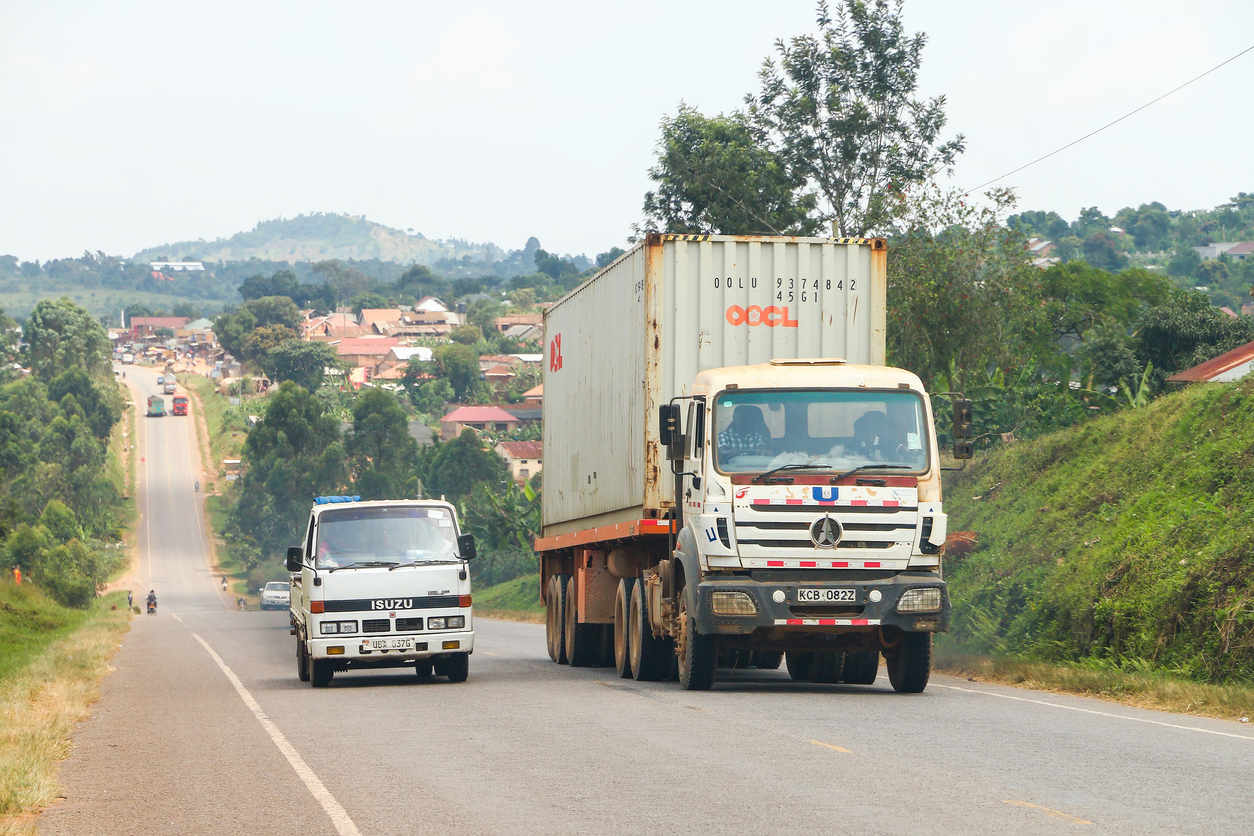
Air cargo between Lagos and Abidjan is fast but expensive per kilo, and sea freight needs port slots and container volumes that many small exporters do not have. Road freight fills the gap. It suits part-loads, mixed consignments, fast-moving consumer goods, building materials, agricultural produce and goods for traders on both ends. The corridor links some of West Africa’s biggest commercial cities: Lagos, Cotonou, Lomé, Accra and Abidjan.
The route: Lagos to Abidjan by road
| Leg | Border crossing | Notes |
|---|---|---|
| Lagos to Cotonou (Benin) | Seme (Nigeria) – Kraké (Benin) | ECOWAS joint border post, formally opened 23 October 2018 |
| Cotonou to Lomé (Togo) | Benin–Togo coastal crossing | Short coastal leg |
| Lomé to Accra (Ghana) | Lomé – Aflao (Ghana) | Aflao is Ghana’s border town with Togo, in the Volta Region |
| Accra to Abidjan (Côte d’Ivoire) | Elubo (Ghana) – Côte d’Ivoire | Elubo is in Ghana’s Western Region; traffic includes trucks and buses |
Sources: Wikipedia entries for Seme Border, Aflao and Elubo; Rome2Rio Lagos–Abidjan route data (about 612 miles or 986 km, about 15 hours of driving).
In practice, trucks take much longer than 15 hours of driving time. Expect border processing at four frontiers, rest stops, night driving limits and congestion around Lagos, Cotonou, Accra and Abidjan. Plan in days, not hours, and get a transit estimate in writing from your haulier.
How cross-border road freight works, step by step
- Describe the cargo. Give the goods description, HS code if you know it, weight, volume, packaging, value, and whether it is fragile, perishable or hazardous.
- Check origin and duty status. If the goods originate in ECOWAS, check whether the product and the producing enterprise are approved under ETLS (see below). If they are not, standard Ivorian import duties apply.
- Choose the load type. A full truckload (FTL) is fastest and most secure for large volumes. Groupage or part-load is cheaper for smaller consignments but can wait for a truck to fill.
- Appoint clearing agents. Export formalities are handled in Nigeria, transit through Benin, Togo and Ghana, and import clearance in Côte d’Ivoire. Use licensed customs agents at each end.
- Insure the goods. Ask for goods-in-transit cover that is valid for every country on the route, not just Nigeria.
- Load, seal and track. Photograph the cargo and the seal numbers, share the driver and truck details with the consignee, and track the truck at each border.
- Clear and deliver. The consignee or their agent completes import clearance in Côte d’Ivoire and pays duties and VAT before release.
ETLS: how ECOWAS goods can move duty-free
The ECOWAS Trade Liberalisation Scheme lets approved goods that originate in the region move between member states without customs duties. According to the ETLS FAQ:
- It covers agricultural and livestock products, fishery products, artisanal handicrafts and industrial goods, all of which must originate in ECOWAS.
- Industrial goods need a certificate of origin. Each certificate covers one product type and one destination country.
- Certificates are issued by designated national authorities, such as chambers of commerce or trade and industry ministries. Approvals are reviewed by a National Approvals Committee and validated by the ECOWAS Commission.
- VAT and excise duties still apply where the importing country charges them.
- Enterprises in export processing or free zones, and goods made there with duty exemptions, do not qualify.
You can search approved companies and products on the ETLS portal. If your product is not listed, budget for normal import duties in Côte d’Ivoire.
Documents to prepare
- Commercial invoice and packing list
- ETLS certificate of origin, where the goods qualify
- Nigerian export documentation, as advised by your licensed clearing agent
- Transit paperwork for Benin, Togo and Ghana
- Import documents required by Ivorian customs, arranged by the consignee’s agent
- Vehicle and driver papers: registration, insurance valid across ECOWAS, and the driver’s passport or ECOWAS travel document. See our guide on the ECOWAS passport versus the international passport.
Requirements change. Confirm the current list with a licensed customs agent before you load.
What affects the cost
There is no public rate card for Lagos–Abidjan road freight, and quotes vary widely. Prices depend on:
- Diesel prices in each country along the route
- Load type: full truck versus shared space, and weight versus volume
- Cargo category: perishables, high-value or hazardous goods cost more to move and insure
- Border time and fees at four frontiers, and any demurrage if the truck is held
- Empty return risk: a truck with no return load on offer prices that in
- Exchange rates: costs are paid in naira, CFA francs and cedis
Always ask for an all-in quote that lists freight, border charges, insurance and agency fees separately, so you can compare providers fairly.
Road versus air: a quick comparison
| Mode | Door-to-door time | Best for |
|---|---|---|
| Road (FTL or groupage) | Several days, including borders | Bulky, heavy or lower-value goods |
| Air cargo or courier | Flight time about 2 hr 47 min, plus handling and clearance | Urgent, light or high-value items |
Flight time from Rome2Rio (Lagos LOS to Abidjan ABJ).
Travelling yourself?
Passengers can also take the road. Chisco Transport lists Abidjan among its West African destinations. Rome2Rio shows bus journeys of about 24 hours via Cotonou, with sample fares of US$45–84. Flights take under three hours. For the first part of the trip, see our bus to Ghana from Lagos guide.
Safety and scam tips
- Pay only on written quotes from registered companies. Avoid cash handovers to people at borders who claim they can clear goods faster.
- Keep copies of every document inside the truck and with the consignee.
- Do not ship goods you cannot legally export or import. Check restricted items with a licensed agent.
- Where you can, use escrow or staged payments. Travo’s SecurePay explains how escrow protects both sides.
Need a truck for West African freight?
Send us your cargo details and route. We will confirm what can be arranged and give you a written quote before anything moves.
Frequently asked questions
How far is Lagos from Abidjan by road?
About 986 km (612 miles), or roughly 15 hours of driving time, according to Rome2Rio. Border processing adds significant time on top of that.
Which borders do trucks cross from Nigeria to Côte d’Ivoire?
Four: Nigeria–Benin at Seme–Kraké, Benin–Togo, Togo–Ghana at Aflao, and Ghana–Côte d’Ivoire at Elubo.
Are goods from Nigeria duty-free in Côte d’Ivoire?
Only if they qualify under ETLS, with an approved certificate of origin. VAT and excise duties still apply. Goods that do not qualify pay normal import duties.
How much does it cost to send a truck to Abidjan?
There is no published standard rate. The cost depends on load size, cargo type, fuel, border charges and exchange rates. Get an itemised written quote.
Can I send a small parcel instead of a truckload?
Yes. For small, urgent items, an international courier or air cargo is usually faster. For medium loads, ask about groupage, where you share truck space.
Who issues an ETLS certificate of origin in Nigeria?
ETLS says certificates are issued by each member state’s designated competent authority, such as the chamber of commerce or the ministry of industry and trade. Check the ETLS portal or ask your clearing agent for the current Nigerian process.
Related guides
- Transport costs from Nigeria to Ghana
- Shipping from Nigeria to Ghana
- List of logistics companies in Nigeria
- Travo haulage services
Sources: ECOWAS ETLS portal and FAQ (etls.ecowas.int, checked 28 Sep 2026); Wikipedia: Seme Border, Aflao, Elubo, Trans–West African Coastal Highway; Rome2Rio Lagos–Abidjan; Chisco Transport website. Fares and prices change often — confirm before you travel or pay.
