


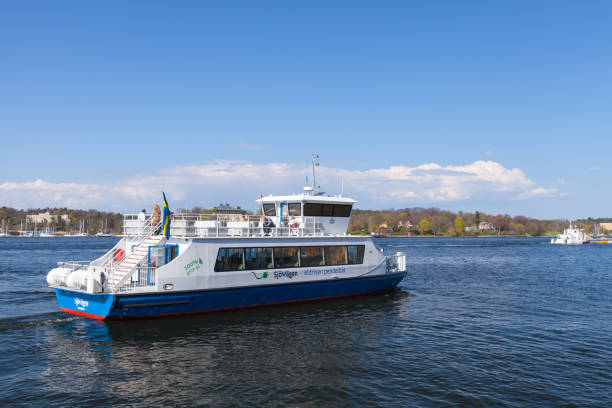
The future of water transport Lagos is increasingly focused on making the city’s waterways a larger part of everyday transportation. As Lagos continues to experience road congestion and a growing population, water transportation is being developed as an alternative that can support commuting, tourism, commerce and sustainable mobility.
LAGFERRY has expanded significantly since its current operations began, with its network now covering more than 25 routes and 18 ferries. The agency’s stated mission is to provide safe, efficient and technology-driven ferry services while supporting environmental sustainability.
Growing Role of Water Transport in Lagos
Water transportation is expected to become increasingly important as Lagos develops a more integrated transportation system.
LAGFERRY has stated that it wants to integrate water, road and rail transportation to provide more efficient mobility options for Lagos residents. In 2025, the agency reported that its fleet had grown from four to 22 boats and that its network had expanded to 17 terminals and 25 routes.
This means future journeys may increasingly involve more than one form of transportation.
For example:
Home → Road transport → Ferry terminal → Ferry → Marina → Road or rail → Final destination
Electric Ferries in Lagos
One of the most significant developments in the future of Lagos water transport is the planned introduction of electric-powered boats.
In January 2026, LAGFERRY announced that the Lagos State Government planned to introduce electric boats into its fleet within the year. The initiative is intended to support more environmentally friendly transportation while reducing operating and maintenance costs, which could eventually help make ferry services more affordable.
Electric ferries could become an important part of Lagos’s transition towards cleaner urban mobility.
Cleaner and More Sustainable Water Transport
The future of water transportation is not only about moving more passengers. It is also about making the system more sustainable.
LAGFERRY’s 2026 strategic planning has focused on sustainable water transportation, transport policy, asset management and the development of Lagos’s blue economy.
Electric vessels, better-maintained boats and more efficient operations could help create a cleaner and more sustainable water transport system.
Expansion of Ferry Routes
As demand increases, more communities could become connected to Lagos’s ferry network.
Current LAGFERRY routes already connect areas such as:
- Ikorodu
- Badore
- Ojo
- Mile 2
- Ibeshe
- Lekki
- Epe
- Apapa
- Lagos Island
- Victoria Island
- Falomo
LAGFERRY currently lists more than 25 operational routes, creating a foundation for further expansion of water-based mobility.
Better Ferry Terminals
The future of water transportation also depends on improving the infrastructure around ferry services.
Modern terminals can provide safer boarding areas, better passenger facilities, improved access roads and easier connections with buses and other forms of transportation.
LAGFERRY has previously highlighted the importance of constructing and rehabilitating terminals and jetties as part of efforts to improve water transportation.
Technology and Smart Ferry Services
Technology is expected to play a bigger role in Lagos water transportation.
Potential developments include:
- Automated ticketing
- Digital payments
- Real-time vessel monitoring
- Passenger information systems
- CCTV surveillance
- Improved communication systems
- Digital route and schedule information
- Advanced safety and rescue technology
LAGFERRY has previously identified automated ticketing, real-time ferry monitoring, CCTV, drones and unmanned water robots as technologies that could improve water transportation.
Water Transport and Lagos Traffic
Reducing road congestion remains one of the strongest reasons for expanding water transportation.
Ferries can move passengers through waterways instead of forcing them to travel entirely along congested roads. This is particularly relevant on corridors such as Ajah–Lekki–Victoria Island.
LAGFERRY has previously described water transportation as an alternative for commuters facing severe traffic along the Ajah-Lekki corridor.
As the network expands, more commuters could have the option of leaving part of their road journey to water transportation.
Growth of Water Tourism
The future of Lagos waterways will not be limited to commuting.
Water tourism, leisure cruises, events and waterfront entertainment are also expected to contribute to the development of the city’s blue economy.
LAGFERRY currently lists water tourism and ferry rental among its responsibilities, and its recent activities have included water-based entertainment and tourism initiatives.
More Efficient Ferry Operations
Maintaining and upgrading existing vessels will also be important.
In July 2026, LAGFERRY reported that two 60-passenger ferries had returned to service after retrofitting, with the agency describing the vessels as part of efforts to provide reliable commuting and enhance sustainable mobility.
Regular maintenance and fleet upgrades can help improve reliability and passenger confidence.
Private Sector Opportunities
The future of Lagos water transportation could also create opportunities for private operators.
The Lagos State Water Transport Policy identifies the importance of increasing the movement of people and goods on inland waterways and discusses greater private-sector participation in water transport services.
This could create opportunities for businesses involved in:
- Passenger ferry services
- Boat manufacturing
- Vessel leasing
- Ferry terminals
- Marine technology
- Digital ticketing
- Water tourism
- Cargo transportation
- Boat maintenance
Safety as a Priority
For water transportation to grow successfully, safety must remain a major priority.
LAGFERRY requires life jackets, passenger manifests and properly maintained vessels, and its safety guidance prohibits night operations and advises passengers to avoid travelling when visibility is poor.
Improving safety standards, vessel maintenance, navigation systems and emergency response will be essential as passenger numbers increase.
How Travo.ng Can Help
Travo.ng can help customers access and coordinate water transportation in Lagos, including ferry journeys, passenger transfers and multimodal transportation arrangements where available.
Customers can provide their:
- Pickup location
- Destination
- Travel date
- Preferred departure time
- Number of passengers
- One-way or return requirement
Travo.ng can help organise the water transportation portion of the journey and coordinate it with other travel requirements.
Why Choose Travo.ng?
Travo.ng makes transportation planning easier by helping customers consider different travel options instead of relying solely on road transportation.
Whether you need a daily ferry commute, business transfer, passenger transportation or a road-to-water connection, Travo.ng can help coordinate the journey according to your requirements.
The Future of Water Transport in Lagos
The future of water transportation in Lagos is likely to involve more routes, better terminals, smarter technology, cleaner vessels and stronger connections between water, road and rail transport.
The planned introduction of electric boats represents an important step towards cleaner and potentially more affordable ferry transportation. At the same time, continued investment in fleet maintenance, infrastructure, safety and private-sector participation will be important for long-term growth.
As Lagos continues to develop its blue economy and integrated transportation network, waterways could become an increasingly important part of how residents, businesses and visitors move around the city.
Travo.ng can help coordinate future-focused water transportation solutions in Lagos according to your route, schedule and passenger requirements.
