


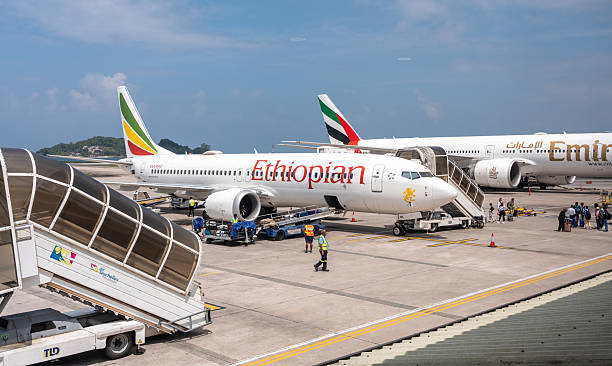
Airport fuel logistics involves much more than delivering aviation fuel to an airport. Fuel has to be sourced, transported, stored, checked and made available for aircraft according to operational schedules and aviation safety requirements.
At busy Nigerian airports, reliable coordination is particularly important because a delay in fuel availability can affect aircraft turnaround times and passenger departures.
How Airport Fuel Logistics Works
The process generally involves several connected stages:
- Fuel sourcing and supply – Aviation fuel is obtained from approved suppliers and transported through the appropriate supply chain.
- Transportation to the airport – Fuel is moved using suitable aviation fuel tankers or other approved infrastructure.
- Storage and quality control – Fuel is stored and handled under procedures designed to maintain its required quality.
- Aircraft refuelling – Fuel is transferred to the aircraft through the airport’s approved fuelling operation.
- Operational coordination – Fuel availability has to match the aircraft’s arrival, turnaround and departure schedule.
Each stage needs proper planning because aviation fuel handling has strict safety and quality requirements.
Why Fuel Logistics Can Affect Flight Schedules
An aircraft cannot simply depart because passengers have boarded. Fuel, baggage, technical checks, catering and other ground operations all have to be coordinated.
At airports such as Murtala Muhammed International Airport in Lagos, where aircraft movements can be busy, delays in one part of the turnaround process can affect subsequent flights.
This is why airlines and aviation operators plan fuel requirements ahead of the scheduled departure rather than waiting until the aircraft is ready to leave.
What Happens When an Aircraft Needs Fuel During a Stop?
An aircraft making a scheduled or charter stop may need to refuel before continuing its journey. The amount required depends on the aircraft, route, payload, weather conditions, reserves and the operator’s flight planning requirements.
For example, an aircraft travelling between Lagos and Abuja may have a different operational fuel requirement from an aircraft continuing from Lagos to an international destination.
The important point is that fuel planning is based on the complete flight operation, not simply the distance between two airports.
Fuel Logistics for Charter and Business Aviation
Charter flights often require more flexible coordination than routine scheduled services. A private aircraft may arrive at short notice, remain on the ground for a limited period and depart again according to the customer’s schedule.
This makes advance communication between the aircraft operator, airport service providers and logistics teams important.
Business travellers may also need airport pickup, accommodation, vehicle hire or onward transportation arranged around the aircraft’s arrival and departure times.
Common Airport Fuel Logistics Challenges in Nigeria
Fuel logistics can become complicated when information is incomplete or arrangements are made too late.
Some common challenges include:
- Delayed fuel requests
- Inaccurate flight or aircraft information
- Poor coordination between different ground-service teams
- Unexpected changes to flight schedules
- Limited turnaround time
- Increased demand during busy travel periods
- Transportation and storage requirements
Good planning helps reduce the chance that a fuel-related issue becomes a wider operational delay.
Coordinating the Rest of the Journey With Travo.ng
Fueling is only one part of airport operations. The people travelling on the aircraft may still need reliable transportation once they arrive.
Travo.ng can support the wider travel and logistics side through services such as airport pickups, vehicle hire, travel bookings and other transportation arrangements where required.
For example, a company arranging a charter flight into Lagos may also need vehicles ready at the airport and onward transportation for employees or clients. Organising these requirements together can make the arrival process much smoother.
Plan Airport Logistics Before the Aircraft Arrives
Airport fuel logistics depends on proper aviation procedures, approved suppliers and coordination with the relevant airport service providers. Travel and logistics arrangements should also be planned around the aircraft’s confirmed schedule.
Whether the movement involves a scheduled flight, charter aircraft or business aviation, early planning gives operators and travellers more time to handle changes without disrupting the wider journey.
