


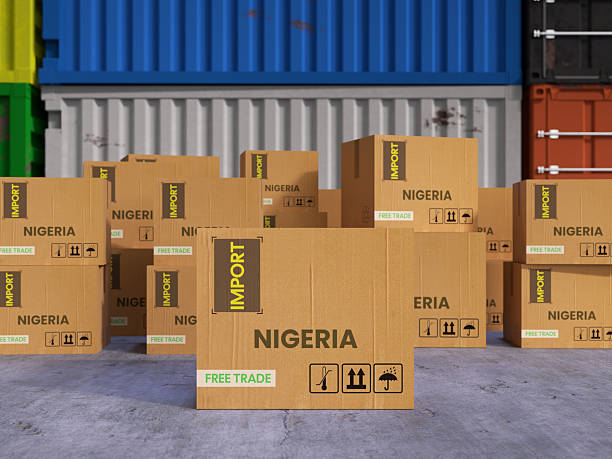
International trade can look straightforward when viewed from the outside. A business finds a supplier or buyer, agrees on a price, ships the goods and completes the transaction. In practice, successful international trade depends on much more than the product itself.
For Nigerian businesses, exchange rates, customs procedures, freight costs, infrastructure, supplier relationships and access to foreign markets can all affect the outcome.
Looking at real international trade case studies helps businesses understand what can go right, where problems usually occur and what should be considered before committing money to an import or export transaction.
Case Study 1: Nigeria’s Dependence on International Suppliers
Nigeria’s import market demonstrates how strongly local businesses depend on international supply chains.
World Bank WITS data shows that Nigeria imported goods worth about $65.05 billion in 2023. China was the largest individual source, accounting for about $11.95 billion or 18.38% of imports. Other major import sources included Singapore, Belgium, India and the United States. (World Integrated Trade Solution)
This creates opportunities for Nigerian importers in areas such as consumer products, machinery, industrial inputs, electronics and other goods.
However, the case also demonstrates the importance of supplier diversification. A business that depends heavily on one overseas supplier or one country can become vulnerable to shipping disruptions, currency movements, supplier problems or changes in trade regulations.
Case Study 2: Nigeria’s Non-Oil Export Opportunity
International trade is not only about importing products into Nigeria.
Nigeria has also been expanding non-oil exports. According to the U.S. International Trade Administration, agricultural products such as cocoa, cashew nuts and sesame seeds form part of Nigeria’s non-oil export activity. (Trade.gov)
WITS data for 2023 also records cocoa beans among Nigeria’s leading exported products by HS6 classification. (World Integrated Trade Solution)
For an agricultural business, this creates a different trade model: instead of buying finished goods abroad and selling them locally, the business can source Nigerian products, meet the buyer’s specifications and export to international markets.
The challenge is that international buyers may require consistent quality, documentation, packaging, certifications and reliable delivery.
Case Study 3: How Exchange Rates Can Change an Import Business
Currency risk is one of the clearest examples of why international trade needs careful financial planning.
Consider an importer purchasing $50,000 worth of goods.
If the exchange rate changes substantially between the initial quotation and the date the importer pays the supplier, the naira amount required for the same shipment can change significantly.
This affects more than the purchase price. Freight, insurance, customs valuation and other expenses can also influence the final landed cost.
The U.S. International Trade Administration has highlighted the effect of Nigeria’s naira depreciation on import costs and business conditions. (Trade.gov)
The practical lesson is simple: an importer should calculate the expected landed cost and consider exchange-rate exposure before agreeing to a large order.
Case Study 4: Customs and Port Procedures
A shipment can be commercially attractive but still become expensive if the importer does not plan for clearance properly.
World Bank research on trading across borders has used standardized import and export case studies to examine the procedures, documents, time and costs involved in moving goods from one country to another. (Open Knowledge Database)
Nigeria’s trading environment also continues to face challenges involving port clearance, congestion and administrative processes. The U.S. International Trade Administration identifies slow and cumbersome port clearance among the challenges businesses can encounter in Nigeria. (Trade.gov)
For an importer, this means the supplier invoice alone cannot be used to determine whether an order is profitable.
Freight, customs charges, port expenses, clearing costs, storage, inland transportation and possible delays should all be considered.
Case Study 5: Choosing the Right Trade Route
International trade does not always mean shipping everything by sea.
An importer may choose between air freight and ocean freight depending on the value, weight, urgency and characteristics of the goods.
A small shipment of high-value goods may justify faster transportation, while large quantities of lower-value products may require a different cost structure.
The decision should therefore be based on the complete landed cost and delivery requirement rather than simply choosing the cheapest quoted freight rate.
For Nigerian businesses, this is especially important because transportation does not end when a vessel or aircraft arrives. The goods still need to move from the port or airport to the final destination.
Case Study 6: Regional Trade and AfCFTA
International trade can also happen within Africa.
Nigeria ratified the African Continental Free Trade Area agreement in 2020. The agreement is designed to support greater trade integration across African markets and reduce barriers to trade among participating countries. (Trade.gov)
For a Nigerian manufacturer or agricultural business, regional markets can therefore represent another potential customer base.
Instead of looking only at Europe, Asia or North America, an exporter can investigate demand in other African countries.
However, regional trade still requires businesses to understand applicable rules of origin, customs requirements, standards, transport routes and payment arrangements.
What These Case Studies Show
These examples point to several recurring factors in international trade.
Demand comes first. A low supplier price does not guarantee that Nigerian customers will buy the product.
Landed cost matters. The true cost includes more than the supplier invoice.
Currency risk matters. A change in the exchange rate can affect the economics of an import transaction.
Documentation matters. Incorrect or incomplete documentation can delay clearance and increase costs.
Logistics matter. A good international purchase still needs a reliable plan for moving the goods after arrival.
Market diversification can help. Importers and exporters can reduce dependence on a single supplier, buyer or market where practical.
How Travo.ng Can Support International Trade Logistics
Travo.ng can support the transportation and delivery side of an international trade operation.
For an importer, this can include arranging relevant cargo transportation, vehicle hire and onward delivery logistics after goods are ready to move within Nigeria.
For businesses dealing with international suppliers, having the domestic transportation stage planned in advance can make it easier to estimate the complete cost of getting goods from a Nigerian port or airport to the warehouse or final customer.
Travo.ng is not a customs authority, bank or licensed customs agent. Importers and exporters still need the appropriate professionals for customs declarations, regulatory compliance and trade financing.
Its role is to help businesses manage relevant travel and logistics requirements around the wider trade process.
How to Build Your Own International Trade Case Study
A business considering a new trade route can create its own case study before investing heavily.
Start by recording:
- Product purchase price
- Supplier location
- Minimum order quantity
- Freight cost
- Insurance
- Customs and applicable taxes
- Port or terminal charges
- Clearing expenses
- Inland transportation
- Expected selling price
- Expected delivery time
- Exchange-rate assumptions
- Potential unexpected costs
After completing the calculation, compare the total landed cost with the realistic selling price.
For exporters, perform the same exercise in reverse by calculating production, packaging, certification, transportation, export documentation, freight and delivery costs before agreeing to an overseas buyer’s price.
Turning Trade Case Studies Into Better Decisions
International trade case studies are most useful when they are treated as learning tools rather than guarantees of future results.
Nigeria’s trade data shows substantial activity across both imports and exports, while documented trade research highlights the importance of procedures, transportation, documentation and costs. (World Integrated Trade Solution)
For a new importer or exporter, the best starting point is to understand one product, one route and one target market thoroughly before expanding.
A carefully calculated small transaction can reveal problems with suppliers, shipping, customs, currency or customer demand before the business commits substantially more capital.
