


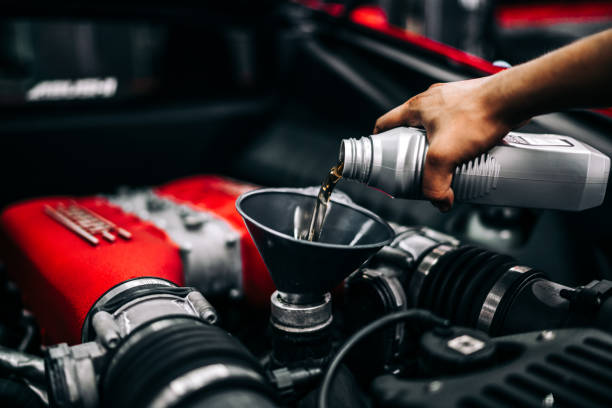
Choosing the right engine oil for your car is not simply about picking a popular brand or the cheapest option at a mechanic’s workshop. The correct engine oil depends on your vehicle, engine, model year, driving conditions and the manufacturer’s required oil specification.
If you are not sure what oil your car needs, check the owner’s manual or the manufacturer’s recommended specification before buying. The American Petroleum Institute also advises vehicle owners to refer to their owner’s manuals when selecting engine oil. (American Petroleum Institute)
How Do I Know What Engine Oil My Car Needs?
The easiest way to find the correct engine oil is to check the vehicle owner’s manual.
Look for information showing:
- SAE viscosity grade
- API service category
- Manufacturer approval or specification
- Recommended oil type
- Required oil capacity
You may also find the recommended oil specification on the manufacturer’s service information or through an authorised dealer.
Do not assume that every car from the same brand uses the same oil.
What Does 5W-30 or 5W-40 Mean?
You will often see numbers such as 0W-20, 5W-30, 5W-40 or 10W-40 on engine-oil containers.
These numbers describe the oil’s viscosity characteristics.
The first part, such as 5W, relates to how the oil behaves at lower temperatures. The second number describes its viscosity at higher operating temperatures.
The correct viscosity is determined by the vehicle manufacturer, so do not switch from one grade to another simply because someone says a thicker oil is better for an older car.
Should I Use Synthetic or Mineral Oil?
Engine oils are available in different formulations, including conventional/mineral, semi-synthetic and fully synthetic products.
Your vehicle manufacturer’s recommendation should guide the choice.
Some modern engines are specifically designed around low-viscosity synthetic oils, while other engines may have different requirements.
The most important thing is not simply whether the bottle says “fully synthetic.” The oil must meet the viscosity and performance specification required by the engine.
What Is API Engine Oil Rating?
The API rating helps identify the performance category of an engine oil.
For modern gasoline engines, API SQ is currently listed as a current service category, while API SP remains current for 2025 and older automotive engines. API explains that newer categories can provide the performance properties of earlier categories in many applications, but vehicle manufacturers’ requirements should still be followed. (American Petroleum Institute)
You may see an API symbol or service category printed on the oil container.
Do not choose an oil based only on the API letters. Check the complete specification required by your vehicle.
What Engine Oil Does a Diesel Car Need?
Diesel engines can have different oil requirements from petrol engines.
For diesel vehicles, API categories such as CK-4 and CJ-4 are used for particular applications, but compatibility depends on the engine manufacturer’s requirements. API specifically advises following the vehicle or engine manufacturer’s recommendations for diesel oil performance levels. (American Petroleum Institute)
This is particularly important for modern diesel vehicles equipped with emissions-control systems.
Can I Use 5W-30 Instead of 5W-40?
Not automatically.
If your manufacturer specifies 5W-30, you should not change to 5W-40 simply because it is readily available.
Likewise, if your vehicle specifically requires 5W-40, using a thinner oil without confirming compatibility is not advisable.
Check the owner’s manual and the manufacturer’s required specifications before making a change.
How Much Engine Oil Does My Car Need?
The amount of oil required also varies between vehicles.
A small engine may require significantly less oil than a larger SUV, pickup or commercial vehicle.
The oil capacity can normally be found in the owner’s manual or manufacturer’s service information.
Do not fill the engine until the entire bottle is empty simply because you bought a certain quantity.
After adding oil, check the dipstick or electronic oil-level system according to the manufacturer’s instructions.
What Happens If You Use the Wrong Engine Oil?
Using oil that does not meet the engine’s requirements can affect lubrication, engine cleanliness, fuel economy and component protection.
The consequences depend on how different the oil is from the required specification and how the vehicle is used.
If you accidentally put the wrong oil into your engine, do not assume that driving for a long period is safe. Ask a qualified mechanic or service centre to confirm whether the oil needs to be replaced.
Engine Oil for Cars Used in Nigerian Traffic
Driving conditions can affect how frequently your vehicle needs maintenance.
A car that spends hours in Lagos traffic, makes frequent short journeys or regularly carries heavy loads may experience different operating conditions from a vehicle that mainly travels on open highways.
However, traffic conditions do not mean you should automatically use a thicker oil.
The correct viscosity and specification should still come from the vehicle manufacturer.
How to Check Engine Oil Before a Long Journey
Before travelling from Lagos to Ibadan, Abuja, Ilorin, Benin City or another destination, check your engine oil level.
Park the vehicle safely and follow the manufacturer’s instructions for checking the oil.
Look for:
- Correct oil level
- Signs of an oil leak
- Unusual oil consumption
- Oil around the engine bay
- Warning lights on the dashboard
If the oil level keeps dropping, find out why rather than simply adding oil repeatedly.
How Often Should You Change Engine Oil?
The correct oil-change interval depends on the vehicle, engine, oil specification and manufacturer’s maintenance schedule.
Your owner’s manual should be the primary guide.
Frequent traffic, heavy use and short journeys can affect vehicle maintenance requirements, so do not rely only on a generic “change every X kilometres” rule from another vehicle owner.
Keep records of your oil changes so you know when the next service is due.
How to Avoid Fake Engine Oil in Nigeria
When buying engine oil, pay attention to the seller and packaging.
Buy from a reputable supplier or established service centre and inspect the container before use.
Check for:
- Properly sealed packaging
- Clear product information
- Manufacturer details
- Correct viscosity
- Correct API or manufacturer specification
- Batch or traceability information where applicable
API operates a licensing and monitoring system for engine oils that display its quality marks, and its licensee directory helps consumers identify licensed oil marketers. (American Petroleum Institute)
A mechanic should also be able to show you the oil being put into your vehicle rather than pouring an unidentified product from an unlabelled container.
Tribal and Cultural Considerations at Nigerian Auto Workshops
Auto workshops across Nigeria serve customers from different tribes, languages and cultural backgrounds.
When discussing engine oil or repairs, focus on the vehicle’s actual requirements rather than assumptions about a mechanic or customer based on their background.
If a mechanic recommends changing the oil specification, ask why and request the manufacturer’s specification or technical reason supporting the recommendation.
Clear communication can prevent unnecessary purchases and disagreements.
How Travo.ng Can Help With Vehicle Logistics
Choosing the correct engine oil is part of preventive vehicle maintenance, but mechanical problems can still happen on the road.
If a vehicle develops an engine problem, breaks down or becomes unsafe to drive, Travo.ng can support relevant logistics needs such as vehicle recovery coordination and transport arrangements.
For businesses operating delivery vehicles, regular maintenance combined with dependable recovery and logistics support can help reduce unexpected downtime.
What to Tell a Mechanic When Asking for Engine Oil
Before buying or changing your oil, provide:
- Vehicle make
- Model
- Model year
- Engine size or engine code if known
- Petrol or diesel
- Current mileage
- Manufacturer’s recommended oil specification
- Current oil grade if known
If you give me your car make, model, year and engine size, I can help you narrow down the exact engine-oil specification you should look for instead of guessing from general oil grades.
