


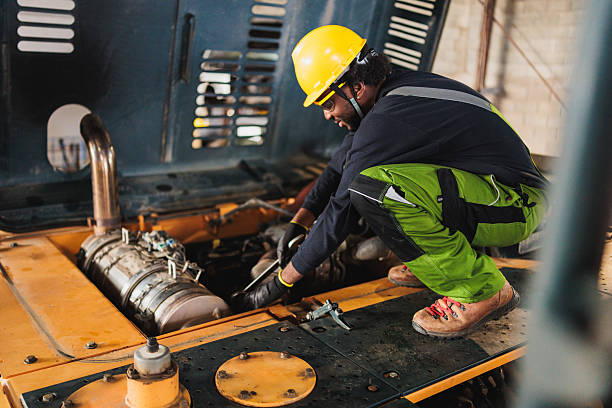
Truck repair training in Nigeria provides practical skills for people who want to build careers maintaining and repairing heavy-duty trucks, trailers and commercial vehicles.
Truck technicians work with diesel engines, transmissions, braking systems, electrical systems, suspension, steering, diagnostics and preventive maintenance. These skills are valuable to haulage companies, logistics businesses, transport operators, fleet owners and truck workshops.
What Does Truck Repair Training Cover?
A comprehensive truck repair programme should combine classroom instruction with hands-on workshop experience.
Key areas include:
- Heavy-duty diesel engines
- Engine servicing and overhaul
- Fuel-injection systems
- Turbochargers
- Manual and automated transmissions
- Clutch systems
- Air-brake systems
- Suspension systems
- Steering systems
- Differential and axle systems
- Truck electrical systems
- Computerised diagnostics
- Preventive maintenance
- Breakdown diagnosis
- Workshop safety
A six-month Truck Technician Training Programme previously run through ITF, NECA and Truckmasters in Lagos combined classroom/workshop training with industrial attachment and focused on diesel and truck technician careers.
Heavy-Duty Diesel Technician Training
Diesel-engine knowledge is one of the most important skills for a truck technician.
Training can cover:
- Diesel engine operation
- Engine servicing
- Engine overhaul
- Fuel systems
- Injectors
- Turbochargers
- Cooling systems
- Lubrication systems
- Engine timing
- Electronic engine controls
- Diesel diagnostics
Specialist heavy-duty diesel courses available in Lagos cover diesel-engine operation, air-charging systems and different fuel-injection systems.
Truck Diagnostic Training
Modern trucks increasingly use electronic systems to monitor engine and vehicle performance.
Technicians should learn:
- Diagnostic scanners
- Fault-code interpretation
- ECU diagnostics
- Sensor testing
- Electronic engine controls
- Electrical fault finding
- ABS diagnostics
- Transmission diagnostics
- CAN-bus systems
- Engine-performance testing
Learning diagnostics alongside traditional mechanical repair can make a truck technician considerably more versatile.
Truck Transmission and Gearbox Training
Truck transmissions operate under heavy loads and require specialised maintenance skills.
Training can include:
- Manual transmissions
- Automated manual transmissions
- Clutch systems
- Gearbox inspection
- Gear selection systems
- Transmission fault diagnosis
- Differential systems
- Final drives
- Gearbox overhaul
Technicians should also understand how transmission problems can affect the wider drivetrain.
Truck Brake System Training
Heavy commercial vehicles require technicians who understand their braking systems.
Training may cover:
- Air-brake systems
- Brake chambers
- Compressors
- Air dryers
- Brake valves
- Brake drums
- Brake discs
- ABS
- Brake inspections
- Air leaks
- Brake-system troubleshooting
Brake-system knowledge is particularly important because truck maintenance directly affects road safety.
Truck Electrical Training
Modern trucks contain extensive electrical and electronic systems.
Technicians can develop skills in:
- Batteries
- Alternators
- Starters
- Wiring
- Fuses
- Relays
- Sensors
- Lighting systems
- Instrument clusters
- Electronic control modules
- Charging systems
- Electrical diagnostics
Combining mechanical and electrical skills can help a technician handle a wider range of truck faults.
Fleet Truck Maintenance Training
Fleet maintenance is another important area for truck technicians.
Training can cover:
- Preventive maintenance schedules
- Vehicle inspections
- Service intervals
- Lubrication
- Oil and filter changes
- Tyre inspections
- Brake inspections
- Cooling-system checks
- Battery checks
- Maintenance records
- Breakdown response
Fleet maintenance training helps companies reduce vehicle downtime and keep trucks operating efficiently.
Truck Repair Training for Beginners
If you are starting from scratch, a practical progression can be:
Basic mechanics → Apprenticeship → Diesel training → Heavy-duty systems → Diagnostics → Industrial attachment → Certification → Employment
Beginners should prioritise programmes that provide substantial workshop exposure rather than programmes that are almost entirely theoretical.
Truck Repair Training for Experienced Mechanics
Existing mechanics can upgrade their skills by specialising in:
- Heavy-duty diesel diagnostics
- Truck transmissions
- Air-brake systems
- Truck electrical systems
- ECU diagnostics
- Fleet maintenance
- Hydraulic systems
- Automated transmissions
- Advanced engine management
This can help an experienced automobile mechanic transition into commercial-truck maintenance.
Truck Brands and Systems
Technicians can specialise in trucks from manufacturers such as:
- Mercedes-Benz
- MAN
- Volvo
- Scania
- DAF
- Iveco
- Howo
- Sinotruk
- Mack
- Hino
- Isuzu
Brand-specific experience can be useful when applying to dealerships, fleet operators and specialist workshops.
Truck Repair Training in Lagos
Lagos is an important location for truck and heavy-duty technician training because of its large logistics, transport, commercial and industrial sectors.
Current training options include the NIATEC automotive technician programmes in Lekki, which use substantial practical workshop training and cover engines, gearboxes, brakes, steering and transmissions.
Specialist heavy-duty diesel training is also available in Yaba, Lagos.
Truck Technician Training Through Industry Programmes
Industry-linked programmes can be particularly useful because they expose trainees to real workshop practices.
A previous ITF-NECA and Truckmasters programme in Lagos offered six months of training in heavy diesel technician work, advanced vehicle diagnosis and auto electrical systems. The programme included practical industrial exposure and was designed to prepare trainees for diesel and truck technician careers.
Although that particular application period has passed, similar industry-sponsored programmes can be worth watching for future intakes.
Certifications for Truck Technicians
Depending on the training route, technicians can pursue:
- National Technical Certificate
- National Skills Qualification
- Trade certifications
- Automotive technician certificates
- Diesel technician certificates
- Manufacturer-specific training
- Specialist diagnostic certificates
- Heavy-equipment or plant-maintenance certificates
A recognised qualification combined with practical experience can strengthen a truck technician’s CV.
Skills Employers Look For
Truck repair employers commonly look for:
- Diesel engine repair
- Engine diagnostics
- Transmission repair
- Clutch repair
- Air-brake knowledge
- Electrical diagnostics
- Suspension repair
- Steering-system knowledge
- Differential and axle maintenance
- Preventive maintenance
- Diagnostic equipment operation
- Fault finding
- Workshop safety
Jobs After Truck Repair Training
After developing the necessary skills and experience, technicians can apply for roles such as:
- Truck Mechanic
- Truck Technician
- Heavy-Duty Technician
- Diesel Technician
- Fleet Technician
- Commercial Vehicle Technician
- Workshop Technician
- Diagnostic Technician
- Field Service Technician
- Fleet Maintenance Technician
- Senior Truck Technician
- Workshop Supervisor
Where Truck Technicians Can Work
Potential employers include:
- Haulage companies
- Logistics companies
- Transport companies
- Truck dealerships
- Fleet operators
- Truck workshops
- Construction companies
- Manufacturing companies
- Mining companies
- Equipment companies
- Vehicle service centres
How to Choose a Truck Repair Training Programme
Before enrolling, check:
- How much practical workshop training is included.
- Whether trainees work on actual trucks.
- Whether diesel engines are covered.
- Whether transmission repair is taught.
- Whether air-brake systems are included.
- Whether truck diagnostics are taught.
- Whether electrical systems are covered.
- Whether industrial attachment is available.
- What certification is awarded.
- Whether instructors have real truck-maintenance experience.
How Long Does Truck Repair Training Take?
Training duration varies significantly.
Short specialist courses can last several days, while structured automotive programmes can run for several months or a year. For example, NIATEC’s current Auto Technician International Standard programme lasts one year and includes extensive workshop training and industrial training.
For someone starting from zero, combining structured training with an apprenticeship or industrial placement can provide a stronger foundation than relying on a short course alone.
What Travo.ng Can Do
Travo.ng provides transportation, mobility and logistics solutions for individuals and businesses. Reliable trucks and properly maintained vehicles are important for efficient logistics and transportation operations.
Skilled truck technicians help reduce breakdowns, minimise vehicle downtime and keep commercial transportation operations running efficiently.
Why Choose Travo.ng?
Travo.ng focuses on practical transportation and logistics solutions designed around the needs of individuals and businesses.
Reliable transportation operations depend on properly maintained vehicles and competent technical personnel. Travo.ng understands the importance of dependable mobility and operational reliability.
Career Progression
A truck technician can progress through:
Apprentice → Junior Truck Mechanic → Truck Technician → Senior Technician → Diagnostic Specialist → Lead Technician → Workshop Supervisor → Workshop Manager → Fleet Maintenance Manager
Specialising in diesel diagnostics, transmissions, electrical systems or fleet maintenance can create additional opportunities.
Final Thoughts
Truck repair training in Nigeria can provide a strong pathway into the commercial-vehicle maintenance industry.
The most valuable combination is:
Diesel skills + truck mechanical repair + diagnostics + electrical systems + practical workshop experience + recognised certification.
For technicians who want to work with major truck fleets, gaining experience with multiple truck brands and modern diagnostic systems can further improve their career prospects.
