


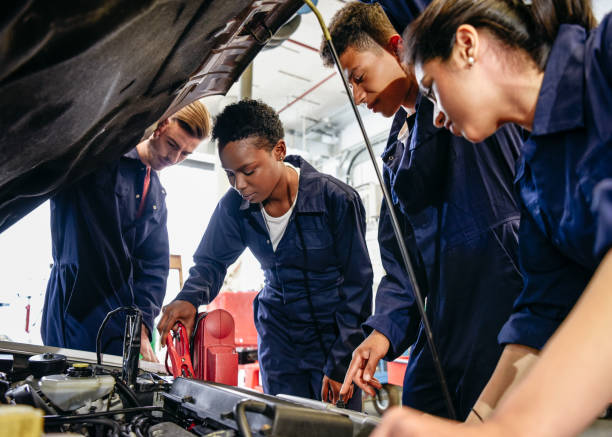
Mechanical maintenance technicians help keep machines, equipment and industrial systems operating safely and efficiently. They are needed across manufacturing, construction, logistics, energy, agriculture, processing and other industries in Nigeria.
Mechanical maintenance technician jobs are suitable for mechanical technicians, fitters, industrial mechanics, maintenance mechanics and technically trained professionals with practical experience repairing and maintaining machinery.
What Does a Mechanical Maintenance Technician Do?
A mechanical maintenance technician is responsible for inspecting, maintaining and repairing mechanical equipment.
Typical duties include:
- Performing preventive maintenance
- Diagnosing mechanical faults
- Repairing machinery
- Inspecting mechanical components
- Replacing worn parts
- Lubricating equipment
- Aligning rotating machinery
- Troubleshooting equipment breakdowns
- Conducting equipment inspections
- Installing mechanical components
- Maintaining maintenance records
- Testing machinery after repairs
The technician’s main objective is to reduce equipment downtime and keep machinery operating reliably.
Types of Equipment You May Work On
Depending on the industry, technicians may maintain:
- Pumps
- Compressors
- Motors
- Conveyors
- Generators
- Industrial machines
- Production equipment
- Hydraulic systems
- Pneumatic equipment
- Gearboxes
- Bearings
- Fans and blowers
Industrial maintenance technicians may work on equipment ranging from small production machines to large processing and manufacturing systems.
Preventive Maintenance
Preventive maintenance is one of the most important responsibilities of a mechanical maintenance technician.
A maintenance programme may include:
- Inspecting equipment regularly.
- Checking lubrication levels.
- Replacing worn components.
- Checking belts and chains.
- Inspecting bearings.
- Checking shafts and couplings.
- Inspecting pumps and motors.
- Checking hydraulic systems.
- Testing safety devices.
- Recording maintenance activities.
Regular maintenance helps identify problems before they result in major equipment failures.
Corrective Maintenance and Repairs
When machinery breaks down, technicians must identify the cause and restore the equipment to working condition.
Corrective maintenance may involve:
- Diagnosing unusual noise
- Identifying vibration problems
- Repairing damaged components
- Replacing bearings
- Repairing pumps
- Replacing belts
- Repairing gearboxes
- Fixing hydraulic leaks
- Adjusting machine alignment
- Testing equipment after repairs
Good technicians focus on identifying the root cause rather than simply replacing the failed component.
Mechanical Fitting Skills
Mechanical fitting is an important skill for maintenance technicians.
Useful abilities include:
- Bearing installation
- Shaft alignment
- Coupling installation
- Belt and chain installation
- Gearbox assembly
- Pipe fitting
- Valve installation
- Machine assembly
- Component measurement
- Use of hand and power tools
Experience with mechanical drawings and equipment manuals can also be valuable.
Pumps and Compressors
Many industrial facilities depend on pumps and compressors.
Technicians may maintain:
- Centrifugal pumps
- Positive-displacement pumps
- Air compressors
- Water pumps
- Hydraulic pumps
- Vacuum pumps
Common problems include leaks, excessive vibration, overheating, low pressure and abnormal noise.
Hydraulic and Pneumatic Systems
Mechanical maintenance technicians may also work with hydraulic and pneumatic equipment.
Useful skills include:
- Hydraulic pump maintenance
- Cylinder repairs
- Valve servicing
- Hose replacement
- Pressure testing
- Leak detection
- Pneumatic valve maintenance
- Compressor servicing
- Pressure-system troubleshooting
Understanding system diagrams helps technicians identify faults more efficiently.
Bearings, Shafts and Rotating Equipment
Rotating machinery requires careful inspection and alignment.
Technicians may inspect:
- Bearings
- Shafts
- Couplings
- Pulleys
- Gears
- Sprockets
- Drive belts
- Chains
Incorrect alignment can cause vibration, premature bearing failure and excessive equipment wear.
Welding and Fabrication Skills
Some maintenance departments value technicians who have basic fabrication abilities.
Useful skills can include:
- Basic welding
- Metal cutting
- Grinding
- Drilling
- Bracket fabrication
- Pipe repairs
- Equipment modifications
These skills can be particularly useful for emergency maintenance and workshop repairs.
What Qualifications Do Mechanical Maintenance Technicians Need?
Requirements vary between employers.
Common qualifications include:
- OND Mechanical Engineering
- HND Mechanical Engineering
- Mechanical Engineering Technology
- Industrial Maintenance
- Mechanical Fitting
- Technical college training
- Trade Test certification
- NABTEB
- Relevant vocational training
- Practical apprenticeship experience
For hands-on positions, practical maintenance experience is often highly valued alongside formal qualifications.
Experience Requirements
Entry-level positions may accept apprenticeship or industrial-training experience, while senior positions typically require several years of hands-on maintenance work.
Experience in manufacturing, construction, power generation, oil and gas, logistics or industrial processing can be particularly useful.
What Should You Put on Your CV?
Your CV should clearly demonstrate your mechanical maintenance skills.
Include:
- Years of experience
- Equipment maintained
- Preventive maintenance
- Corrective maintenance
- Breakdown repairs
- Mechanical fitting
- Pumps and compressors
- Hydraulic and pneumatic systems
- Bearings and shaft alignment
- Welding or fabrication skills
- Tools and equipment used
- Technical qualifications
For example:
“Four years’ experience in mechanical maintenance and equipment repair, with expertise in preventive and corrective maintenance, pumps, compressors, bearings, gearboxes, hydraulic systems, mechanical fitting and breakdown troubleshooting.”
Related Job Titles to Search
Don’t search only for “mechanical maintenance technician jobs.”
Also search for:
- Mechanical Maintenance Technician
- Maintenance Technician
- Mechanical Technician
- Maintenance Mechanic
- Industrial Maintenance Technician
- Mechanical Fitter
- Industrial Mechanic
- Plant Maintenance Technician
- Equipment Maintenance Technician
- Maintenance Fitter
- Mechanical Maintenance Mechanic
- Workshop Technician
- Plant Technician
- Field Maintenance Technician
Searching related titles can help you discover more opportunities.
Applications and CV Submission
Candidates interested in mechanical maintenance technician opportunities and related technical positions should prepare an updated CV showing their practical experience, equipment knowledge and technical qualifications.
Applications and CVs should be sent to jobs@wigmoretrading.com.
Use Mechanical Maintenance Technician Application as the email subject and include your phone number, years of experience, qualifications, equipment maintained and technical specialisations.
How to Stand Out
Employers want maintenance technicians who can keep equipment running and reduce costly downtime.
Highlight your ability to:
- Diagnose mechanical faults
- Perform preventive maintenance
- Carry out corrective repairs
- Troubleshoot equipment breakdowns
- Maintain pumps and compressors
- Work with hydraulic and pneumatic systems
- Install bearings and couplings
- Align rotating equipment
- Read mechanical drawings
- Maintain accurate service records
Strong problem-solving and troubleshooting skills can make a major difference in maintenance roles.
Safety Is Critical
Mechanical maintenance involves moving machinery, rotating equipment, electrical systems, compressed air, hydraulic pressure and heavy components.
Important safety practices include:
- Lockout and isolation procedures
- Appropriate PPE
- Safe lifting
- Machine guarding
- Hydraulic-pressure safety
- Compressed-air safety
- Proper use of tools
- Workshop housekeeping
- Safe equipment testing
- Following maintenance procedures
Equipment should only be returned to operation after repairs and safety checks have been completed.
Preparing for the Interview
Expect practical questions such as:
- How would you diagnose a machine that suddenly stops working?
- What can cause excessive vibration in rotating equipment?
- How would you identify a failing bearing?
- What causes a pump to lose pressure?
- How would you troubleshoot a hydraulic leak?
- What is preventive maintenance?
- What is the difference between preventive and corrective maintenance?
- How would you align a motor and pump?
- How do you safely isolate machinery before maintenance?
- How would you determine the root cause of repeated equipment failure?
Use practical examples from your previous workshop, industrial or apprenticeship experience.
Where Can Mechanical Maintenance Technicians Work?
Potential employers include:
- Manufacturing companies
- Construction companies
- Oil and gas companies
- Power-generation companies
- Logistics companies
- Mining companies
- Agricultural businesses
- Food-processing companies
- Industrial plants
- Engineering companies
- Equipment-service companies
Mechanical maintenance technicians are particularly valuable in facilities where equipment downtime can directly affect production.
Career Progression
A mechanical maintenance technician can progress through:
Apprentice → Junior Technician → Maintenance Technician → Senior Technician → Lead Technician → Maintenance Supervisor → Maintenance Manager
You can also specialise in:
- Industrial machinery
- Rotating equipment
- Hydraulic systems
- Pneumatic systems
- Plant maintenance
- Equipment diagnostics
- Reliability maintenance
- Mechanical fitting
Additional training in vibration analysis, condition monitoring, industrial automation, hydraulics and equipment diagnostics can improve your career prospects.
A strong mechanical maintenance technician is ultimately someone who can prevent equipment failures, diagnose faults accurately, perform reliable repairs and keep industrial machinery operating safely with minimal downtime.
