


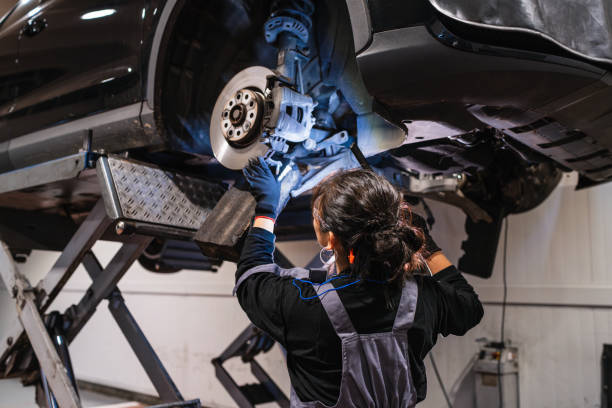
Brake pads are one of the most important wear components on a car. Every time you slow down or stop, the brake pads press against the brake discs to create the friction needed to bring the vehicle to a stop.
Unlike engine oil or other maintenance items, brake pads do not have one fixed replacement interval that applies to every vehicle. How long they last depends on the car, driving conditions, traffic, driving habits and the quality of the brake components.
How often should brake pads be replaced?
Many brake pads can last tens of thousands of kilometres, but some will need replacement much earlier while others can last considerably longer.
A driver who spends most of the day in heavy stop-and-go traffic may wear through brake pads faster than someone who mainly drives on open roads.
Factors that affect brake pad life include:
- How frequently you use the brakes
- City traffic and frequent stopping
- Driving on steep roads
- Vehicle weight
- Driving style
- Brake pad quality
- Condition of the brake discs
- Whether the vehicle regularly carries heavy loads
This is why brake pad condition should be checked during routine servicing rather than replacing them based only on mileage.
Signs that your brake pads may need changing
Your car can give you several warning signs when the brake pads are becoming worn.
Watch out for:
- Squealing or high-pitched noises when braking
- Grinding sounds
- Longer stopping distances
- A brake pedal that feels different
- Vibration when braking
- The vehicle pulling to one side
- A brake warning light
- Noticeably thinner brake pads
Some brake pads have a wear indicator that produces a noticeable sound when the pad material becomes low. However, not every brake problem produces an obvious warning noise.
Can you drive with worn brake pads?
It is not something to ignore.
Brake pads that are heavily worn can reduce braking performance and may eventually allow the backing plate to contact the brake disc. This can cause additional damage and turn a relatively straightforward brake pad replacement into a more expensive brake repair.
If you hear grinding whenever you brake or notice that your car is taking noticeably longer to stop, have the braking system inspected as soon as possible.
Why do brake pads wear faster in Nigerian traffic?
Driving conditions can make a significant difference to brake pad life.
In busy Nigerian cities, drivers can spend long periods in traffic, repeatedly accelerating and braking. Frequent stops around busy junctions, traffic lights, markets and congested roads can put more demand on the braking system.
Vehicles used for deliveries, ride-hailing, commercial transport or frequent city trips may also accumulate brake wear faster because of their operating conditions.
This does not mean every Nigerian driver needs to replace brake pads at a particular mileage. Regular inspection is a more useful approach.
Do front and rear brake pads wear at the same rate?
Not necessarily.
On many vehicles, the front brakes handle a greater share of the braking force, so the front brake pads can wear faster than the rear pads. However, the exact wear pattern depends on the vehicle’s braking system and how it is driven.
During a brake inspection, both the front and rear brakes should be checked rather than assuming that replacing one set automatically means the other set needs replacement too.
Should brake pads be replaced in pairs?
Brake pads are generally replaced as an axle set rather than replacing just one pad on one side.
For example, if the front brake pads are worn, the appropriate approach is normally to replace the pads on both sides of the front axle and inspect the discs and other brake components at the same time.
This helps maintain balanced braking between the two sides.
What happens during a brake pad replacement?
A proper brake service involves more than simply removing the old pads and installing new ones.
A technician should inspect the brake pads, discs, calipers and related components. The condition of the brake disc is particularly important because installing new pads against a badly damaged or excessively worn disc may not solve the underlying braking problem.
After replacement, the brakes should be checked to make sure everything is operating correctly.
How can you make brake pads last longer?
You cannot prevent brake pad wear completely, but your driving habits can affect how quickly they wear.
Try to:
- Avoid unnecessary hard braking
- Keep a sensible following distance
- Look ahead and slow down gradually where possible
- Avoid carrying unnecessary weight
- Have brake problems checked early
- Service the vehicle according to the manufacturer’s recommendations
Smooth driving can reduce unnecessary braking and make the entire braking system work more efficiently.
Don’t wait until the brakes become dangerous
Brake pads are designed to wear out, so replacing them is a normal part of vehicle maintenance. The important thing is catching the wear before it causes further damage or affects your ability to stop safely.
If you are unsure how much life is left in your brake pads, ask a qualified technician to inspect them during your next service. If the pads are already producing grinding noises, the brake pedal feels abnormal or the car is not stopping as it normally should, get the vehicle checked promptly.
For drivers managing regular trips, deliveries or longer-distance journeys, Travo.ng can also help with relevant travel and transport coordination when vehicle problems affect your plans.
Knowing the condition of your brakes before a long journey can save you from an avoidable breakdown and an uncomfortable roadside situation.
