


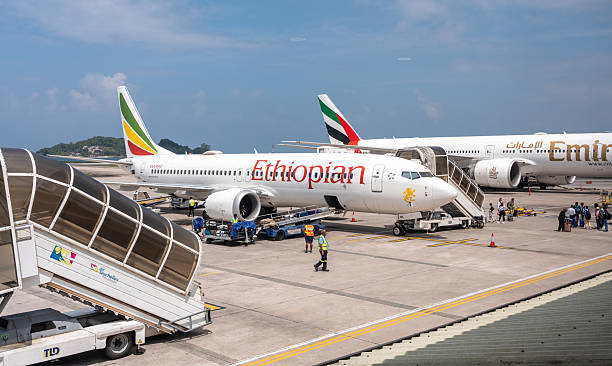
Ground support operations are the activities that take place around an aircraft while it is on the ground at an airport. These operations include baggage and cargo handling, passenger services, aircraft cleaning, refuelling coordination, catering, aircraft pushback, ground support equipment management and other tasks required before an aircraft can depart.
Across Africa, effective ground support operations are important for maintaining safe aircraft turnarounds and reliable flight schedules. IATA describes ground handling as an integral part of airline operations, with aircraft, ground support equipment and personnel working in a confined ramp environment. (IATA)
What Ground Support Operations Include
Ground support is a broad area involving several teams working around an aircraft at the same time.
Depending on the airport and flight, activities can include:
- Aircraft marshalling and parking coordination
- Passenger boarding and disembarkation support
- Baggage loading and unloading
- Cargo and mail handling
- Aircraft cleaning
- Catering support
- Refuelling coordination
- Pushback and towing
- Ground power and other aircraft servicing
- Ground support equipment management
- Load control and aircraft loading coordination
The timing of these activities matters because many have to happen during the aircraft’s turnaround period.
Why Aircraft Turnaround Coordination Matters
An aircraft cannot simply land, allow passengers to leave and immediately depart again. Several ground activities have to be completed in the correct sequence and within the available turnaround window.
For example, baggage may need to be unloaded before new baggage is loaded, catering and cleaning teams may need access to the aircraft, and passengers must be boarded before departure.
Poor coordination between these teams can result in delays that affect the next flight and potentially other flights further along the aircraft’s schedule.
IATA’s ground operations standards emphasise safe, secure and on-time turnarounds, with standardisation particularly important when operators are dealing with staffing pressures. (IATA)
Ground Support Equipment at African Airports
Ground support equipment, commonly called GSE, is essential to aircraft servicing.
Examples include baggage tractors, belt loaders, passenger stairs, aircraft tugs, ground power units and other specialised equipment.
The condition and availability of this equipment can directly affect turnaround performance. Equipment that is unavailable or poorly maintained may force teams to wait, use alternative equipment or change the planned sequence of work.
Safety is equally important. IATA says GSE operations are a significant contributor to aircraft ground damage and is promoting enhanced equipment with technologies such as anti-collision systems. (IATA)
Staffing and Ground Crew Coordination
Ground support operations depend heavily on trained personnel.
Ramp agents, baggage handlers, load controllers, equipment operators, passenger service teams, supervisors and other workers need to coordinate their activities around the aircraft.
Staff shortages can create additional pressure, particularly during peak travel periods. IATA identifies labour availability alongside safety and on-time performance as ongoing ground-handling challenges. (IATA)
Training is therefore important not only for individual tasks but also for communication, safety procedures and coordination between different teams.
Baggage and Cargo Handling
Baggage and cargo operations form a major part of ground support.
Baggage has to be collected, sorted, transported to the aircraft, loaded correctly and reconciled with the flight. Cargo requires additional procedures depending on its type, documentation and handling requirements.
Errors in loading can create operational and safety problems. IATA’s ground safety guidance highlights issues involving load reconciliation, baggage and cargo, weight information and communication between load control and ramp staff. (IATA)
Digital systems can help improve visibility and reduce dependence on disconnected manual processes.
Digital Technology in Ground Support Operations
African airports are increasingly looking at technology that can improve ground operations.
Digital systems can help track equipment, share turnaround information, monitor task completion and provide better visibility of aircraft movements.
IATA has identified fragmented data, manual processes and delayed information as barriers to efficient ground handling. Its work on future ground operations includes digital turnaround systems, asset tracking and improved resource allocation. (IATA)
For busy airports, better information sharing can help teams identify problems earlier instead of discovering them when an aircraft is already approaching its departure time.
Safety and Standardisation
Ground operations involve aircraft, vehicles, equipment and people operating close together, so consistent procedures are essential.
International standards such as the IATA Ground Operations Manual and Airport Handling Manual provide frameworks for areas including aircraft handling, passenger and cargo operations, GSE management and training. (IATA)
African ground handlers can also use structured training, audits, safety management systems and equipment checks to improve operational consistency.
The goal is not simply to make operations faster. A fast turnaround that compromises safety can create much greater problems for an airline and airport.
Moving Towards Electric Ground Support Equipment
Sustainability is becoming another consideration in ground support operations.
Electric GSE can reduce tailpipe emissions and noise around aircraft stands, although switching fleets requires suitable charging infrastructure, equipment planning and operational changes.
IATA reports that electric GSE can produce 35% to 52% lower CO2 emissions per turnaround than conventional equipment under the conditions examined in its study. (IATA)
For African airports, adoption will depend on factors such as electricity availability, airport infrastructure, equipment costs and the operational requirements of individual ground handlers.
How Travo.ng Can Support Airport Travel Logistics
Travo.ng is not a specialist ground handling company and does not provide aircraft marshalling, baggage handling, aircraft towing or GSE operations.
Its role is on the wider travel and transportation side surrounding aviation activity. For example, airline personnel, aviation consultants, technicians, business travellers or project teams arriving in Nigeria may need airport transfers, hotel reservations, vehicle hire and transportation between different locations.
Travo.ng can help coordinate these travel and mobility requirements so that people involved in aviation projects or business activities have reliable transportation before and after their airport movements.
This makes Travo.ng complementary to specialist airport ground handlers rather than a replacement for them.
Improving Ground Support Operations in Africa
Improving ground support operations requires coordination across airlines, airports, ground handlers, equipment providers and other aviation stakeholders.
Investment in reliable GSE, staff training, standardised procedures, digital systems and appropriate airport infrastructure can help create more predictable ground operations.
The direction of the industry is also moving toward greater automation, enhanced equipment and better data visibility. IATA’s current ground operations programme highlights stronger standards, modern GSE and digitalisation as important priorities for safer and more resilient ground handling. (IATA)
For African airports, the practical challenge is to adopt these improvements in ways that match local infrastructure, workforce capabilities, traffic levels and operating conditions.
