


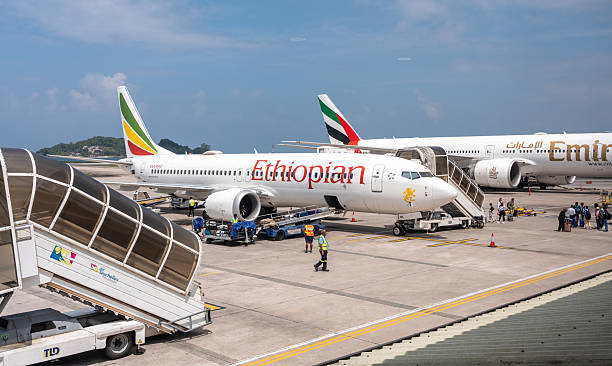
Airport ground handling in Africa is moving toward a more technology-driven, coordinated and efficient operating model. As passenger numbers, cargo volumes and regional connectivity grow, airports and ground handling companies will need to handle more aircraft without allowing delays, equipment shortages, baggage problems and safety incidents to increase.
The future will not simply depend on hiring more ground staff. It will involve better equipment, stronger data systems, improved training, automation and closer coordination between airlines, airports, ground handlers and logistics providers.
More Digital Ground Handling Operations
One of the biggest changes will be the replacement of manual processes with connected digital systems.
Many ground operations still depend on radios, paper records, spreadsheets and separate systems. This can make it difficult for teams to know exactly where equipment, baggage, aircraft servicing teams or other resources are at any given moment.
Digital platforms can bring these activities together. Ground handlers can monitor turnaround activities, assign resources, track equipment and share updates with airlines and airport teams in real time.
For African airports, this could be particularly valuable at busy hubs such as Lagos, Nairobi, Addis Ababa, Johannesburg and Cairo, where operational pressure can increase quickly during peak periods.
AI Will Support Faster Turnaround Decisions
Artificial intelligence is expected to become more useful in aircraft turnaround management.
AI systems can analyse information from aircraft stands, baggage operations, equipment, staffing and previous turnaround performance. This can help identify potential delays before they become serious operational problems.
For example, if baggage loading is falling behind schedule while a particular piece of ground equipment is unavailable, a digital system could alert the relevant team and help managers reallocate resources.
IATA identifies AI-integrated turnaround management, asset tracking and structured turnaround data as important areas for future ground operations. (IATA)
Electric and Smarter Ground Support Equipment
Ground support equipment will also change significantly.
Traditional diesel-powered equipment remains common across African airports, but electric alternatives are becoming increasingly relevant. Electric baggage tractors, ground power units, passenger stairs and other equipment can reduce emissions and noise when the required charging infrastructure is available.
The transition will not happen equally across every African airport. Electricity reliability, charging infrastructure, equipment costs, maintenance capability and airport investment will influence how quickly operators can adopt electric GSE.
Enhanced equipment with collision-prevention technology is another area likely to grow as airports look for ways to reduce aircraft and ramp damage. (IATA)
Better Tracking of Ground Equipment
Knowing where equipment is and whether it is available will become increasingly important.
Ground handlers can use telematics, GPS-enabled systems and digital fleet management tools to monitor equipment utilisation, maintenance requirements and location.
Instead of discovering that a baggage tractor or catering vehicle is unavailable only when an aircraft needs it, operations teams can receive information earlier and make alternative arrangements.
This can reduce unnecessary equipment movement, improve utilisation and help airports understand where additional investment is actually required.
Automation and Autonomous Equipment
Automation will gradually take over some repetitive ground tasks.
Autonomous vehicles could eventually support activities such as transporting baggage, moving equipment or completing predefined airside routes. Robotics may also assist with baggage and cargo handling.
However, automation is unlikely to remove the need for people from African ground operations. Human workers will continue to be required for supervision, safety decisions, problem-solving, passenger assistance and situations where conditions are too unpredictable for automated systems.
The more realistic future is likely to be human teams supported by automation rather than completely unmanned airports.
Stronger Baggage and Cargo Coordination
Baggage handling will become increasingly dependent on real-time information sharing.
Passengers expect their bags to move reliably from check-in to aircraft and eventually to the correct arrival belt. Ground handlers therefore need better visibility across baggage operations.
The same applies to cargo. As African air freight develops, cargo terminals will need stronger coordination between airlines, freight forwarders, customs authorities, warehouses, road transport operators and ground handlers.
Digital data sharing can reduce the dependence on disconnected systems and help different organisations work from the same operational information. (IATA)
More Skilled Ground Handling Workers
Technology will not eliminate the need for trained aviation professionals.
Instead, the skills required by ground handling workers will change. Staff will increasingly need to understand digital systems, equipment monitoring, safety technology, data and automated processes alongside traditional ramp and baggage-handling skills.
African airports will therefore need continuous training rather than relying only on initial employee certification.
Training will also remain important as airports introduce new aircraft types, new GSE and more sophisticated turnaround systems.
Greater Focus on Safety and Standardisation
As airport operations become more complex, standardisation will become increasingly important.
Different airlines, handlers and airports may have their own procedures, but unnecessary variations can create confusion and increase operational risk.
Stronger implementation of recognised ground handling standards, better audits and consistent staff training can help create more predictable operations.
IATA has specifically called for stronger implementation of global ground handling standards alongside modern GSE and digitalisation. (IATA)
Ground Handling Will Become More Data-Driven
Future airport managers will have access to much more operational data than they do today.
They will be able to examine aircraft turnaround times, baggage delays, GSE utilisation, staff productivity, aircraft damage incidents and other performance indicators.
This makes it possible to identify recurring problems instead of simply reacting to individual delays.
For example, if an airport repeatedly experiences delays because buses are unavailable during evening peaks, historical data can demonstrate the problem and support better resource planning.
African Airports Will Need Localised Solutions
Technology alone will not solve every ground handling problem in Africa.
Solutions need to account for local realities such as electricity reliability, airport infrastructure, road access, equipment availability, financing, workforce capacity and differences between major hubs and smaller airports.
A system designed for a highly automated European airport may require significant adaptation before it works effectively at a secondary African airport.
The future of airport ground handling in Africa will therefore involve combining international aviation standards with solutions suited to local operating conditions.
How Travo.ng Can Support Airport Travel and Logistics
Travo.ng can support the wider travel and logistics activities that surround airport ground operations without positioning itself as an airport ground handler or specialist aviation equipment provider.
For example, airlines, aviation companies, business travellers and other organisations may need airport transfers, travel bookings, hotel reservations, vehicle hire, cargo logistics, delivery coordination or transportation support alongside their airport activities.
A company sending staff to Lagos for an airport project may need flights, accommodation and airport transportation arranged together. Similarly, personnel travelling between airports and project locations may require reliable vehicle coordination and travel logistics.
By handling these wider movement and logistics requirements, Travo.ng can help businesses and travellers coordinate the parts of their journey that happen around airport operations.
What the Future Means for African Ground Handlers
The future of airport ground handling in Africa will be shaped by several changes happening at the same time: digitalisation, artificial intelligence, smarter GSE, automation, stronger safety standards, better data sharing and workforce development.
The transition will not happen overnight, and airports will move at different speeds. Major hubs may adopt advanced technologies earlier, while smaller airports may initially focus on basic digital systems, reliable equipment and staff training.
The operators that can combine technology with properly trained people, reliable equipment and strong coordination will be better positioned to manage increasingly complex airport operations as African aviation continues to develop.
