


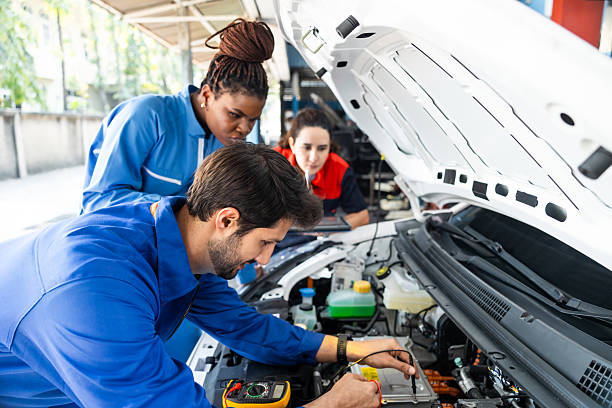
Companies that operate multiple vehicles need skilled technicians who can keep their fleet safe, reliable and available for daily operations. Fleet workshop technician jobs are suitable for mechanics and automotive technicians with experience in servicing cars, buses, trucks and other commercial vehicles.
Fleet workshops are different from ordinary repair garages because the focus is not just on fixing individual vehicles. Technicians have to work around maintenance schedules, vehicle availability, breakdowns, inspections and operational deadlines.
What Does a Fleet Workshop Technician Do?
A fleet workshop technician can handle a wide range of maintenance and repair tasks, including:
- Routine vehicle servicing
- Preventive maintenance
- Mechanical fault diagnosis
- Engine repairs
- Brake and suspension repairs
- Transmission maintenance
- Electrical troubleshooting
- Battery checks
- Vehicle inspections
- Diagnostic scanning
- Breakdown repairs
- Replacement of worn components
- Maintenance documentation
The vehicles may include company cars, delivery vans, buses, trucks, pickups or specialised commercial vehicles.
Why Fleet Maintenance Requires Different Skills
In a normal workshop, a mechanic may focus on one customer’s vehicle at a time. Fleet technicians often work with several vehicles that have different maintenance requirements.
A fleet workshop may need to track:
- Which vehicles are due for servicing.
- Which vehicles have recurring faults.
- Which vehicles are currently off the road.
- Which spare parts are required.
- Which repairs are urgent.
- When each vehicle needs to return to operation.
This makes organisation and accurate record keeping important alongside mechanical ability.
Preventive Maintenance Is a Major Part of the Job
Fleet operators cannot afford frequent unexpected breakdowns, particularly when vehicles are being used for deliveries, passenger transport or interstate operations.
Technicians may perform:
- Engine oil and filter changes
- Brake inspections
- Tyre checks
- Cooling-system inspections
- Battery testing
- Belt and hose inspections
- Suspension checks
- Fluid checks
- Lubrication
- Scheduled servicing
The goal is to identify problems before they become expensive breakdowns.
Vehicle Diagnostics Are Increasingly Important
Modern fleet vehicles contain numerous electronic control systems, making diagnostic skills increasingly valuable.
A fleet workshop technician should consider developing skills in:
- OBD diagnostic scanners
- Fault-code interpretation
- Multimeter testing
- Sensor testing
- ECU diagnostics
- Automotive wiring
- Engine-management systems
- Battery and charging systems
Being able to diagnose a fault accurately can reduce unnecessary parts replacement and get vehicles back into service faster.
Experience With Commercial Vehicles Can Help
Technicians with experience working on commercial vehicles can be particularly useful to fleet operators.
Relevant experience includes:
- Delivery vans
- Trucks
- Buses
- Pickups
- Trailers
- Diesel vehicles
- Heavy-duty vehicles
Diesel-engine knowledge can be especially useful where a fleet contains trucks and other commercial vehicles that operate long distances.
What Qualifications Do Fleet Technicians Need?
Requirements depend on the employer and fleet type.
Common qualifications include:
- OND/HND Mechanical Engineering
- Automotive Engineering qualifications
- Automobile Technology
- Technical college certificates
- Trade Test certification
- Vocational mechanic training
- Manufacturer-specific technical training
Practical experience is also important. Employers want technicians who can work confidently on real vehicles and diagnose faults without unnecessary delays.
Workshop Safety Matters
Fleet technicians often work with heavy components, hydraulic equipment, lifting equipment, electrical systems and moving vehicles.
Important safety practices include:
- Using appropriate PPE
- Correctly securing vehicles before working underneath them
- Using lifting equipment properly
- Handling batteries safely
- Keeping tools organised
- Following workshop procedures
- Conducting proper checks before road testing
A technically skilled mechanic who ignores safety procedures can create significant risks for the entire workshop.
What Should You Put on Your CV?
A fleet technician CV should clearly show your practical experience.
Include:
- Years of experience
- Types of vehicles maintained
- Engine types
- Diagnostic equipment used
- Preventive maintenance experience
- Fleet experience
- Mechanical repairs
- Electrical troubleshooting
- Brake and suspension work
- Transmission experience
- Technical qualifications
- Relevant certifications
Instead of simply writing “Fleet Technician,” explain the scale and type of work you have performed.
For example:
“Maintained a 40-vehicle commercial fleet, carrying out preventive servicing, engine diagnostics, brake repairs, electrical troubleshooting and breakdown response.”
Related Job Titles to Search
Don’t restrict your search to “fleet workshop technician jobs.”
Also search for:
- Fleet Technician
- Fleet Maintenance Technician
- Fleet Mechanic
- Automotive Technician
- Workshop Technician
- Senior Fleet Technician
- Vehicle Maintenance Technician
- Fleet Maintenance Mechanic
- Workshop Mechanic
- Diesel Technician
- Heavy-Duty Technician
- Fleet Maintenance Supervisor
These titles can cover similar responsibilities depending on the organisation.
Applications and CV Submission
Candidates interested in fleet workshop technician opportunities and related automotive positions should prepare an updated CV showing their experience with vehicles, maintenance, diagnostics and workshop operations.
Applications and CVs should be sent to jobs@wigmoretrading.com.
Use Fleet Workshop Technician Application as the email subject and include your phone number, years of experience, qualifications and the types of vehicles you have maintained.
How to Stand Out as a Fleet Technician
Fleet employers are particularly interested in technicians who understand that vehicle downtime costs money.
Highlight your ability to:
- Complete repairs efficiently
- Diagnose faults accurately
- Reduce repeat breakdowns
- Follow preventive maintenance schedules
- Keep accurate maintenance records
- Handle urgent repairs
- Work with other technicians
- Inspect vehicles before returning them to service
- Use diagnostic equipment
- Follow workshop safety procedures
If you have helped improve vehicle availability or reduced recurring breakdowns, include that achievement on your CV.
Preparing for the Interview
Expect practical questions about vehicle maintenance and troubleshooting.
You may be asked:
- How would you diagnose a vehicle that won’t start?
- What maintenance should a commercial vehicle receive regularly?
- How would you identify the cause of repeated overheating?
- What does an OBD scanner help you determine?
- How would you handle several fleet vehicles needing repairs at the same time?
- How do you decide whether a component needs replacement?
- How would you respond to a vehicle breakdown during an urgent delivery?
- How do you confirm that a vehicle is safe to return to service?
Give answers based on your actual workshop experience whenever possible.
Where Can Fleet Workshop Technicians Work?
Potential employers include:
- Logistics companies
- Transport companies
- Delivery companies
- Manufacturing businesses
- Construction companies
- Car rental companies
- Distribution companies
- Agricultural businesses
- Government contractors
- Oil and gas service companies
- Large organisations operating company vehicles
Fleet technicians can also progress into supervisory and management positions as they gain experience.
Career Progression in Fleet Maintenance
A typical career path can develop from:
Workshop Assistant → Fleet Technician → Senior Fleet Technician → Lead Mechanic → Fleet Maintenance Supervisor → Fleet Maintenance Manager
Additional training in diagnostics, diesel technology, electrical systems, hydraulics and modern vehicle technology can improve your career options.
For technicians who want to remain competitive as vehicle technology changes, learning about hybrid and electric vehicles can also be a useful long-term investment.
A strong fleet workshop technician is ultimately someone who can diagnose problems accurately, maintain vehicles consistently, minimise downtime and return vehicles to service safely and reliably.
