


Knowing the correct tyre pressure is important for safe handling, braking, tyre wear and fuel efficiency. However, the right pressure is not the same for every vehicle, so drivers should check the manufacturer’s recommended figure rather than simply using a general PSI number. (Ford UK)
Where Can You Find Your Car’s Tyre Pressure?
The easiest place to check is usually the sticker or placard inside the driver’s door frame. Depending on the vehicle, the recommended pressure may also be listed inside the fuel-filler flap or in the owner’s manual. (Michelin Africa)
The information normally shows the recommended pressure for the front and rear tyres. Some vehicles also provide a different pressure when the car is heavily loaded with passengers or luggage.
Don’t Use the Number on the Tyre Sidewall
One common mistake is seeing a PSI number on the tyre and assuming that is the pressure you should use.
The number on the tyre sidewall generally refers to the tyre’s maximum permitted pressure, not the vehicle manufacturer’s recommended operating pressure.
Always use the pressure specified for your vehicle. (Michelin)
Should Front and Rear Tyre Pressure Be the Same?
Not necessarily.
Many vehicles have different recommended pressures for the front and rear tyres because the weight distribution of the vehicle is different.
Your tyre-pressure sticker will show the appropriate figure for each axle, so check the front and rear recommendations separately.
When Should You Check Tyre Pressure?
For the most accurate reading, check your tyres when they are cold. This means checking before driving or after the vehicle has been parked for several hours.
Driving heats the tyres and can temporarily increase the pressure reading. (bridgestone)
This is particularly useful before a long journey between cities in Nigeria.
How to Check Your Tyre Pressure
Checking your tyre pressure is straightforward:
- Find the recommended PSI or BAR on the vehicle’s tyre-pressure sticker.
- Remove the valve cap.
- Attach a reliable pressure gauge.
- Compare the reading with the manufacturer’s recommendation.
- Add or release air as required.
- Replace the valve cap.
- Repeat the process for all four tyres.
Don’t forget to check the spare tyre if your vehicle has one.
What Happens If Tyre Pressure Is Too Low?
Underinflated tyres can affect handling and braking while increasing tyre wear. They can also make the vehicle work harder and may increase fuel consumption.
If one tyre keeps losing pressure while the others remain stable, don’t simply keep adding air. The tyre could have a puncture, damaged valve or another leak that needs to be inspected.
What Happens If Tyre Pressure Is Too High?
Overinflating tyres can also affect how the vehicle behaves on the road. It can reduce the tyre’s contact with the road and contribute to uneven wear.
The correct pressure provides the balance intended by the vehicle manufacturer.
Can a Tyre Shop Check Your Pressure?
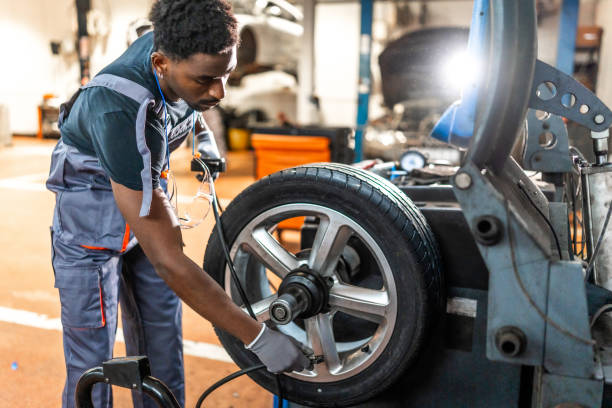
Yes. A tyre technician can check and adjust your tyre pressure using a pressure gauge and air compressor.
If you are already visiting a tyre shop for puncture repair, wheel alignment or tyre replacement, it is worth having all four tyres checked rather than focusing only on the tyre that looks low.
What If You Cannot Drive to a Tyre Shop?
If a tyre is completely flat or has suffered serious damage, driving to a workshop can damage the tyre or create a safety risk.
A mobile tyre service may be able to come to your location for an inspection, inflation, puncture repair or tyre replacement where available. If the vehicle cannot safely be driven, Travo.ng can also help coordinate vehicle transport to a suitable service location.
Checking your tyre pressure regularly is a simple part of vehicle maintenance, but always start with the pressure specified for your particular vehicle rather than relying on a generic PSI figure.
