


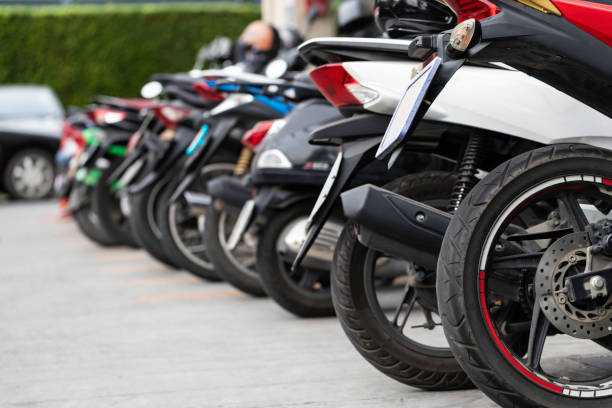
Commercial bike ownership solutions refer to structured models that enable individuals or businesses to own motorcycles that are professionally managed and deployed for income-generating activities such as courier delivery, e-commerce logistics, food delivery, and last-mile transportation. These solutions combine asset ownership with operational management to ensure bikes generate consistent revenue while being efficiently maintained and utilized.
This model is widely used in urban logistics, fleet investment programs, and shared mobility systems.
What commercial bike ownership solutions mean
Commercial bike ownership solutions involve acquiring motorcycles as business assets and integrating them into managed delivery or logistics operations.
A typical system includes:
- Motorcycle acquisition and financing support
- Fleet onboarding and deployment
- Rider assignment and coordination
- Delivery operations management
- Maintenance and servicing
- Fuel and cost optimization
- Real-time tracking and monitoring
- Revenue generation and ROI reporting
In simple terms, owners invest in bikes, while a management system ensures they generate steady income.
Why commercial bike ownership solutions are important
Motorcycles can generate daily income, but without structure, ownership becomes inefficient and risky.
Common challenges include:
- Poor utilization of bikes
- High maintenance and repair costs
- Rider misuse or inefficiency
- Unstable income streams
- Weak return on investment (ROI)
- Lack of operational control
Commercial ownership solutions solve these problems by combining ownership with professional management.
Core components of commercial bike ownership solutions
1. Asset acquisition and financing support
Ensures proper purchase and setup of motorcycles.
This includes:
- Selection of fuel-efficient and durable bikes
- Financing or installment purchase options
- Registration and insurance setup
- Initial inspection and onboarding
- Asset documentation and compliance
2. Fleet deployment and operational integration
Bikes are deployed into revenue-generating systems.
This includes:
- Assignment to courier or delivery networks
- Integration with logistics platforms
- Deployment in e-commerce or food delivery services
- Matching bikes to high-demand zones
- Operational scheduling and coordination
3. Rider and workforce management
Riders determine operational success.
This includes:
- Recruitment and onboarding
- Training for safety and efficiency
- Shift scheduling and supervision
- Performance tracking
- Incentive and accountability systems
4. Maintenance and asset protection
Protects long-term asset value and reliability.
This includes:
- Preventive maintenance scheduling
- Engine and mechanical diagnostics
- Tire, brake, and oil servicing
- Workshop coordination
- Breakdown response systems
5. Fuel and operational cost optimization
Cost control improves profitability.
This includes:
- Monitoring fuel usage per bike
- Detecting inefficiencies or misuse
- Cost-per-kilometer tracking
- Driver behavior optimization
- Budget control systems
6. Route and delivery optimization
Improves speed and efficiency.
This includes:
- Shortest-path route planning
- Traffic-aware navigation
- Multi-stop delivery sequencing
- Real-time rerouting
- Zone-based dispatching
7. Real-time tracking and fleet visibility
Ensures transparency and accountability.
This includes:
- GPS tracking of all bikes
- Live delivery monitoring
- Geofencing for operational zones
- Rider performance dashboards
- Usage analytics
8. Financial reporting and ROI tracking
Critical for investment evaluation.
This includes:
- Revenue per bike tracking
- Cost per delivery analysis
- Maintenance cost breakdown
- Net profit per asset
- ROI and payback period calculation
Key performance indicators (KPIs)
Commercial bike ownership solutions are measured using:
- Vehicle utilization rate
- Cost per delivery
- Revenue per bike
- Fuel efficiency
- Maintenance cost ratio
- Delivery success rate
- Asset lifespan performance
- Return on investment (ROI)
Benefits of commercial bike ownership solutions
Passive income generation
Owners earn while operations are managed professionally.
High asset utilization
Bikes are consistently deployed in logistics operations.
Reduced operational burden
Management handles riders, maintenance, and logistics.
Scalable investment model
Easy to expand fleet size over time.
Transparent performance tracking
Clear visibility into financial returns.
Challenges in commercial bike ownership solutions
Despite benefits, challenges include:
- Dependence on management quality
- Asset depreciation over time
- Fuel and maintenance fluctuations
- Rider behavior risks
- Logistics demand variability
Risks of unmanaged bike ownership
Without structured systems, owners may face:
- Low or inconsistent income
- High maintenance costs
- Poor asset utilization
- Misuse or damage of bikes
- Weak ROI and financial losses
Technology used in commercial bike ownership solutions
Modern systems rely on:
- GPS tracking and telematics
- Fleet management platforms
- Mobile rider applications
- Fuel monitoring systems
- Route optimization tools
- Financial dashboards
- Predictive maintenance systems
These tools ensure transparency, efficiency, and control.
Where logistics coordination fits into bike ownership solutions
Commercial bike ownership systems operate within broader logistics ecosystems such as:
- E-commerce delivery networks
- Courier and express logistics
- Food and pharmacy delivery services
- Urban distribution hubs
- Supply chain logistics operations
Efficient coordination ensures maximum utilization and profitability.
How Travo.ng supports logistics coordination
While commercial bike ownership solutions focus on asset investment and income generation, logistics coordination ensures smooth movement of goods across transport systems.
Travo.ng supports logistics operations through:
- Cargo consolidation and freight coordination
- Intercity and interstate delivery services
- Port-to-destination logistics support
- Supply chain coordination across Nigeria
- End-to-end logistics execution for cargo movement
This improves fleet utilization and strengthens overall investment returns.
Final thoughts
Commercial bike ownership solutions transform motorcycles into structured income-generating assets by combining ownership with professional fleet management. This model reduces operational stress, increases efficiency, and provides investors with scalable and transparent returns.
In modern logistics, success depends not just on owning bikes, but on how effectively they are deployed, managed, and optimized for continuous performance.
