


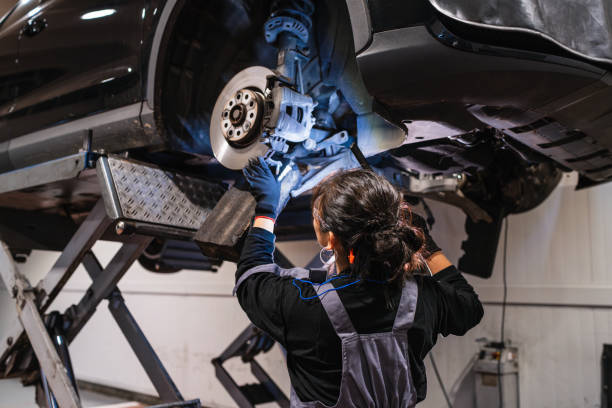
Brake pads and discs work together to slow down and stop your car. The pads create friction against the rotating discs, gradually converting the vehicle’s movement into heat.
Because they are used every time you brake, both components eventually wear out. Knowing the difference between brake pads and discs can help you understand what your mechanic is checking when your car starts showing braking problems.
What Are Brake Pads?
Brake pads are friction components fitted inside the brake caliper. When you press the brake pedal, the caliper pushes the pads against the brake disc.
The friction between the pads and disc slows the wheel.
Brake pads are designed to wear down, so they need to be inspected and replaced periodically.
What Are Brake Discs?
Brake discs, also called brake rotors, are metal discs attached to the wheel assembly. The brake pads clamp onto their surfaces when you apply the brakes.
Unlike brake pads, discs generally last longer, but they can become worn, scored, distorted or too thin and eventually need replacement.
Brake Pads vs Brake Discs
The easiest way to understand the difference is:
- Brake pads: Create friction against the disc and normally wear faster.
- Brake discs: Provide the rotating surface that the pads grip.
- Brake caliper: Holds and pushes the brake pads against the disc.
All three components need to work properly for effective braking.
Signs Your Brake Pads May Be Worn
Several warning signs can indicate that your brake pads need inspection.
Watch out for:
- Squealing or screeching when braking
- Grinding or scraping sounds
- Longer stopping distances
- A brake pad warning light
- A visibly thin friction material
- Uneven braking
- The car pulling to one side when braking
A squealing sound can sometimes have other causes, but persistent noise should not be ignored.
Signs Your Brake Discs May Need Replacing
Disc problems can feel different from normal pad wear.
Possible signs include:
- Vibration through the steering wheel when braking
- Pulsation through the brake pedal
- Deep grooves across the disc
- Severe corrosion
- A pronounced lip around the edge of the disc
- Blue or heat-damaged areas
- Longer or less consistent braking
A mechanic should measure the disc and compare it with the vehicle manufacturer’s minimum thickness specification rather than judging it by appearance alone.
Can You Replace Brake Pads Without Changing the Discs?
Sometimes, yes.
If the brake discs are still within specification and their condition is good, new brake pads may be all that is required.
However, fitting new pads to badly worn or damaged discs can cause poor braking performance, noise or uneven wear. The condition of both components should therefore be checked before deciding what to replace.
When Should Brake Pads Be Replaced?
There is no single mileage that applies to every vehicle.
Brake pad life depends on factors such as:
- Driving style
- Traffic conditions
- Vehicle weight
- Road conditions
- Brake pad material
- Frequency of braking
- Quality of the components
Frequent stop-and-go driving in busy urban traffic can put considerably more use through the brakes than steady motorway-style driving.
Instead of relying only on mileage, have the pads inspected during routine servicing.
What Happens If You Ignore Worn Brake Pads?
Once the friction material becomes excessively worn, the metal backing of the pad can come into contact with the disc.
This can damage the disc and potentially increase the cost of the repair. More importantly, braking performance can be affected.
If you hear persistent grinding or scraping from the brakes, arrange an inspection as soon as possible rather than continuing to drive normally.
Why Are My Brakes Vibrating?
Brake vibration can have several possible causes.
If the steering wheel or brake pedal pulses when you brake, the discs may have uneven thickness, distortion or other damage. Other suspension or wheel-related problems can also produce vibration.
Don’t automatically replace the discs without proper diagnosis. A mechanic should inspect the complete braking system and determine the source.
Brake Pads and Discs in Nigerian Driving Conditions
Driving conditions can affect how frequently your brakes are used.
Heavy traffic in cities such as Lagos and Abuja involves frequent acceleration and braking. Long journeys can also place significant demands on the braking system, particularly when carrying passengers and luggage.
Dust, dirt, water and prolonged periods of vehicle inactivity can also affect brake components.
Regular inspection is therefore more useful than waiting for a specific mileage before checking your brakes.
Should Brake Pads Be Changed in Pairs?
Brake pads on the same axle are normally replaced as a set rather than replacing only one side.
This helps maintain balanced braking between the left and right wheels.
If one pad is wearing significantly faster than the other, however, the mechanic should investigate the reason instead of simply replacing the worn pad. A sticking caliper, guide pin or another problem can cause uneven wear.
What About Brake Discs?
Brake discs on the same axle should generally be assessed together. If one is significantly damaged or below its specified minimum thickness, the condition of the other disc should also be checked.
The exact replacement procedure depends on the vehicle and brake system.
Choosing Replacement Brake Pads and Discs
Don’t buy brake components based only on price.
Check that the parts are compatible with your:
- Vehicle make
- Model
- Model year
- Engine
- Brake configuration
- Disc dimensions
- Pad specification
Cheap components that don’t meet the correct specification can create braking, noise or durability problems.
Brake Checks Before a Long Journey
Before an interstate journey, have the braking system checked if you have noticed any unusual symptoms.
Pay particular attention to:
- Brake pedal feel
- Brake fluid level
- Pad thickness
- Disc condition
- Brake warning lights
- Unusual noises
- Vehicle pulling under braking
- Steering or pedal vibration
If the brakes are already making grinding noises or the pedal feels abnormal, don’t wait until after the trip to investigate them.
Getting Your Car Ready for Travel
Brake maintenance should be part of your normal vehicle preparation, especially before long-distance travel.
If your car needs servicing or you’re arranging transport while repairs are being carried out, Travo.ng can help with relevant travel and transport logistics, including journey planning and vehicle-related coordination.
The key is simple: don’t wait for complete brake failure before checking your pads and discs. Regular inspection can identify wear early and help keep your vehicle ready for the road.
