


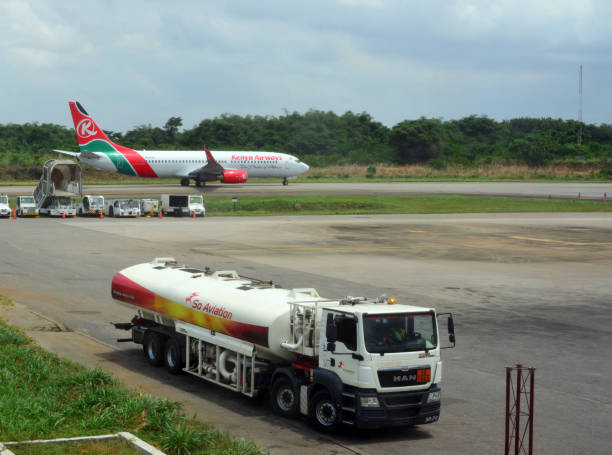
An aviation logistics provider in Africa helps airlines, cargo operators, businesses and other aviation stakeholders coordinate the movement of cargo, equipment, documents and people through complex airport and transportation networks.
The work can extend from airport cargo handling and warehousing to customs coordination, ground transportation, freight forwarding and time-sensitive deliveries. Some providers specialise in air cargo, while others combine aviation support with broader logistics and supply chain services.
This distinction matters because moving cargo by air is only one part of the journey. Goods still need to reach the airport, pass through the required processes, connect with the aircraft and often continue by road after landing.
What an Aviation Logistics Provider Handles
The exact service package varies between providers, but aviation logistics can involve:
- Air freight coordination
- Cargo handling
- Airport transfers
- Warehousing
- Customs and documentation support
- Ground transportation
- Cargo consolidation
- Time-critical deliveries
- Perishable cargo logistics
- Aircraft cargo support
- Door-to-airport and airport-to-door movements
For example, Landover provides cargo flight logistics, airline representation, warehousing, clearing and forwarding, and logistics consultancy services in Nigeria. (Landover)
Other providers operate across multiple countries. Aero Africa, for instance, says its network covers 54 African countries and 84 airports, offering airfreight, cargo management, express and perishable cargo services. (Aero Africa)
Why Aviation Logistics Is Different in Africa
Aviation logistics across Africa often involves multiple transport modes and operational environments.
A shipment might originate from a manufacturing facility in Lagos, move by road to Murtala Muhammed International Airport, travel by air to Nairobi, and then continue by road to its final destination.
Each stage requires coordination.
Airport capacity, customs processes, road conditions, cargo documentation, warehouse availability and flight schedules can all affect delivery times.
This is why businesses moving aviation-related cargo often need a provider capable of coordinating the entire movement rather than simply booking an airfreight service.
Air Cargo Handling and Airport Coordination
Cargo needs to be correctly received, documented, stored and prepared for transportation.
Depending on the shipment, this can involve cargo screening, weighing, documentation, warehouse handling, consolidation and loading arrangements.
Special cargo requires additional attention. Pharmaceuticals, fresh produce and other temperature-sensitive goods may require controlled storage and transportation throughout the journey.
Swissport currently operates cargo facilities across several African markets, including certified facilities supporting pharmaceutical and perishable cargo logistics. Its African network includes 17 warehouses across six countries. (Swissport)
Ground Transportation Is Part of the Logistics Chain
An aircraft cannot complete a cargo journey on its own.
Cargo needs to move between airports, warehouses, factories, distribution centres and final customers. Ground transportation therefore plays an important role in aviation logistics.
For example, a shipment arriving at Lagos airport may need immediate transportation to a warehouse or customer in Ikeja, Lekki, or another part of Lagos. A cargo movement from Abuja airport may similarly require onward transportation to a business or distribution centre.
Some aviation logistics providers combine air cargo services with road transportation to provide a more connected supply chain. Jet Afrique, for example, describes services covering air cargo, ground logistics, warehousing and transportation in West and Central Africa. (jetAfrique)
Time-Critical Aviation Logistics
Some shipments cannot wait for a normal delivery cycle.
Examples include:
- Aircraft spare parts
- Medical supplies
- Pharmaceuticals
- Perishable food
- Emergency equipment
- Important commercial documents
- High-value goods
- Urgent replacement components
For these shipments, the logistics provider has to consider more than the flight schedule. Pickup time, airport acceptance deadlines, cargo documentation, customs clearance, warehouse handling and final delivery all matter.
A delay at any one stage can affect the entire shipment.
Choosing an Aviation Logistics Provider
Businesses should examine the provider’s actual network and capabilities before handing over an important shipment.
Useful questions include:
- Which African airports do they cover?
- Do they have local operational partners?
- Can they arrange airport cargo handling?
- Can they coordinate customs and documentation?
- Do they offer warehousing?
- Can they provide road transportation?
- How do they handle urgent cargo?
- Can they support temperature-sensitive shipments?
- Do they provide shipment visibility?
- What happens when a flight is delayed or cancelled?
A provider with a strong network but limited local operational capacity may not be suitable for every shipment.
Managing Cargo Between African Airports
Cross-border aviation logistics becomes more complicated when cargo moves through several countries.
Different customs procedures, documentation requirements, airport handling arrangements and transport networks can affect the shipment.
Centralised coordination can simplify this process. Aero Africa, for example, describes using regional service centres and a centralised approach to coordinate air cargo operations across its African network. (Aero Africa)
For businesses, having one logistics contact can reduce the need to separately coordinate multiple airport handlers, freight agents and transport companies.
How Travo.ng Can Support Aviation Travel and Logistics
Travo.ng can support the travel and transportation requirements surrounding aviation logistics without presenting itself as a specialist cargo handler or freight forwarder.
For example, an aviation company may have technical personnel travelling to Lagos, Abuja or another African city to support an operation. Those personnel may need airport pickup, hotel accommodation, vehicle hire and transportation between operational locations.
Travo.ng can help coordinate these travel and mobility requirements while specialist aviation logistics providers manage cargo handling, customs, aircraft support and other regulated activities.
The same applies to businesses sending staff or equipment between locations. Travo.ng can support the wider ground transportation and travel arrangements that sit around an aviation logistics operation.
This makes the roles complementary: specialist aviation providers handle the technical cargo and airport processes, while Travo.ng can help organise related travel, transport, accommodation and delivery requirements where applicable.
Aviation Logistics for Businesses Operating Across Africa
Aviation logistics providers are increasingly important for businesses that depend on reliable cross-border movement.
Manufacturers, airlines, freight forwarders, healthcare companies, retailers and international organisations may all require air cargo and supporting transportation at different points.
The right provider should therefore be assessed based on its actual African network, airport capabilities, cargo expertise, local partnerships and ability to coordinate the complete logistics chain.
For time-sensitive shipments, the objective is not simply to get cargo onto an aircraft. It is to ensure that every stage before departure and after arrival is properly coordinated so the shipment reaches its destination with as little unnecessary delay as possible.
