


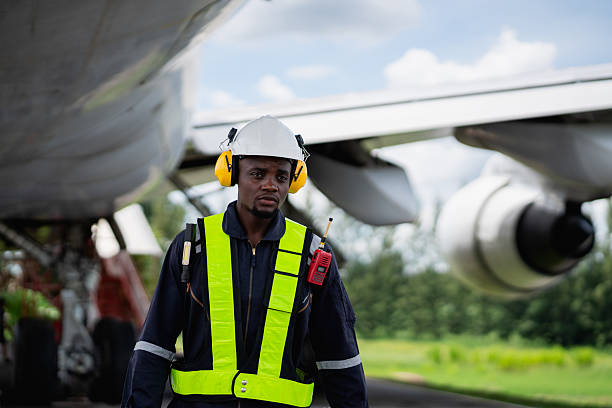
Aviation ground support equipment is essential to the daily operation of airports and airlines across Africa. Aircraft require a wide range of equipment while parked at the terminal or aircraft stand, from passenger stairs and baggage loaders to tow tractors, ground power units and specialised servicing equipment.
When the right equipment is unavailable, poorly maintained or positioned too far from an aircraft, even routine ground operations can become slower and less predictable. Reliable GSE therefore plays an important role in aircraft turnaround times, ramp safety and overall airport efficiency.
What Ground Support Equipment Is Used at African Airports?
Ground support equipment covers the vehicles and machinery used to support an aircraft while it is on the ground.
Common examples include:
- Baggage belt loaders
- Passenger boarding stairs
- Aircraft tow tractors
- Pushback tractors
- Ground power units
- Air start units
- Aircraft water and lavatory service equipment
- Cargo and ULD loaders
- Catering trucks
- Passenger buses
- Maintenance platforms
- Ground support vehicles
- Refrigerated and specialist service equipment
The exact equipment required depends on aircraft type, airport infrastructure, airline operations and the services provided by the ground handling company.
Why GSE Availability Matters in Africa
African airports operate in very different environments. A busy international hub such as Lagos, Johannesburg, Nairobi or Addis Ababa has different equipment requirements from a smaller regional airport.
Equipment availability becomes particularly important when several aircraft are being handled at the same time. If there are not enough serviceable belt loaders, passenger stairs or tractors, ground teams may have to wait for equipment to become available.
That can affect baggage loading, passenger boarding, cargo movement and other turnaround activities.
For airlines, the problem is not simply having a large GSE fleet. The equipment needs to be available, serviceable and suitable for the aircraft and operation being handled.
Equipment Maintenance and Reliability
A GSE fleet that is not properly maintained can create operational problems even when the airport has enough equipment.
Preventive maintenance should cover engines, batteries, hydraulic systems, tyres, brakes, safety systems and other components relevant to each equipment type.
Airports and ground handlers can also maintain records showing:
- Equipment condition
- Maintenance history
- Upcoming servicing
- Breakdown frequency
- Utilisation rates
- Replacement requirements
- Availability during peak periods
This helps operators identify equipment that repeatedly causes delays and plan replacements before failures become operational problems.
Safety and Aircraft Ground Damage
GSE operates close to aircraft, passengers and ground personnel, making safe operation critical.
IATA notes that GSE operations account for a significant share of aircraft ground damage and promotes enhanced GSE with anti-collision systems as one approach to reducing this risk. Passenger stairs, ULD loaders and belt loaders are among the equipment types identified in relation to ground damage. (IATA)
For African airports, safety programmes should therefore go beyond purchasing equipment. Operators also need trained personnel, appropriate operating procedures, equipment inspections and clear movement controls around aircraft stands.
Electric Ground Support Equipment in Africa
Electric GSE is becoming increasingly relevant as airports and ground handlers look for ways to reduce emissions and noise from ramp operations.
Equipment such as electric tow tractors, baggage loaders and other electric vehicles can reduce tailpipe emissions and may require less maintenance than conventional equipment. IATA also highlights lower noise levels and improved working conditions as potential benefits of electric GSE. (IATA)
Nigeria provides an example of this transition. SAHCO has invested in electric GSE, including electric tow tractors and electric conveyor belt loaders designed for baggage and cargo movement. (SAHCO Plc.)
However, switching to electric equipment requires more than buying electric vehicles. Airports need to consider charging infrastructure, electricity reliability, operating patterns, maintenance capability and the availability of suitable replacement parts.
GSE Procurement and Fleet Planning
Airports and airlines should avoid selecting GSE based only on purchase price. Equipment needs to match the actual operational environment.
Before procurement, operators should consider:
- Aircraft types being handled
- Number of daily movements
- Peak operating periods
- Airport stand configuration
- Local weather and terrain
- Spare-parts availability
- Maintenance support
- Operator training
- Equipment lifespan
- Fuel or charging requirements
For airports with limited budgets, refurbishment can also be considered where appropriate. Extending the useful life of suitable equipment can be more practical than replacing an entire fleet at once.
Moving GSE Across African Airports
Equipment deployment can become complicated when GSE needs to move between countries or remote airports.
Cross-border transportation may involve freight arrangements, customs procedures, specialised handling and on-site commissioning. The logistics can be particularly challenging when an airport is located far from major industrial or commercial centres.
For this reason, procurement planning should consider not only where equipment is purchased but also how it will reach the airport, who will install or commission it and how future maintenance will be handled.
GSE Technology and Fleet Tracking
Technology can make large GSE fleets easier to manage.
Equipment tracking systems can help operators monitor the location, utilisation and condition of vehicles and machines. This can reduce unnecessary equipment movements and make it easier to identify whether sufficient equipment is available for an upcoming aircraft turnaround.
Some newer GSE systems also incorporate safety technology, automation and anti-collision features.
IATA is also exploring autonomous GSE and standardised approaches for testing and implementation as airport ground operations become more technology-driven. (IATA)
How Travo.ng Can Support Aviation Logistics Around GSE
Travo.ng is not a GSE manufacturer or aircraft ground-handling company, but it can support the travel and logistics activities surrounding aviation operations.
For example, when GSE technicians, aviation contractors or equipment suppliers need to travel between locations, Travo.ng can help coordinate relevant travel arrangements, airport transfers, accommodation and vehicle hire. Where appropriate, its logistics and delivery capabilities can also support the movement of eligible items and operational materials.
Consider a GSE specialist travelling from Lagos to Abuja for an equipment installation or maintenance assignment. Instead of separately arranging flights, airport pickup, accommodation and local transportation, these travel requirements can be coordinated as part of the wider trip.
This type of support helps aviation businesses focus on their specialist ground operations while their related travel and movement requirements are handled more efficiently.
Building More Reliable GSE Operations
The future of aviation ground support equipment in Africa will involve a combination of reliable conventional equipment, electric GSE, better maintenance, safety technology and stronger fleet management.
The biggest gains do not necessarily come from simply buying more machines. Airports and ground handlers need equipment that matches their traffic levels, aircraft types and local operating conditions.
With proper procurement, maintenance, trained operators and dependable logistics, GSE can support faster aircraft turnarounds while reducing avoidable ground delays and equipment-related safety risks.
