


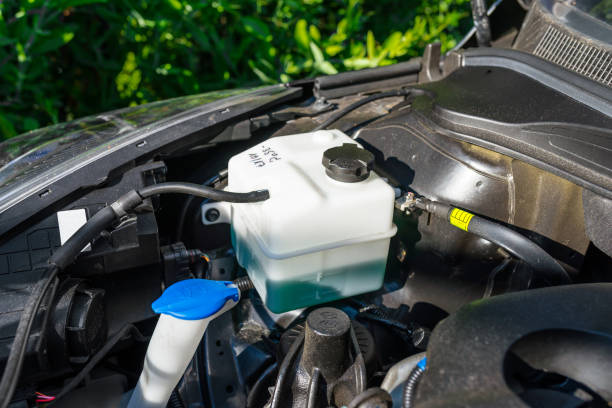
Anti freeze coolant, commonly written as antifreeze coolant, is the fluid used in a vehicle’s cooling system to help control engine temperature and protect cooling-system components.
Despite the name, antifreeze is not only useful in very cold weather. It also helps raise the coolant’s boiling point and provides corrosion protection, making the correct coolant important for vehicles operating in hot conditions as well.
What Is Antifreeze Coolant?
Antifreeze is usually a glycol-based concentrate containing additives that help protect the cooling system.
When mixed with water according to the vehicle or coolant manufacturer’s instructions, it becomes engine coolant that circulates through the engine and radiator.
The coolant absorbs heat from the engine and carries it to the radiator, where the heat is released.
What Does Antifreeze Coolant Do?
A properly specified coolant performs several jobs:
- Helps regulate engine temperature
- Raises the boiling point of the cooling mixture
- Provides freeze protection where required
- Helps protect against corrosion
- Helps protect cooling-system components
- Supports proper operation of the cooling system
This is why replacing coolant with plain water as a permanent solution is not recommended.
Antifreeze vs Coolant
The two terms are often used interchangeably, but they can mean different things.
Antifreeze is commonly sold as a concentrated product that may need to be diluted.
Coolant is the finished fluid used in the vehicle’s cooling system and may already be premixed.
Some bottles are sold as ready-to-use coolant, while others are concentrates that require dilution.
Always read the product instructions before adding it to your vehicle.
What Type of Coolant Does Your Car Need?
The correct coolant depends on the vehicle’s manufacturer specification, engine and cooling-system requirements.
Common coolant technologies include:
- IAT
- OAT
- HOAT
- Other manufacturer-specific formulations
Do not choose coolant based only on its colour. Different coolant formulations can share similar colours, while the same type of coolant may be available in different colours.
Check your owner’s manual or the manufacturer’s specification before buying.
Can You Mix Different Coolants?
It is better not to mix coolant types unless the products are specifically confirmed as compatible.
Incompatible formulations can reduce the protection provided by the coolant and may cause deposits or other cooling-system problems.
If you are unsure what coolant is already in the vehicle, get the system checked rather than guessing from the colour.
If a different coolant specification needs to be introduced, a proper drain and flush may be required.
How to Check Your Coolant Level
Checking the coolant level is normally straightforward.
With the engine completely cold:
- Park the vehicle on level ground.
- Open the bonnet.
- Locate the coolant expansion reservoir.
- Check the level against the MIN and MAX markings.
- Look for obvious leaks around hoses, the radiator and the reservoir.
- Top up only with the correct coolant if the level is low.
Never remove a hot coolant-system cap. The system can be pressurised and hot coolant or steam can cause serious burns.
Can You Use Water Instead of Coolant?
Water can sometimes be used temporarily in an emergency, but it should not replace the correct coolant mixture as a long-term solution.
Using only water does not provide the same corrosion protection and boiling or freezing protection as the appropriate coolant mixture.
If you have had to use water because of an emergency, have the cooling system checked and restored to the correct specification as soon as practical.
Signs Your Coolant Needs Attention
A cooling system problem can show up in several ways.
Look out for:
- Engine temperature rising above normal
- Low coolant warning
- Coolant level repeatedly dropping
- Visible coolant leaks
- A sweet smell around the engine bay
- Steam from the engine area
- Discoloured or contaminated coolant
- Overheating in traffic
- Poor cabin heater performance on vehicles equipped with a heater
If coolant keeps disappearing, simply topping it up repeatedly may hide an underlying leak.
Why Is My Car Losing Coolant?
A low coolant level can be caused by a leak or another cooling-system fault.
Potential problem areas include:
- Radiator
- Coolant hoses
- Expansion tank
- Radiator cap
- Water pump
- Thermostat housing
- Heater system
- Engine or head-gasket-related problems
If the coolant level keeps falling, have the system inspected rather than continuing to refill it without finding the cause.
Antifreeze Coolant in Nigerian Conditions
Even though Nigeria does not generally experience the freezing conditions that make antifreeze protection the main concern, the coolant still has an important role in managing engine temperature and protecting the cooling system.
Traffic in cities such as Lagos can leave vehicles idling or moving slowly for long periods, while long-distance journeys can place sustained demands on the cooling system.
A properly maintained cooling system is therefore important for daily driving and interstate travel.
When Should You Change Coolant?
There is no single replacement interval for every vehicle.
Coolant service intervals vary according to the vehicle manufacturer, coolant formulation and operating conditions.
Follow the maintenance schedule for your particular vehicle rather than relying on a general number of years or kilometres.
If the coolant is contaminated, the wrong type has been added, or the cooling system has been repaired, additional servicing may be required.
What Happens If You Ignore Old Coolant?
Coolant additives gradually lose their effectiveness. Neglected coolant can provide less protection against corrosion and contamination.
Problems within the cooling system can eventually affect components such as the radiator, water pump, thermostat and hoses.
Regular inspection and replacement according to the manufacturer’s schedule can help keep the system in good condition.
Check Coolant Before a Long Journey
Before travelling between cities, check the coolant level while the engine is cold and look for signs of leaks.
Also inspect the radiator hoses, temperature gauge, fan operation and other visible cooling-system components.
If your vehicle has recently overheated, do not simply refill the coolant and start a long trip. Find out why it overheated first.
Get Your Vehicle Ready With Travo.ng
Whether you’re preparing for an interstate journey, airport transfer, relocation or business trip, checking essential vehicle fluids before travelling can help prevent avoidable problems on the road.
Travo.ng can help with travel bookings, airport transfers, vehicle hire and logistics arrangements while you prepare your vehicle for the journey.
