


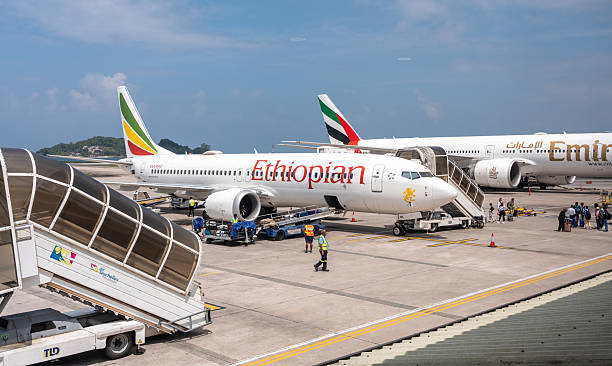
Airport equipment maintenance in Africa is essential for keeping ground operations safe, reliable and efficient. Airports depend on a wide range of equipment to move passengers and cargo, service aircraft and support aircraft turnaround activities.
Ground support equipment such as baggage tractors, belt loaders, aircraft tugs, ground power units, passenger stairs and service vehicles must remain available when aircraft arrive and depart. When equipment breaks down unexpectedly, the resulting delay can affect baggage handling, passenger boarding, aircraft servicing and departure schedules.
Effective maintenance therefore needs to focus not only on repairing equipment after failure but also on preventing avoidable breakdowns.
Which Airport Equipment Needs Regular Maintenance?
Airport operators and ground handlers manage different types of equipment, each with its own inspection and servicing requirements.
Common examples include:
- Aircraft towing tractors
- Belt loaders
- Baggage tractors and carts
- Ground power units
- Air start units
- Passenger boarding stairs
- Aircraft catering vehicles
- Potable water and lavatory service trucks
- Cargo loaders
- Forklifts
- Passenger buses
- Pre-conditioned air units
- Fixed ground power equipment
IATA notes that ground support equipment plays an important role in safe and efficient aircraft servicing and that equipment design, functionality and safety affect both operational efficiency and ground-worker conditions. (IATA)
Preventive Maintenance Reduces Unexpected Breakdowns
Waiting for airport equipment to fail before repairing it can create operational problems.
Preventive maintenance involves scheduled inspections, servicing and replacement of components before they become major faults. Maintenance programmes can cover engines, hydraulic systems, electrical components, tyres, brakes, batteries and other critical parts depending on the equipment.
Nigeria’s Civil Aviation Authority ground-operations inspection requirements specifically call for preventive maintenance programmes for ground support equipment, maintenance records and equipment that remains serviceable and in good mechanical condition. (NCAA)
A planned maintenance schedule also makes it easier to take equipment out of service without disrupting peak airport operations.
Why GSE Availability Matters During Aircraft Turnarounds
Aircraft turnaround depends on several activities happening within a limited period.
Baggage needs to be unloaded and loaded, passengers need to board, aircraft may require ground power, cargo may need handling and other servicing activities must be completed.
If a belt loader, tug, ground power unit or other essential piece of equipment is unavailable, another activity may have to wait.
This makes equipment availability an important part of turnaround planning. Maintenance teams therefore need to coordinate servicing schedules with airport operations and flight schedules rather than treating equipment maintenance as a completely separate function.
Maintenance Challenges in African Airports
African airports operate under different climatic, infrastructure and operational conditions.
Heat, dust, humidity and heavy equipment utilisation can affect the reliability and service life of airport vehicles and machinery. Equipment may also be required to operate for long periods during busy schedules.
Some airports may face additional challenges involving spare parts availability, specialist technicians, workshop capacity and access to manufacturer support.
This is why maintenance programmes need to reflect the local operating environment instead of simply copying schedules designed for completely different conditions.
Spare Parts and Technical Support
A maintenance programme is only effective when the necessary parts and technical expertise are available.
A relatively small component can keep a piece of GSE out of service if a replacement cannot be sourced quickly. Delays become more serious when the equipment is specialised or when parts have to be imported.
Airport operators can reduce this risk by identifying critical components, monitoring inventory and maintaining relationships with reliable suppliers and technical service providers.
Some African GSE maintenance providers already offer on-site servicing, workshop repairs, refurbishment and technical support across multiple countries. (Gsmsa)
Digital Maintenance Management
Technology can make airport equipment maintenance easier to organise.
Computerised maintenance management systems can keep records of inspections, repairs, servicing intervals, equipment faults and technician activities. This gives maintenance managers better visibility of the condition of their fleet.
Condition-monitoring technologies can also help identify developing problems before they cause equipment failure. For example, vibration analysis, thermal inspections and oil analysis can provide information about equipment condition and wear. (Engequip)
The result is a shift from simply reacting to breakdowns toward planning maintenance around equipment condition and operational requirements.
Refurbishment Can Extend Equipment Life
Replacing airport equipment is not always the only solution when older GSE becomes unreliable.
Depending on its condition and the availability of replacement components, equipment may be refurbished or upgraded. Mechanical, hydraulic, electrical and structural components can be inspected and repaired as part of a wider refurbishment programme.
This can extend useful equipment life while allowing airport operators to manage capital expenditure more carefully.
However, refurbishment should still be based on safety, reliability and lifecycle costs rather than keeping unsuitable equipment in service indefinitely.
Airport Workshops and Maintenance Facilities
Airports need appropriate facilities where equipment can be inspected, cleaned, repaired and stored.
A properly designed GSE maintenance area can include:
- Equipment parking and staging areas
- Covered maintenance bays
- Mechanical workshops
- Electrical repair facilities
- Equipment cleaning areas
- Spare-parts storage
- Diagnostic equipment
- Safe areas for testing repaired equipment
The proposed New Bugesera International Airport in Rwanda, for example, includes dedicated GSE facilities with maintenance workshops and areas for servicing and repairing vehicles and equipment used in aircraft operations. (African Development Bank – ESA)
Training Airport Maintenance Personnel
Equipment maintenance depends heavily on the people performing the work.
Technicians need appropriate training for mechanical, electrical, hydraulic and other systems used across airport equipment fleets. Operators also need to understand basic equipment checks and how to report faults before they become more serious.
Maintenance records should clearly show what was inspected, what was repaired, which parts were replaced and when the equipment was returned to service.
Good documentation also makes it easier to identify recurring failures and determine whether a particular equipment type is becoming too expensive to maintain.
How Travo.ng Can Support Airport Travel and Logistics
Travo.ng is not an airport equipment maintenance company, GSE manufacturer or aviation engineering organisation. Its role is better suited to the travel and transportation requirements surrounding airport operations.
For companies working on airport maintenance projects, Travo.ng can support relevant travel bookings, airport transfers, hotel reservations, vehicle hire and transportation coordination.
For example, if maintenance specialists are travelling from Abuja to Lagos for an airport equipment project, Travo.ng can help coordinate their flights, airport pickup, accommodation and local transportation. Where applicable, delivery and logistics support can also help move equipment or materials as part of the wider project.
This complements specialist maintenance providers without replacing the technical work required to inspect, repair or certify airport equipment.
Measuring Airport Equipment Maintenance Performance
Maintenance teams need measurable indicators to understand whether their programmes are working.
Useful measures include:
- Equipment availability
- Number of unexpected breakdowns
- Mean time between failures
- Repair turnaround time
- Preventive maintenance completion rate
- Spare-parts availability
- Maintenance cost per equipment unit
- Equipment utilisation
- Repeat failure rates
Tracking these indicators can reveal which equipment requires excessive maintenance and where investment or replacement may be necessary.
Building More Reliable Airport Equipment Fleets
Airport equipment maintenance in Africa should be treated as part of the wider airport operations strategy.
Reliable GSE supports baggage handling, cargo movement, aircraft servicing and passenger operations. Preventive maintenance, skilled technicians, spare-parts planning, digital maintenance records and appropriate workshops can all contribute to better equipment availability.
The objective is not simply to repair equipment when something goes wrong. It is to keep critical airport equipment safe, serviceable and available when operations need it, while managing its costs throughout its working life.
