


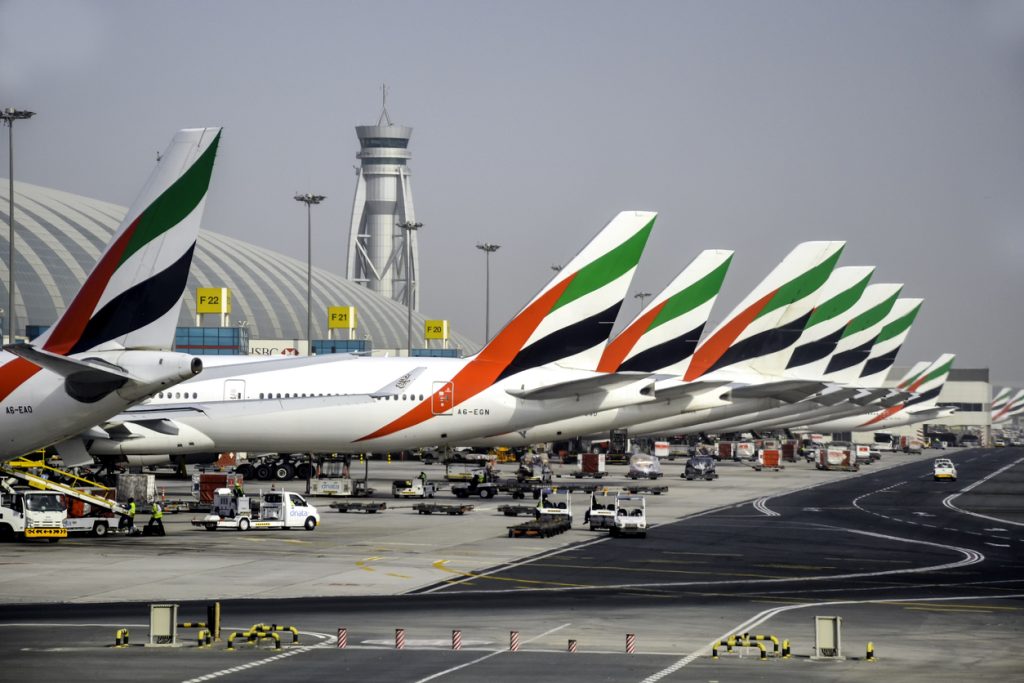
Aircraft turnaround optimisation in Africa is about reducing unnecessary ground time while keeping aircraft operations safe, coordinated and predictable.
An aircraft turnaround involves many activities happening within a limited window. Passengers need to disembark, baggage and cargo must be unloaded, the aircraft may require cleaning, catering and refuelling, new passengers and baggage need to be processed, and the aircraft must eventually be ready for pushback.
When these activities are poorly coordinated, a small delay can affect the next flight and potentially create further disruption across an airline’s schedule. IATA identifies standardisation, modern ground support equipment and digitalisation as important elements for improving ground handling efficiency and turnaround resilience. (IATA)
Where Aircraft Turnaround Time Is Lost
Before trying to make a turnaround faster, airport operators and airlines need to identify where time is actually being lost.
Common causes include:
- Late arrival of ground staff
- Unavailable ground support equipment
- Slow baggage unloading or loading
- Delayed catering or cleaning
- Refuelling coordination problems
- Late passenger boarding
- Loading and documentation errors
- Poor communication between teams
- Aircraft technical issues
- Congestion around the aircraft stand
The same delay does not occur for every aircraft, so turnaround performance should be measured by aircraft type, route, airport, service provider and operating period.
Better Turnaround Planning Before Arrival
Efficient turnaround begins before the aircraft reaches its stand.
Ground teams should have information about the expected arrival time, aircraft type, stand assignment, passenger requirements, baggage or cargo volume and required servicing.
This gives teams time to position equipment and personnel before the aircraft arrives rather than starting preparations after landing.
At airports with busy operations, changes to arrival times should also be communicated quickly. A delayed inbound aircraft may affect stand availability, ground staff assignments and the departure schedule of another flight.
Coordinating Turnaround Milestones
Aircraft turnaround is easier to manage when important activities are tracked as defined milestones.
These can include aircraft arrival, chocks-on, passenger disembarkation, baggage unloading, fuelling, boarding, baggage loading, doors closed and aircraft departure.
Airport Collaborative Decision Making uses this type of milestone-based approach to connect inbound and outbound operations and provide more accurate estimates as a turnaround progresses. (EUROCONTROL)
For African airports, structured milestone tracking can provide a clearer picture of where delays are developing instead of waiting until the scheduled departure time has already been missed.
Improving Ground Support Equipment Availability
GSE can have a direct impact on turnaround performance.
Baggage tractors, belt loaders, passenger stairs, ground power units, catering vehicles and aircraft tugs all need to be available when required.
The problem is not always a shortage of equipment. Poor allocation, unexpected breakdowns or equipment being positioned at another stand can create the same operational effect.
Digital equipment tracking and planned maintenance can help ground handlers understand where equipment is located, whether it is available and when maintenance is required. IATA specifically identifies asset tracking and resource allocation as areas where digital systems can improve ground operations. (IATA)
Faster Baggage and Cargo Coordination
Baggage and cargo activities need to remain closely connected to the aircraft’s turnaround schedule.
If baggage loading starts late, boarding may finish before the aircraft is ready to close its doors. Similarly, cargo that has not been delivered to the aircraft can delay the final loading process.
Better communication between baggage teams, cargo handlers, load control and ramp personnel can reduce these gaps.
Digital baggage and loading information can also reduce manual communication errors. IATA’s current ground-operations programme highlights digital baggage information and digital load reconciliation as important areas for improving accuracy and operational efficiency. (IATA)
Managing Staff More Effectively
Having enough employees does not automatically produce a fast turnaround.
Staff need to be available at the correct location and at the correct time. Poor scheduling can leave one aircraft overstaffed while another aircraft is waiting for assistance.
Ground handlers can analyse historical turnaround data to identify periods of high demand and adjust staffing accordingly.
Training is equally important. Staff who understand standard turnaround procedures can coordinate their tasks more consistently and respond more effectively when something changes.
Standardising Ground Procedures
Different procedures between airlines, airports and ground handlers can create unnecessary complexity.
Standardised processes make it easier for employees to understand what should happen at each stage of the turnaround and who is responsible for each task.
IATA’s Ground Operations Manual is designed to standardise ground-handling processes across airlines, airports and service providers, covering areas including baggage, aircraft servicing, turnaround, towing and load control. (IATA)
For African operators working with multiple airlines, standardisation can be particularly useful because teams may need to handle different operating requirements without creating unnecessary variations.
Using Real-Time Data During Turnaround
Turnaround coordination becomes more effective when teams can see what is happening while the aircraft is still on the ground.
A digital system can show whether cleaning has started, whether baggage loading is complete, whether catering has arrived or whether a required piece of GSE is unavailable.
This allows supervisors to intervene before a small delay becomes a departure delay.
IATA’s current work on AI-integrated turnaround operations includes the use of cameras, connected equipment and structured turnaround timestamps to provide a more complete picture of ground activity. (IATA)
AI and Predictive Turnaround Management
Artificial intelligence could make turnaround optimisation more proactive.
Instead of simply showing that an activity is late, an AI-supported system can analyse multiple operational events and identify the likelihood of a departure delay.
For example, if an aircraft has arrived late, a baggage team is behind schedule and a required GSE unit has not reached the stand, the system can identify the combined effect rather than treating each issue separately.
IATA says AI-integrated turnaround systems can communicate operational information simultaneously to relevant parties and support more proactive decision-making. (IATA)
Improving Aircraft Stand Utilisation
Stand availability can become a constraint at busy African airports.
An aircraft may complete its turnaround but remain on the stand because the next movement cannot be coordinated efficiently. Conversely, another aircraft may be waiting for an available stand.
Better stand planning involves considering aircraft size, arrival and departure times, passenger facilities, ground equipment and expected turnaround duration.
When stand information is shared across airport partners, managers can make adjustments earlier when schedules change.
Measuring Turnaround Performance
Optimisation should be based on measurable results.
Useful indicators include:
- Average turnaround time
- On-time departure rate
- Ground handling delay minutes
- Baggage loading time
- GSE availability
- Staff utilisation
- Aircraft damage incidents
- Number of missed turnaround milestones
- Frequency of repeated delay causes
These measurements can show whether an operational change actually improved performance.
A single faster turnaround does not necessarily mean the process has improved. Performance needs to be monitored over time and across different operating conditions.
How Travo.ng Can Support Aviation Travel and Logistics
Travo.ng is not an aircraft ground handler or turnaround-management company. Its role can support the wider transportation and travel requirements surrounding airport operations.
For example, an airline, aviation contractor or airport project team sending personnel to Lagos, Abuja, Nairobi or another African destination may need flights, airport transfers, hotel accommodation and vehicle hire arranged around operational schedules.
Travo.ng can also support relevant delivery and transportation requirements where applicable. Personnel may need movement between an airport, hotel, warehouse and project location, while businesses working across different cities may require coordinated ground transportation.
This allows Travo.ng to support the wider movement of people and logistics around aviation operations while specialist airport teams remain responsible for aircraft servicing and turnaround activities.
Building Faster and More Reliable Turnarounds
Aircraft turnaround optimisation in Africa is not simply about completing every task as quickly as possible. Safety, accuracy and coordination have to remain central to the process.
The strongest improvements usually come from understanding where time is being lost, preparing resources before aircraft arrival, maintaining reliable GSE, standardising procedures and sharing accurate information between operational teams.
Digitalisation and AI can strengthen this process, but they work best when supported by trained staff, dependable equipment and clear procedures.
As African airports handle growing passenger and aircraft volumes, better turnaround coordination can help operators make more effective use of existing stands, equipment and staff while reducing avoidable ground delays.
