


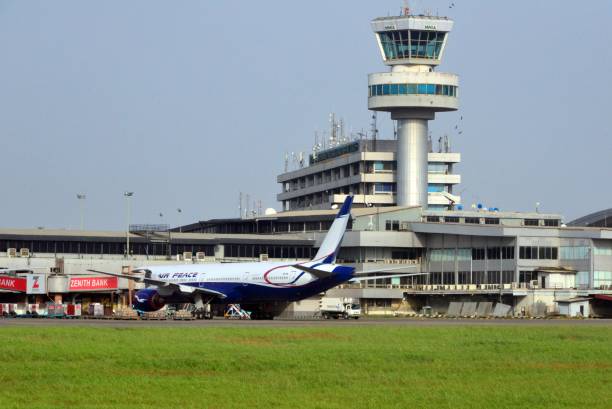
Aircraft turnaround management in Africa involves coordinating everything that happens between an aircraft arriving at its parking stand and departing for its next flight. The process brings together airline staff, ground handlers, airport teams, fuel providers, caterers, baggage teams, cargo personnel and other service providers.
A turnaround can involve several activities happening at the same time, while others depend on an earlier task being completed. IATA notes that effective turnaround management depends heavily on standardised procedures, preparation and coordination between airlines, airports and ground service providers. (IATA)
For African airports dealing with growing passenger volumes, equipment constraints and varying levels of infrastructure, managing these activities efficiently can make a significant difference to departure reliability.
What Happens During an Aircraft Turnaround?
Once an aircraft reaches its stand, several ground activities begin.
Depending on the aircraft and flight, the process can include:
- Passenger disembarkation
- Baggage unloading
- Cargo and mail unloading
- Aircraft cleaning
- Catering
- Refuelling
- Technical inspections
- Ground power connection
- Waste servicing
- Passenger boarding
- Baggage and cargo loading
- Final aircraft checks
- Pushback preparation
Some activities can happen simultaneously, while others must follow a specific sequence. This means turnaround management is largely about coordinating resources and timing rather than simply making individual tasks faster.
Why Turnaround Time Matters at African Airports
An aircraft that remains on the ground longer than planned can affect the rest of its schedule.
For an aircraft operating Lagos–Abuja–Accra, for example, a delay during the first turnaround can affect the next departure and potentially create further delays later in the day.
Turnaround performance also affects aircraft utilisation, gate availability and passenger connections. Research into airport ground operations identifies turnaround processes, baggage handling, workforce scheduling, taxiing and ground support equipment as interconnected areas of operational optimisation. (Twente Research Info)
This makes turnaround management particularly important for airlines operating multiple sectors from the same aircraft.
Common Causes of Turnaround Delays
Turnaround delays can come from a single problem or several small problems occurring together.
Common causes include:
- Late arrival of ground handling teams
- Insufficient ground support equipment
- Delayed refuelling
- Slow baggage loading or unloading
- Cargo documentation problems
- Late catering
- Aircraft cleaning delays
- Passenger boarding issues
- Technical defects
- Congested apron areas
- Poor communication between service providers
Equipment availability is particularly important. Research on apron operations has found that peak periods can expose problems when ground support assets are unavailable or arrive late at the aircraft stand. (Edinburgh Research)
Managing Ground Support Equipment
Ground support equipment must be available at the right place and at the right time.
Depending on the aircraft and operation, this may include baggage tractors, belt loaders, passenger stairs, ground power units, catering vehicles, water servicing equipment and other specialised equipment.
A shortage of one critical piece of equipment can hold up activities that would otherwise be ready to proceed.
Good turnaround management therefore involves planning equipment requirements before the aircraft arrives, monitoring availability and ensuring equipment is properly maintained.
Coordinating Multiple Teams
Aircraft turnaround is a shared operation.
The airline may be responsible for certain activities while a ground handler manages others. Airport operations teams, fuel providers, catering companies and cargo operators may also have separate responsibilities.
This creates a need for clear communication.
IATA’s turnaround guidance highlights the importance of coordination among airlines, airports and ground service providers, particularly when multiple resources need to be ready around the same aircraft. (IATA)
A delay should also be communicated quickly. If a refuelling delay is going to affect boarding, for example, the relevant teams need to know early enough to adjust the sequence.
Using Data to Improve Turnaround Performance
Airlines and airports can improve turnaround management by measuring where time is actually being spent.
Useful performance indicators can include:
- Actual turnaround time
- Planned versus actual off-block time
- Baggage loading time
- Refuelling duration
- Boarding time
- Cleaning duration
- GSE response time
- Number of turnaround-related delays
- Delay causes by service provider
Modern turnaround systems can also use real-time information to identify developing delays. IATA is working toward greater use of standardised turnaround timestamps and digital systems for monitoring ground operations. (IATA)
This is important because management decisions should be based on actual operational data rather than assumptions about where delays are occurring.
Improving Aircraft Turnaround Efficiency in Africa
Airports and airlines can improve turnaround performance without compromising safety by focusing on preparation and coordination.
Before an aircraft arrives, teams should already know:
- Which stand will be used
- What equipment is required
- Which staff are assigned
- When refuelling should begin
- When baggage and cargo teams should arrive
- When cleaning and catering are expected
- When boarding should commence
- What the target departure time is
Standardised procedures can also reduce uncertainty. IATA recommends analysing operations, preparing for the flight ahead of arrival and coordinating airport and ground service providers as part of improving ground-time efficiency. (IATA)
The objective should not simply be to make every turnaround as short as possible. Safety, aircraft requirements, passenger handling and operational conditions still determine how much time is realistically required.
How Travo.ng Can Support Aviation Travel and Logistics
Travo.ng can support the travel and logistics activities surrounding aircraft operations while specialist airport teams handle the actual aircraft turnaround.
For example, airline personnel, aviation contractors, corporate travellers or visiting technical teams may need airport transfers, accommodation, vehicle hire or transportation between an airport and another operational location. Travo.ng can help coordinate these requirements around the relevant travel schedule.
Where logistics support is needed, Travo.ng can also assist with appropriate delivery and transportation arrangements. A company operating around Lagos, Abuja or another African destination may have its aircraft turnaround handled by an authorised ground handler while using Travo.ng for related travel and ground transportation needs.
This separation is important. Travo.ng is not presented as an aircraft ground handler or specialist turnaround operator. Its role is to support the wider movement of people and logistics connected to aviation travel.
Handling Turnaround Problems Before They Become Delays
Effective turnaround management is largely about identifying problems early.
If a baggage vehicle has not arrived, a catering team is running late or a required GSE unit is unavailable, waiting until the scheduled departure time to react can make the delay much harder to recover.
Airlines and ground handlers can therefore use pre-arrival planning, real-time communication and performance monitoring to identify potential problems earlier.
For African airports, the approach also needs to account for local operating conditions, including infrastructure limitations, traffic around airport facilities, equipment availability and differences between individual airports.
Well-coordinated turnaround management helps airlines make better use of available aircraft, stands, equipment and personnel while maintaining the safety standards required for every departure.
