


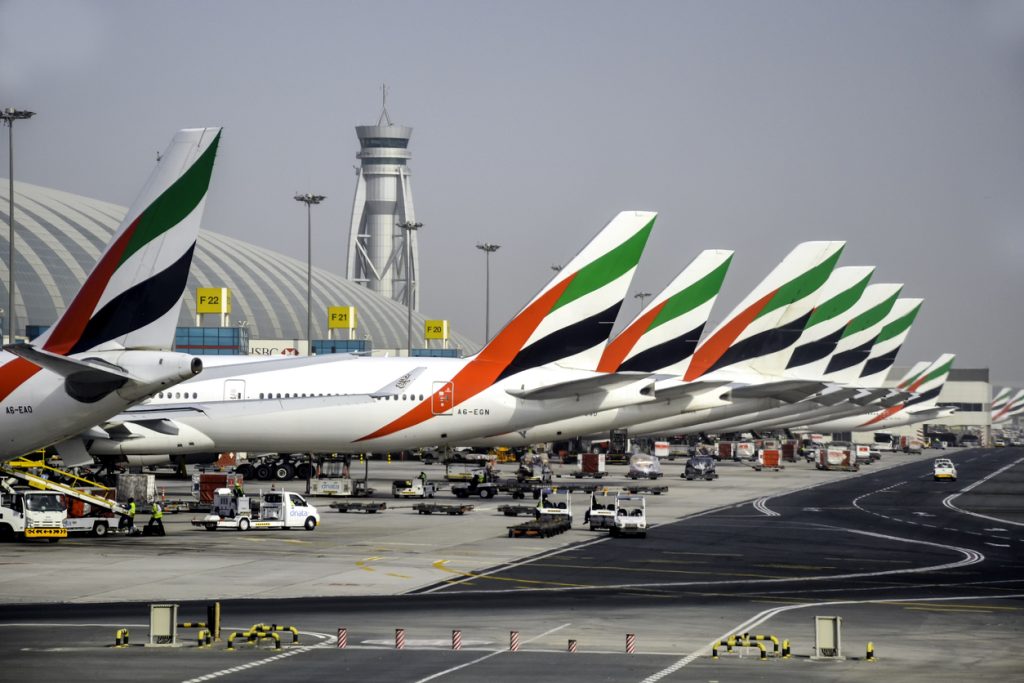
Aircraft turnaround and ground handling are closely connected parts of airport operations. Every time an aircraft lands in Africa, a series of activities must be completed before it can safely depart again. These include passenger disembarkation, baggage unloading, aircraft servicing, catering, refuelling, cleaning, cargo handling, boarding and final checks.
When these activities are properly coordinated, airlines can maintain schedules and use their aircraft efficiently. When one activity is delayed, the effect can spread to other flights, particularly at busy airports.
IATA describes ground handling as an integral part of airline operations and identifies safety, on-time performance and labour availability among the major challenges facing the sector. (IATA)
What Happens During an Aircraft Turnaround?
An aircraft turnaround begins when an aircraft arrives at its parking stand and continues until it is ready to depart.
Depending on the aircraft and airport, ground teams may need to coordinate:
- Passenger disembarkation and boarding
- Baggage unloading and loading
- Cargo operations
- Aircraft cleaning
- Catering
- Refuelling
- Water and lavatory servicing
- Ground power
- Cabin servicing
- Loading and load control
- Aircraft towing or pushback
- Final safety and departure checks
These activities often happen simultaneously. That means ground handlers need to coordinate people, equipment and timing rather than treating each task as an isolated operation.
IATA’s Ground Operations Manual specifically covers aircraft turnaround procedures, including arrival, aircraft doors, departure and towing, alongside passenger, baggage, load-control and airside safety procedures. (IATA)
Why Ground Handling Can Delay African Airports
Ground handling standards and facilities vary across African airports. AFRAA notes that infrastructure and passenger and cargo handling facilities are inadequate, limited or in poor condition at some airports, while handling costs can also be high. (afraa.org)
A turnaround can therefore be affected by relatively simple operational problems.
For example, an aircraft may arrive on schedule but experience a delay because:
- A baggage vehicle is unavailable
- Ground support equipment is being used by another aircraft
- A loading team is short-staffed
- Catering arrives late
- Refuelling takes longer than planned
- Cargo documentation is incomplete
- Passengers take longer to board
- Communication between teams is poor
- An aircraft requires additional servicing
- A technical issue is discovered during turnaround
The important point is that an aircraft cannot depart simply because the flight crew is ready. Multiple ground activities have to reach the required stage before departure.
Ground Support Equipment Makes a Major Difference
Ground support equipment, or GSE, is essential to aircraft turnaround.
Equipment such as baggage tractors, belt loaders, passenger stairs, ground power units, aircraft tugs and cargo loaders allows ground teams to complete tasks efficiently.
However, equipment availability is only part of the issue. Equipment also needs to be properly maintained and positioned where it is required.
A faulty belt loader can delay baggage loading. A shortage of baggage tractors can slow movement between the aircraft and terminal. Problems with ground power equipment can also affect aircraft servicing.
IATA’s current ground-handling priorities include modernising GSE alongside stronger standards and greater digitalisation. (IATA)
Staff Training and Turnaround Coordination
Aircraft turnaround involves several teams working within a limited period, making coordination particularly important.
Ground handlers, airline operations teams, ramp personnel, baggage teams, cargo staff, catering companies, fuelling providers and other service providers may all have responsibilities during the same turnaround.
Staff need to understand not only their individual tasks but also how their work affects other teams.
IATA identifies standardisation as a way to improve safety, training quality, personnel competency and operational efficiency. (IATA)
Training is particularly important when aircraft types, airport procedures or equipment differ between locations.
Safety Cannot Be Separated From Turnaround Speed
A faster turnaround is not useful if it creates safety problems.
Aircraft stands are busy areas where people, vehicles, GSE and aircraft operate in close proximity. Poor coordination can result in injuries, equipment damage, loading errors or aircraft damage.
IATA tracks ground-operation safety through indicators including occupational injuries, aircraft ground damage and loading errors. (IATA)
This means African airports and ground handlers need to balance punctual departures with proper safety procedures. Rushing a ground operation simply to recover a few minutes can create a much larger operational problem.
Digital Tools Can Improve Turnaround Coordination
Technology can help ground teams understand what is happening during an aircraft turnaround.
Digital systems can provide information about task completion, equipment locations, aircraft status and delays. This allows operations teams to identify problems earlier instead of waiting for a missed departure time.
IATA is also examining AI-supported turnaround coordination and structured turnaround timestamps. Its research indicates that wider adoption of the industry timestamp standard could reduce ground-handling delays by up to 5% globally. (IATA)
For African airports, digitalisation can be particularly useful when several stakeholders need to coordinate activities around the same aircraft.
Spare Parts and Aviation Supply Chains Also Matter
Turnaround performance does not depend entirely on activities taking place on the ramp.
If an aircraft develops a technical problem, the availability of replacement components, tools and qualified maintenance personnel can determine how quickly the aircraft returns to service.
Supply-chain constraints can therefore create longer aircraft-on-ground periods and disrupt planned schedules. AFRAA reported in August 2026 that improving aircraft component and material support can help African airlines improve parts availability and reduce turnaround times. (afraa.org)
This shows why aircraft turnaround should be considered as part of a wider aviation logistics system.
How Travo.ng Can Support Aviation Travel and Logistics
Travo.ng is not a specialist aircraft ground-handling company and does not perform ramp handling, aircraft towing, baggage loading, refuelling or other technical airside turnaround activities.
Its role can support the wider travel and transportation requirements surrounding aviation operations.
For example, an airline contractor or aviation company sending personnel to Lagos, Abuja, Accra or another African aviation hub may need flight bookings, hotel accommodation, airport transfers or vehicle hire. Travo.ng can help coordinate relevant travel bookings, hotel reservations, airport transfers and transportation requirements.
This can be useful when aviation teams need reliable movement between airports, hotels, offices and project locations while specialist ground handlers focus on the aircraft itself.
Improving Aircraft Turnaround and Ground Handling in Africa
Improving turnaround performance requires more than simply asking ground teams to work faster.
Airports and ground handlers need reliable equipment, adequate staffing, appropriate training, standardised procedures and effective communication. They also need systems that allow airlines, handlers and other service providers to see operational information at the right time.
AFRAA’s concerns about differences in ground-handling standards and infrastructure across African airports highlight why improvement needs to address the wider operating environment rather than one individual task. (afraa.org)
For airports in Lagos, Nairobi, Johannesburg, Addis Ababa, Accra and other major aviation centres, better coordination between airlines, ground handlers, airport operators and logistics providers can help make aircraft turnarounds safer, more predictable and more efficient.
