


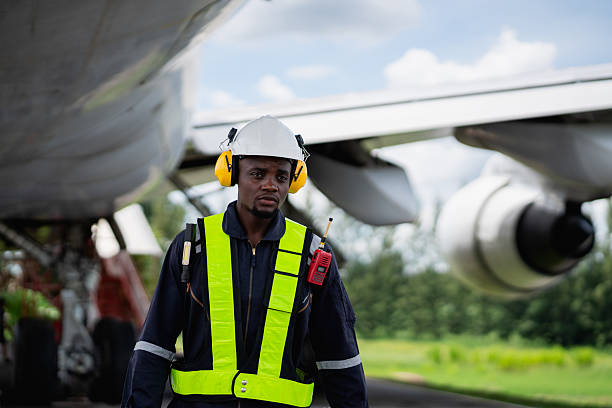
Aircraft support equipment in Africa plays an important role in keeping aircraft moving safely and efficiently on the ground. From baggage loaders and aircraft tugs to ground power units, passenger stairs and servicing equipment, these tools support many of the activities that take place between aircraft arrival and departure.
Ground support equipment, commonly called GSE, is essential to aircraft servicing and airport operations. IATA notes that the design, functionality and maintenance of GSE can directly affect operational efficiency, safety and working conditions for ground personnel. (IATA)
What Aircraft Support Equipment Includes
Aircraft support equipment covers a wide range of machinery used around an aircraft while it is on the ground.
Common examples include:
- Baggage tractors
- Belt loaders
- Aircraft tugs and pushback tractors
- Ground power units
- Air start units
- Passenger stairs
- Passenger boarding equipment
- Catering vehicles
- Water service vehicles
- Lavatory service equipment
- Aircraft de-icing equipment where required
- Cargo loaders
- Maintenance platforms
- Aircraft tow bars
The equipment required depends on the aircraft type, airport facilities and services being provided by the ground handling company.
Baggage and Cargo Support Equipment
Baggage and cargo need to move between aircraft, terminals, warehouses and other airport facilities.
Belt loaders can help move baggage between the ground and aircraft holds, while baggage tractors and carts transport luggage around the ramp. Cargo loaders are used for larger shipments and unit load devices where applicable.
Equipment availability becomes particularly important during busy periods. If a ground handler has insufficient loaders, tractors or other vehicles, staff may have to wait for equipment to become available, potentially extending aircraft turnaround times.
Aircraft Power and Servicing Equipment
Aircraft do not necessarily need to keep their engines running while receiving certain services on the ground. Ground power units can provide electrical power while an aircraft is parked, reducing the need to operate onboard engines or auxiliary systems for some ground requirements.
Other equipment supports air-start operations, potable water, lavatory servicing, catering and other aircraft preparation activities.
These services need to be coordinated around the aircraft’s turnaround schedule so that equipment does not obstruct other teams working on the ramp.
Pushback and Aircraft Movement Equipment
Aircraft cannot simply drive away from a parking stand. Pushback tractors and related equipment are used to move aircraft from their parking positions when required.
Towing equipment may also be used when aircraft need to be repositioned within an airport.
Because these vehicles operate very close to aircraft, safety procedures and operator training are essential. IATA identifies GSE operations as a significant contributor to aircraft ground-damage risk and promotes enhanced equipment with anti-collision systems. (IATA)
Aircraft Support Equipment Requirements in Africa
African airports have different operational environments, so equipment requirements cannot be treated as identical across the continent.
A major international hub handling wide-body aircraft may require a much larger and more specialised GSE fleet than a smaller regional airport. Weather, apron conditions, aircraft mix, passenger volumes and cargo activity can also influence equipment requirements.
Equipment operating in hot, dusty or humid environments may require appropriate specifications and maintenance programmes. Some African suppliers specifically design or adapt GSE for local operating conditions, including high temperatures, dust and humidity. (Avianet Consulting)
Maintaining Aircraft Support Equipment
Having enough equipment is only part of the problem. Ground handlers also need to keep equipment operational.
Preventive maintenance can help identify worn components and mechanical problems before they cause equipment failure during an aircraft turnaround.
A useful maintenance programme can include:
- Routine inspections before equipment is deployed.
- Scheduled servicing based on operating hours.
- Fast repair procedures for equipment that breaks down.
- Monitoring equipment utilisation.
- Maintaining critical spare parts.
- Training operators to identify basic faults.
- Replacing ageing equipment when maintenance becomes uneconomical.
Poorly maintained GSE can create both operational and safety risks. IATA identifies equipment condition, ground procedures and training as important factors in preventing aircraft damage. (IATA Connect)
Electric and Low-Emission Ground Equipment
Electric GSE is becoming more relevant as airports look for ways to reduce emissions and noise from ground operations.
Electric baggage tractors, belt loaders and other equipment can reduce direct emissions during airport operations. IATA notes that electric GSE can also reduce noise and, in some circumstances, maintenance costs, although airports need to consider charging infrastructure and operational requirements before making the transition. (IATA)
For African airports, the practical question is not simply whether electric equipment is available. Operators also need to consider electricity reliability, charging locations, equipment utilisation and the cost of replacing existing fleets.
Aircraft Support Equipment Suppliers and Service Providers
Airports and ground handlers can obtain aircraft support equipment through different models, including direct purchase, leasing, rental, refurbishment and equipment-service agreements.
Some companies also provide maintenance and fleet-management support rather than simply selling equipment.
For example, African GSE specialists provide combinations of manufacturing, refurbishment, maintenance, fleet assessment and deployment support. (Gsmsa)
The appropriate model depends on the airport’s capital budget, fleet size, equipment utilisation and expected operating life.
Challenges With Aircraft Support Equipment in Africa
Equipment availability remains an operational issue at some African airports. FAAN, for example, identifies shortages of certain standard ground-handling equipment and services at some Nigerian airports, particularly domestic airports. (FAAN)
Other challenges can include:
- High equipment acquisition costs
- Limited access to spare parts
- Equipment downtime
- Difficulty sourcing specialised technicians
- Ageing GSE fleets
- Poor maintenance planning
- Limited charging infrastructure for electric equipment
- Uneven equipment availability between airports
These conditions vary considerably by country and airport.
How Travo.ng Can Support Aviation-Related Logistics
Travo.ng is not a GSE manufacturer, aircraft maintenance company or specialist aviation equipment supplier. Its role can instead support the travel and transportation requirements surrounding aviation operations.
For example, a company deploying aviation personnel to Lagos, Abuja or another African airport may need airport transfers, accommodation, vehicle hire and transportation between work locations. Travo.ng can help coordinate these arrangements.
Where businesses also need movement of items between locations, Travo.ng can support relevant delivery and transportation logistics. This can be useful for companies managing personnel and logistics around airport projects, maintenance assignments or aviation operations.
The distinction is important: specialist aviation providers handle aircraft equipment and airside technical activities, while Travo.ng can support the wider mobility and logistics needs connected to those operations.
Choosing the Right Aircraft Support Equipment
Selecting equipment should start with the airport’s actual operating requirements rather than simply purchasing the newest machinery.
Operators need to consider:
- Aircraft types handled
- Daily flight volumes
- Peak operating periods
- Ramp layout
- Cargo requirements
- Passenger volumes
- Available maintenance support
- Equipment storage
- Fuel or charging requirements
- Operator training
- Total lifecycle cost
Standardisation can also simplify training, maintenance and fleet management. IATA’s ground operations standards identify standardisation as a way to improve safety, personnel competency, efficiency and oversight. (IATA)
Building More Reliable Ground Equipment Fleets
Aircraft support equipment is a fundamental part of airport ground operations. Reliable equipment helps ground handlers move baggage, cargo, passengers and aircraft efficiently while reducing unnecessary waiting during turnaround.
For African airports, improving equipment availability will require more than purchasing additional machines. Preventive maintenance, trained operators, appropriate equipment specifications, spare-parts availability and effective fleet planning all matter.
As airport activity grows across the continent, investment in reliable and appropriately maintained support equipment can help ground handlers build more predictable and safer aircraft turnaround operations.
