


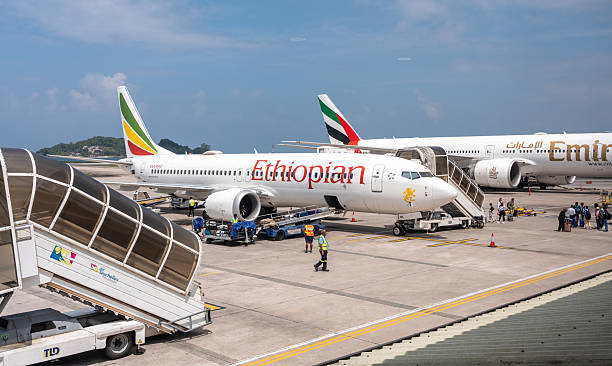
Aircraft parking shortages in Africa can become a major constraint when airports have more aircraft movements than their available apron and stand capacity can comfortably handle. Parking positions are needed not only for aircraft that are actively boarding or being serviced, but also for aircraft waiting between flights, undergoing maintenance, operating seasonally, or being held during operational disruptions.
Airport capacity planning therefore has to consider the number and type of aircraft that need to be accommodated during peak periods. IATA notes that the number of aircraft parking stands needs to be adequate to keep airline delays low and support future airport growth. (IATA)
When parking capacity becomes tight, aircraft may have to wait for stands, use remote parking positions or be repositioned more frequently. These constraints can affect turnaround times and create knock-on delays across an airport.
Why Aircraft Parking Capacity Matters
An aircraft stand is more than an empty space where an aircraft stops. It has to provide enough room for the aircraft itself, ground support equipment, service vehicles and safe movement around the aircraft.
Stand design also depends on aircraft size and configuration. Airports need to know which aircraft types each parking position can accommodate and whether a stand is designed for contact or remote parking. (ICAO)
A shortage can therefore occur even when an airport appears to have considerable open apron space. Some areas may not be suitable for particular aircraft types, while others may lack the infrastructure required for passenger boarding, baggage handling, fuelling or other turnaround activities.
What Causes Aircraft Parking Shortages in Africa?
Several factors can contribute to limited aircraft parking capacity.
Common causes include:
- Growth in passenger and aircraft traffic
- Limited apron expansion space
- Airport development constraints
- Increasing use of larger aircraft
- Aircraft remaining on the ground for extended periods
- Maintenance aircraft occupying operational stands
- Poor allocation of existing parking positions
- Limited remote parking areas
- Insufficient space for ground equipment
- Construction around terminals and aprons
- Peak-hour concentration of flight movements
At busy airports, demand can become particularly difficult to manage when several aircraft arrive within a short period. Even if average daily capacity appears adequate, the airport may still experience parking pressure during peak operating periods.
How Parking Shortages Affect Aircraft Turnaround
Aircraft turnaround depends on having a suitable stand available at the right time.
Once an aircraft arrives, ground teams may need to position baggage equipment, passenger stairs or bridges, catering vehicles, fuelling equipment, cleaning teams and other GSE.
If an aircraft has to wait before reaching its assigned stand, some of these activities cannot begin. The resulting delay can extend the turnaround time.
ICAO guidance on apron management emphasises orderly aircraft parking allocation and coordination between airport operations, air traffic services and ground handling organisations. (ICAO)
A delayed departure can then affect the aircraft’s next destination, particularly when the same aircraft is scheduled for several sectors during the day.
Remote Parking and Passenger Transfers
Remote aircraft parking can help airports accommodate additional aircraft when contact gates or terminal-adjacent stands are unavailable.
However, remote stands create additional operational requirements. Passengers may need buses to travel between the aircraft and terminal, while ground staff need to move equipment and baggage over longer distances.
This can add time to boarding and disembarkation and increase the number of vehicles operating around the apron.
Remote stands can therefore provide useful additional capacity, but they need to be properly integrated into the airport’s passenger and ground handling processes.
The Problem of Aircraft Waiting on the Ground
Not every parked aircraft is actively being turned around.
Airlines may need to keep aircraft at an airport because of schedule changes, maintenance requirements, crew issues, operational disruptions or changes in fleet deployment.
When aircraft remain parked for longer periods, they can occupy stands that would otherwise be used for arriving and departing flights.
This creates a capacity management problem. Airports need designated areas for longer-term aircraft parking where possible, rather than allowing operational stands to become storage areas.
GSE and Apron Space Can Make the Problem Worse
Aircraft parking capacity cannot be considered separately from ground equipment requirements.
Baggage tractors, belt loaders, passenger stairs, catering vehicles, ground power equipment and other vehicles also need designated space. ICAO guidance notes that airports should provide parking areas for GSE and vehicles as well as areas for equipment positioned close to aircraft stands. (ICAO)
If equipment is left in unsuitable locations, it can restrict vehicle routes, interfere with aircraft movements and reduce the effective capacity of an apron.
This means an airport may technically have enough aircraft stands but still experience operational congestion because there is insufficient usable space around them.
Managing Limited Aircraft Parking Capacity
Airports facing parking shortages can improve utilisation before immediately building new stands.
Practical measures include:
- Reviewing peak-hour aircraft demand
- Improving daily stand allocation
- Separating short-term and long-term parking
- Using suitable remote stands
- Introducing flexible stand configurations
- Improving communication between airport operations and airlines
- Monitoring aircraft occupancy times
- Creating designated GSE parking areas
- Coordinating maintenance parking
- Planning apron expansion around future aircraft demand
Flexible apron designs can also help airports accommodate different aircraft sizes. IATA guidance highlights the importance of having enough parking positions for peak-hour demand and designing apron layouts with flexibility where appropriate. (ICAO)
How Technology Can Improve Aircraft Stand Management
Digital systems can give airport operations teams better visibility over available and occupied stands.
A stand management system can help track aircraft movements, planned arrivals, departures, stand assignments and changes to parking arrangements.
Real-time information is particularly useful when an aircraft arrives early, a flight is delayed or a stand becomes temporarily unavailable.
ICAO’s airport performance objectives include reducing stand unavailability, avoiding incompatible stand assignments and reallocating flights to alternative gates or stands when necessary. (ICAO GANP Portal)
Technology does not create additional physical apron space, but better information can help airports make more efficient use of the capacity they already have.
How Travo.ng Can Support Travel Around Airport Capacity Constraints
Travo.ng does not provide aircraft parking or manage airport aprons, but it can support the travel and logistics arrangements that become important when airport operations are affected by limited parking capacity.
For example, if passengers are transferred between remote aircraft stands and terminals, or if changing flight schedules affect their arrival time, transportation arrangements may need to be adjusted. Travo.ng can support airport pickups, vehicle hire, hotel reservations and travel bookings around these changing schedules.
For aviation companies sending personnel to airports in Lagos, Abuja or other Nigerian locations, Travo.ng can also help coordinate the surrounding mobility requirements. If a delayed aircraft changes the timing of a business team’s itinerary, their airport transfer, accommodation and onward transportation can be reorganised accordingly.
The role is therefore complementary: airport operators and aviation service providers manage aircraft and apron operations, while Travo.ng can help manage the travel and logistics requirements around those operations.
Planning for Future Aircraft Parking Demand
Aircraft parking shortages are ultimately a capacity planning issue, but building additional stands is not the only solution.
Airports need to understand when and where demand occurs, which aircraft types require parking, how long aircraft remain on the ground and how much space is needed for GSE and other services.
Better stand allocation, remote parking, technology and operational coordination can improve existing capacity. Where demand continues to exceed available space, apron expansion and additional parking infrastructure may become necessary.
For African airports experiencing growing traffic, planning parking capacity alongside terminal, runway, taxiway and ground handling infrastructure can help prevent apron congestion from becoming a bottleneck for future operations.
