


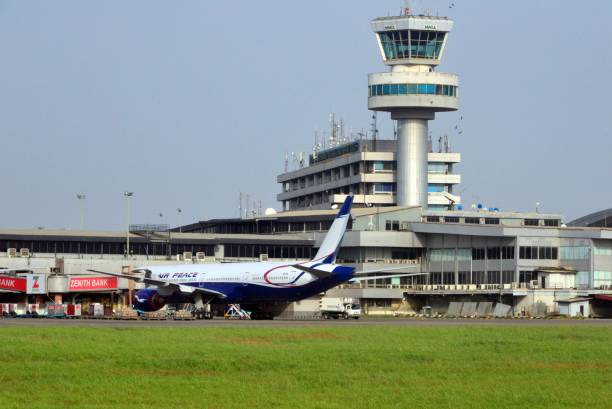
Aircraft handling operations in Africa cover the activities carried out around an aircraft while it is on the ground. These operations begin when an aircraft arrives at its parking stand and continue through passenger disembarkation, baggage and cargo handling, servicing, boarding, loading and final departure preparation.
At busy African airports such as Lagos, Johannesburg, Nairobi, Accra and Addis Ababa, effective aircraft handling is important for maintaining safe and efficient turnarounds. A delay in one ground activity can affect several other teams and potentially push back the aircraft’s departure time.
What Aircraft Handling Operations Include
Aircraft handling involves several teams working together around the aircraft. Depending on the airport and airline, activities can include:
- Aircraft arrival and parking coordination
- Passenger boarding and disembarkation
- Baggage loading and unloading
- Cargo and mail handling
- Aircraft cleaning
- Catering coordination
- Refuelling support
- Water and lavatory servicing
- Ground support equipment positioning
- Pushback and aircraft towing
- Load control and documentation
- Ramp safety and turnaround supervision
IATA’s ground operations standards cover areas including aircraft handling, passenger and baggage services, cargo, load control, safety and ground support equipment. (IATA)
Managing the Aircraft Turnaround
Aircraft turnaround is one of the most time-sensitive parts of ground operations. Once an aircraft reaches its parking position, multiple activities have to happen within the available ground time.
Passengers need to leave the aircraft while baggage and cargo are unloaded. Cleaning, catering, servicing and refuelling may take place alongside these activities. At the same time, the next group of passengers and their baggage must be prepared for departure.
Good coordination is therefore more important than simply trying to make individual tasks faster. A delay in baggage handling, for example, can affect loading and eventually delay boarding and departure.
Baggage and Cargo Handling
Baggage and cargo handling are major components of aircraft handling operations across African airports.
Ground teams must unload arriving baggage and cargo, inspect and organize them for onward movement, and prepare departing loads according to the aircraft’s requirements. Cargo may also require additional handling because of its size, weight, destination or special characteristics.
Accurate load information is particularly important because aircraft loading must account for weight distribution and balance. Standardized procedures help ground teams coordinate these activities consistently. (IATA)
Aircraft Servicing on the Ground
Several services have to be completed before an aircraft can depart. These may include cabin cleaning, catering, refuelling, potable water servicing, lavatory servicing and other aircraft support activities.
Ground support equipment such as baggage tractors, belt loaders, passenger stairs, catering vehicles and other specialized equipment must also be positioned correctly around the aircraft.
Because aircraft, vehicles and personnel operate within a restricted ramp environment, poor coordination can create safety risks as well as delays. IATA identifies the ramp as a busy environment where aircraft, people and ground support equipment operate in close proximity. (IATA)
Ramp Safety During Aircraft Handling
Safety remains central to aircraft handling operations. Ground personnel work close to aircraft engines, moving vehicles, baggage equipment and other machinery, so procedures have to be followed carefully.
Common areas requiring attention include:
- Aircraft arrival and departure movements
- Pushback and towing
- Ground support equipment positioning
- Foreign object debris prevention
- Communication between ground teams and flight crew
- Passenger movement around the aircraft
- Refuelling and servicing activities
- Weather-related operational risks
Standardized procedures are particularly useful because different airlines and ground handlers may operate at the same airport. IATA’s IGOM is designed to standardize ground handling procedures and reduce variations between airlines, airports and ground service providers. (IATA)
Aircraft Handling Challenges in Africa
African airports operate under different infrastructure, staffing and operational conditions, so aircraft handling requirements can vary considerably from one location to another.
Some common challenges include inadequate or ageing ground support equipment, limited ramp capacity, staffing shortages, communication problems and inconsistent availability of specialized handling resources.
Traffic growth can also place pressure on existing airport infrastructure. At busy airports, multiple aircraft may require handling services at overlapping times, making scheduling and resource allocation increasingly important.
Training is another important consideration. Ground handling personnel need the appropriate skills for the equipment and tasks they perform, while supervisors must be able to coordinate multiple activities without compromising safety.
Improving Aircraft Handling Operations
Improving aircraft handling does not necessarily mean rushing ground teams. The objective is to make the entire turnaround better coordinated and more predictable.
Airlines, airports and ground handlers can improve operations by:
- Planning ground activities before aircraft arrival.
- Ensuring the required equipment is available and serviceable.
- Assigning trained personnel to specialized tasks.
- Improving communication between airlines and ground handlers.
- Monitoring turnaround performance to identify recurring delays.
- Standardizing procedures across different handling teams.
- Using digital systems where they can improve coordination and information sharing.
IATA notes that standardized ground handling procedures can support safety, training, operational efficiency and more consistent turnaround performance. (IATA)
How Travo.ng Can Support Aviation Travel and Logistics
Travo.ng does not replace specialist aircraft ground handlers, but it can support the wider travel and logistics requirements that surround aviation operations in Africa.
For example, an airline employee, aviation contractor or business traveller arriving in Lagos may need airport pickup, hotel accommodation and onward transportation after landing. A company moving personnel between airports, hotels and project locations may also need coordinated transport arrangements.
Travo.ng can assist with travel bookings, airport transfers, hotel reservations, vehicle hire and relevant delivery or logistics coordination. This can be useful when aviation teams need their people or travel arrangements organized alongside operational activities.
For businesses managing aviation-related projects across cities such as Lagos, Abuja, Accra or Nairobi, having travel and transportation arrangements coordinated separately can make movement between airports, hotels and work locations easier to manage.
Building More Reliable Aircraft Handling Operations
Aircraft handling operations depend on coordination between airlines, airports, ground handlers, cargo teams, passenger service personnel and other aviation stakeholders.
The strongest operations are built around clear procedures, properly trained personnel, reliable equipment and good communication. As African aviation continues to develop, improving these areas can help airports manage aircraft turnarounds more safely and efficiently.
For airlines and aviation businesses, aircraft handling should therefore be viewed as an interconnected operation rather than a collection of separate ground tasks. When each team understands its responsibilities and works according to coordinated procedures, aircraft can move through the airport more predictably while maintaining the safety standards required for every turnaround.
