


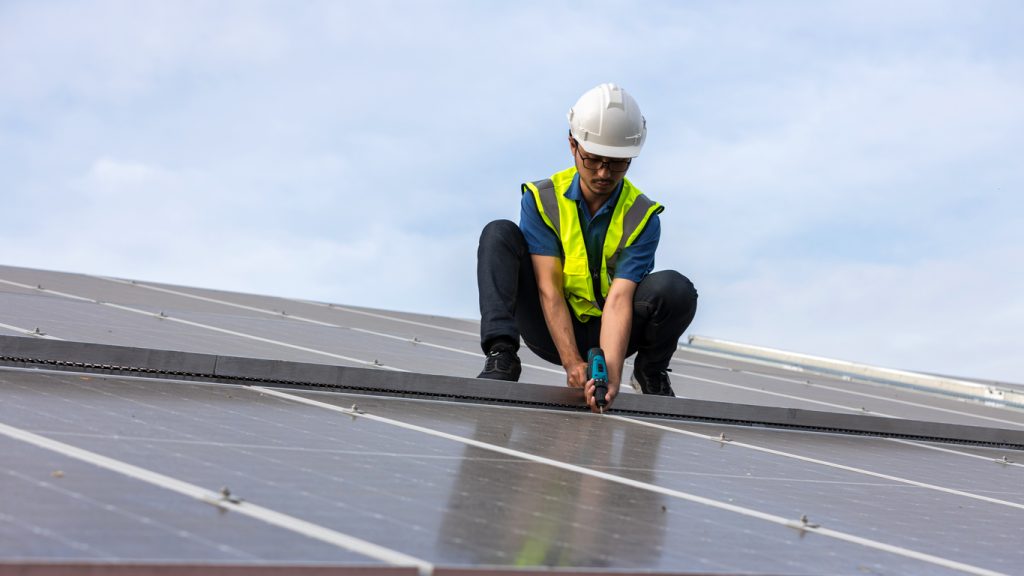
For many Lagos homes and businesses, installing solar is no longer only about surviving power cuts. Property owners are increasingly interested in net metering solar in Lagos because they want to make better use of every unit of electricity their panels generate.
The basic idea is straightforward. Your solar panels supply electricity to your property first. When generation is higher than your immediate consumption, a properly approved grid-connected arrangement can allow surplus electricity to flow back into the distribution network and be measured separately.
However, anyone considering this option in Lagos needs to understand the regulatory situation before spending money on equipment.
How Net Metering Actually Works With a Lagos Solar System
Imagine a small office in Lekki that consumes most of its electricity between 8am and 6pm.
During a sunny afternoon, its solar array may generate more power than computers, air conditioners, lighting and other equipment are using. With a normal solar installation, that excess may charge batteries or simply remain unused once the batteries are full.
A grid-connected export arrangement is different. A compatible meter measures electricity moving between the property and the distribution network.
This means system design matters. Panels, inverters, protection equipment, metering arrangements and the property’s electrical connection must all be suitable for grid interaction.
It is not simply a case of installing panels and sending spare electricity into the public network.
Nigeria Is Developing a Net Billing Framework
Customers should also avoid assuming that rooftop solar export is already available everywhere in Lagos under one automatic net-metering programme.
In September 2025, the Nigerian Electricity Regulatory Commission published draft Net Billing Regulations for consultation. The proposed framework covers customers who generate renewable electricity, consume some themselves and inject excess energy into a distribution company’s network.
Under the draft arrangement, imported grid electricity and exported renewable electricity would be recorded separately rather than simply cancelling one kilowatt-hour against another at the same price. NERC was still listing the Net Billing Regulations among its draft documents when checked in 2026.
For Lagos customers, this distinction is important when discussing expected savings with a solar installer.
Your Location Determines Which Distribution Company You Deal With
Solar planning in Lagos must consider the distribution company’s franchise area.
For example, Eko Electricity Distribution Company serves areas including Lekki, Ajah, Ibeju, Lagos Island, Apapa, Festac, Ojo and Mushin, as well as Agbara in Ogun State.
Other parts of Lagos fall within Ikeja Electric’s network.
Before purchasing equipment for a grid-interactive project, confirm:
- Which electricity distributor serves the property
- Whether electricity export is currently permitted for your customer category
- What technical approvals are required
- The type of bidirectional or smart meter required
- Approved inverter and protection specifications
- How exported electricity would be valued
These checks can prevent an expensive installation from being designed around assumptions that the local network cannot support.
Size the Solar System Around Real Electricity Consumption
One mistake businesses make is choosing solar capacity based mainly on roof space.
A supermarket in Ikeja, restaurant in Victoria Island and warehouse in Apapa can have completely different daytime load profiles.
A proper assessment should examine recent electricity consumption, operating hours, generator use, major appliances, peak demand and daytime energy requirements.
If your building normally consumes 20 kWh during strong daylight hours, installing a system that regularly produces far beyond that amount only makes financial sense when the excess electricity has somewhere useful to go, such as batteries or an approved export arrangement.
Where Travo.ng Can Support a Lagos Solar Project
Travo.ng can support customers exploring solar and energy solutions by helping coordinate practical requirements around sourcing, equipment movement and project logistics.
Solar projects may involve moving panels, batteries, inverters and mounting equipment from suppliers or warehouses to properties across Lagos. Deliveries into Lekki, Victoria Island, Ikeja or congested commercial areas should also be scheduled carefully because poorly coordinated transport can delay installation teams for hours.
For businesses managing larger energy projects, Travo.ng can also assist with transport coordination, cargo movement and business logistics support.
Net metering solar in Lagos has strong potential as Nigeria develops clearer rules for customers who generate their own renewable electricity. The smartest approach today is to design around your real energy consumption, verify the applicable distribution requirements and avoid assuming that excess solar electricity will automatically earn credits.
Good planning makes the difference between simply owning solar panels and building an energy system that genuinely lowers long-term electricity costs.
