


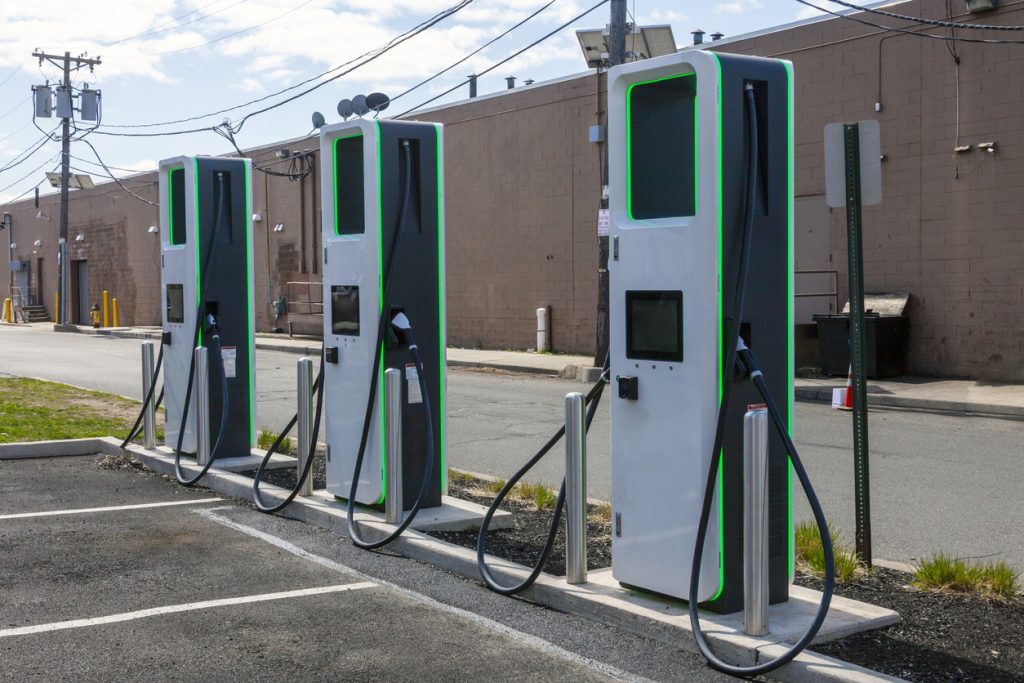
Green building EV infrastructure is becoming an important part of how new commercial, residential, and mixed-use properties are planned in Nigeria.
For developers, facility managers, estates, hotels, offices, shopping centres, and industrial sites, the issue is no longer just whether electric vehicles will become more common. The practical question is whether a building will have the electrical capacity, parking layout, charging access, and operational support needed when EV demand increases.
Installing one charger at the entrance is easy. Building infrastructure that can serve several vehicles safely without disrupting normal building operations requires more planning.
Start With the Building’s Actual Power Capacity
Before buying chargers, the first step should be understanding how much electricity the property can realistically support.
Many Nigerian buildings already combine grid supply with generators, solar systems, inverters, and battery storage. Adding several EV chargers without checking the existing load can create avoidable pressure on the system.
A proper assessment should consider:
- Available transformer capacity
- Peak electricity demand
- Generator and backup power arrangements
- Solar or battery storage capacity
- Number of expected EV users
- Charging speed required
- Possibility of expanding the system later
A Lagos office development expecting five EVs today may need capacity for 20 vehicles within a few years. Designing with that growth in mind is usually cheaper than repeatedly reopening finished parking areas for new cabling.
Where EV Chargers Are Installed Matters
Good Green building EV infrastructure should fit naturally into how people already use the property.
For residential estates, overnight parking areas are usually the most practical charging locations. Offices may need chargers where vehicles can remain parked for several working hours, while hotels may require a mix of overnight and faster charging options.
Shopping centres have different requirements because customers may stay for only one or two hours.
The parking layout must also allow safe movement of vehicles without charging cables becoming obstacles. Weather protection, drainage, security, lighting, and access control should all be considered.
In Lagos especially, outdoor equipment should be planned for heavy rainfall and periods of intense heat.
Fast Charging Is Not Always the Best Choice
Property owners sometimes assume that every charging point should be extremely fast.
That can unnecessarily increase infrastructure costs.
A vehicle parked at an office from 8 a.m. until 5 p.m. does not necessarily require the same charging speed as a vehicle stopping briefly at a transport hub.
Slower AC chargers may work well for:
- Residential estates
- Corporate offices
- Hotels
- Long-stay parking facilities
Higher-capacity charging may be more appropriate for commercial fleets, delivery vehicles, taxis, and locations where vehicles need to return to the road quickly.
Matching charger speed to actual vehicle dwell time helps control both installation costs and electricity demand.
Solar Can Support EV Charging but Needs Proper Sizing
Solar-powered charging is attractive for green buildings, but expectations should be realistic.
A few rooftop panels connected to an existing solar installation may not automatically provide enough energy for several electric vehicles.
Developers need to calculate expected vehicle energy consumption alongside normal building loads such as lighting, cooling, lifts, security systems, and office equipment.
Battery storage can also help manage demand by storing energy when supply is available and supporting charging during periods when grid electricity is unreliable.
For larger developments, EV charging should therefore be considered during the building’s wider renewable energy planning rather than added as an isolated system later.
Think About Vehicles Beyond Private Cars
Electric mobility in Nigeria will not be limited to privately owned cars.
Green buildings may eventually need to accommodate electric:
- Company fleet vehicles
- Delivery vans
- Ride-hailing cars
- Shuttle vehicles
- Motorcycles
- Logistics vehicles
This is especially relevant for hotels, corporate campuses, warehouses, residential estates, and commercial centres where transport activity happens throughout the day.
Travo.ng can support these operations through vehicle coordination, business logistics, delivery services, airport pickups, and transport arrangements where mobility needs extend beyond charging infrastructure itself.
Plan the Logistics Before Installation Starts
EV infrastructure projects require more than electrical work.
Chargers, cables, switchgear, protective equipment, mounting systems, batteries, and related materials may need to be transported between ports, warehouses, contractors, and project sites.
Deliveries into busy areas such as Lekki, Victoria Island, Ikeja, or central Abuja also need proper timing. Large equipment arriving during peak traffic or before a site is prepared can create unnecessary storage and handling problems.
Travo.ng can help businesses coordinate cargo movement, delivery schedules, transport, and other logistics required during infrastructure projects.
Well-planned Green building EV infrastructure should make electric vehicle use easier without creating new operational problems. When power capacity, parking behaviour, renewable energy, future demand, and project logistics are considered together, Nigerian properties can build charging systems that remain useful as electric mobility grows.
