


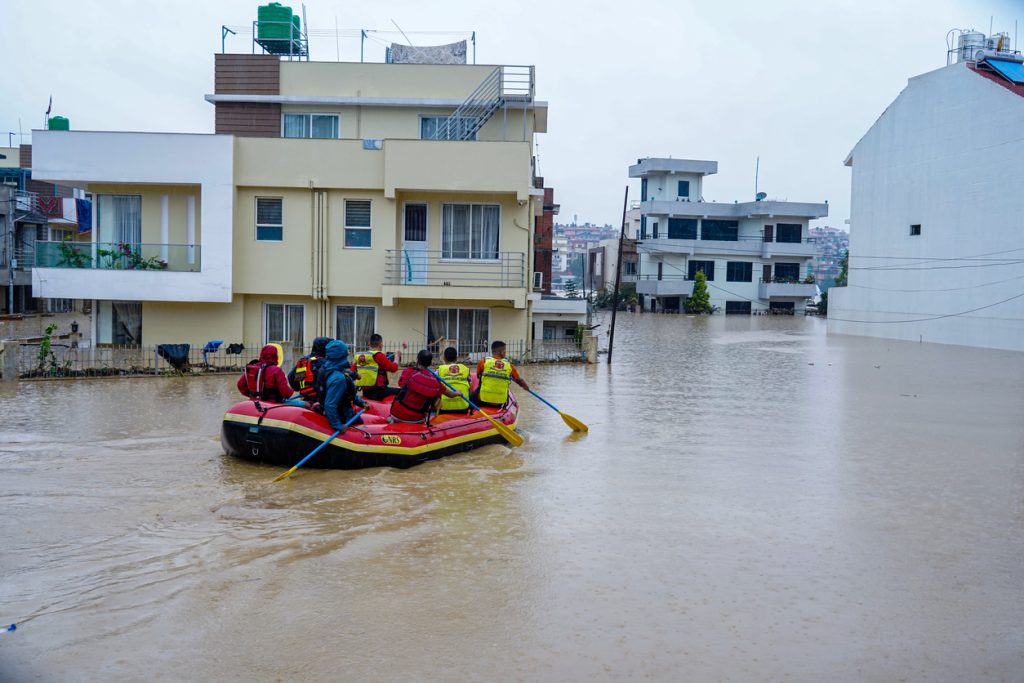
When heavy rain turns a normal road, drainage channel, or riverside community into fast-moving water, ordinary evacuation methods may no longer be safe. Swift-water rescue Nigeria operations are designed for situations where flowing floodwater puts motorists, residents, passengers, workers, or entire communities at immediate risk.
In Nigeria, these emergencies can develop quickly during the rainy season. A road that was passable in the morning may become dangerous after several hours of rainfall. Low-lying parts of Lagos, riverine communities in Bayelsa and Rivers, and flood-prone areas across Niger, Kogi, Anambra, Benue, and other states can require coordinated evacuation and emergency logistics when water levels rise.
When Floodwater Becomes Too Dangerous for Normal Evacuation
Not every flooded street requires a technical water rescue team. The situation becomes more serious when water is moving strongly, vehicles are trapped, people are cut off from dry ground, or access roads have disappeared under water.
Swift-water rescue may be needed when:
- A vehicle is stranded in rapidly rising floodwater
- Residents are trapped inside homes or buildings
- People need evacuation from an isolated community
- A boat capsizes or passengers are in distress
- Floodwater prevents ambulances or normal vehicles from reaching victims
- Workers are stranded at construction, industrial, or riverside sites
Moving water can easily hide open drains, damaged roads, debris and deep channels. Walking into it without appropriate equipment can turn one emergency into several.
What Happens During a Swift-Water Rescue Operation
A proper rescue starts with assessing the water, access points and people at risk. Responders may use rescue boats, flotation equipment, ropes and trained personnel depending on the location and water conditions.
The operation may also require support away from the water itself.
For example, people evacuated from a flooded neighbourhood may need vehicles waiting at a safe collection point. Injured victims may require onward medical transport, while families could need movement to temporary accommodation.
This is where transport and emergency logistics coordination become just as important as the rescue itself.
Flood Rescue in Lagos Can Become a Traffic Problem Too
In Lagos, emergency movement has an additional challenge: traffic.
During intense rainfall, routes around places such as Lekki, Ajah, Victoria Island, Ikoyi, Surulere and parts of the mainland can become heavily congested while some streets are temporarily inaccessible.
Sending a vehicle without checking the route may waste valuable time.
A better response considers alternative access roads, safe pickup locations and the type of vehicle required. In some situations, people may need to be moved from the immediate flood area to a dry meeting point before normal road transportation can continue.
What to Do If Someone Is Trapped in Fast-Moving Water
Avoid entering moving floodwater simply because it looks shallow. Water depth is difficult to judge, especially at night or where roads and drains are submerged.
Instead:
- Report the exact location and nearest recognisable landmark.
- Explain how many people are stranded.
- State whether children, elderly people or injured persons are involved.
- Describe whether they are inside a building, vehicle or open area.
- Keep affected people away from electricity sources where possible.
- Arrange safe onward transportation once professional responders reach them.
Clear location information can make emergency coordination significantly easier.
Coordinating Emergency Transport After the Rescue
Rescue does not always end when someone reaches dry ground.
Families may still need transportation, temporary hotel accommodation, vehicle arrangements or movement of essential belongings. Businesses affected by flooding may require emergency cargo movement or alternative delivery arrangements.
Travo.ng can support these wider mobility and logistics needs by helping coordinate transport, vehicle hire, delivery services and other practical movement requirements associated with an emergency.
For swift-water rescue Nigeria situations, speed matters, but organised coordination matters just as much. Knowing where people are, determining the safest access point and planning what happens immediately after evacuation can prevent confusion when conditions are already difficult.
During Nigeria’s rainy season, preparing those arrangements before severe flooding occurs can make emergency response considerably easier.
