


The challenges facing airport ground handling services in Africa can affect almost every stage between an aircraft landing and taking off again. Ground handlers are responsible for important tasks such as baggage handling, aircraft servicing, passenger assistance, cargo movement, equipment positioning, and other turnaround activities.
When these services are delayed, passengers may experience late departures or delayed baggage, while airlines can face longer aircraft turnaround times and disruptions to their schedules.
Ground Handling Has to Keep Several Teams Moving
An aircraft turnaround involves many activities happening within a limited period.
Depending on the flight, ground teams may need to coordinate:
- Passenger disembarkation and boarding
- Baggage loading and unloading
- Cargo handling
- Aircraft cleaning
- Refuelling
- Catering
- Ground power
- Pushback and aircraft positioning
- Equipment movement
- Maintenance support
These activities cannot always happen independently. A delay affecting one operation can create pressure on the others.
For example, if baggage unloading takes longer than expected, the aircraft may have less time available for cleaning and boarding before its next scheduled departure.
Shortages of Ground Support Equipment
Ground support equipment is essential to efficient airport operations.
Equipment such as baggage tractors, belt loaders, passenger stairs, pushback tractors, ground power units, and cargo handling equipment needs to be available when required.
At busy airports, insufficient equipment or equipment downtime can make it difficult for ground handlers to maintain planned turnaround times.
The problem is not necessarily that an airport has no equipment. A piece of equipment may simply be unavailable because it is being used elsewhere, undergoing maintenance, or not suitable for the particular aircraft or operation.
Staff Availability and Training
Ground handling is labour-intensive, and operations require workers with appropriate training for their specific responsibilities.
Baggage teams, ramp agents, equipment operators, passenger service staff, cargo handlers, and other personnel all have different roles.
When staffing levels are stretched during busy periods, individual teams may struggle to keep pace with the number of aircraft being handled.
Training is also important because ramp operations involve strict safety procedures. Speed cannot come at the expense of safe aircraft and equipment movement.
Baggage Handling Remains a Major Pressure Point
Passengers are often most aware of ground handling through their baggage.
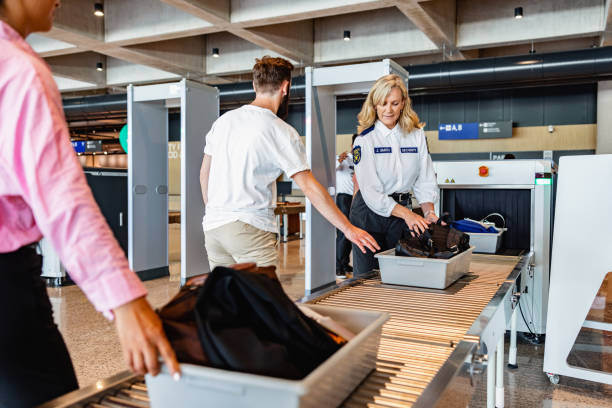
Luggage must be removed from arriving aircraft, transferred to the appropriate area, sorted, and delivered to passengers. For departing flights, bags must be checked, screened, sorted, transported to the aircraft, and loaded correctly.
High passenger volumes can put additional pressure on these processes.
A delay in baggage handling can also affect aircraft turnaround when loading must be completed before the aircraft can depart.
Cargo Handling Requires Additional Coordination
Air cargo introduces another layer of ground handling work.
Cargo may require weighing, documentation checks, security screening, specialised storage, loading equipment, and onward transportation.
Some shipments may also require particular handling conditions.
For businesses moving cargo through airports in Nigeria, getting the goods onto or off an aircraft is only part of the operation. The shipment may then need to move by road to a warehouse, office, distribution centre, or customer.
That final connection needs to be planned before the cargo arrives.
Congestion Around the Airport Can Affect Ground Operations
Ground handling does not take place in isolation from the surrounding transport network.
Airport roads can become congested, affecting staff buses, passenger pickups, cargo collection vehicles, and delivery trucks.
This is particularly relevant around Lagos, where traffic conditions can significantly change travel times.
A cargo vehicle may reach the airport on schedule but still require additional time to access the appropriate collection point, complete loading, and leave the airport.
For urgent shipments, these details can make a meaningful difference to the final delivery time.
Limited Apron and Parking Capacity
The aircraft apron needs enough space for aircraft and ground equipment to operate safely.
When available aircraft stands are limited, ground operations can become more complicated. Aircraft may need to use remote parking positions or wait for an appropriate stand to become available.
Remote stands can introduce additional passenger transport requirements and increase the number of ground movements needed during a turnaround.
For airports experiencing growing passenger and aircraft traffic, managing apron capacity becomes increasingly important.
Communication Between Ground Teams
A successful turnaround depends heavily on communication.
Airline staff, ground handlers, airport authorities, security personnel, fuel suppliers, maintenance teams, catering providers, and transport operators may all be involved.
If information about a late arrival, aircraft change, gate change, or operational problem does not reach the right team quickly, the disruption can spread.
Clear communication is particularly important when flight schedules change at short notice.
Weather and Operational Disruptions
Weather conditions can also affect ground handling.
Heavy rain, strong winds, thunderstorms, poor visibility, or other adverse conditions may slow certain ramp activities or require additional safety precautions.
The resulting delay can continue after the weather improves because several aircraft and ground teams may then be working to recover from the earlier disruption.
This is one reason airlines and passengers can experience delays that continue beyond the period of the original problem.
How Businesses Can Reduce the Impact of Airport Delays
Businesses cannot control every ground handling issue, but they can make their own travel and logistics arrangements more flexible.
For airport transfers, it helps to provide the driver’s team with the passenger’s flight information rather than relying only on a fixed pickup time.
For cargo, businesses should prepare documentation early and arrange onward transportation before the shipment is released.
For important meetings, allowing sufficient time between an international arrival and the appointment can also prevent a ground handling delay from disrupting the entire schedule.
Where Travo.ng Can Help
Travo.ng supports the travel and transportation activities that take place around airport operations. Depending on the requirement, this can include airport pickups, vehicle hire, courier services, cargo logistics, delivery, and transport coordination.
For example, a company receiving a visitor at Lagos airport can arrange transportation to a hotel or business location around the passenger’s flight. A business receiving air cargo can also organise onward delivery once the shipment is available for collection.
These services do not eliminate airport-side delays, but proper coordination can make the part of the journey outside the aircraft easier to manage.
Making Ground Handling More Reliable
The challenges facing airport ground handling services in Africa involve equipment, staffing, baggage, cargo, apron capacity, communication, airport access, and changing operating conditions.
For passengers and businesses, the practical response is to recognise that landing is not the end of an airport journey. There can still be several ground operations before a traveller reaches the pickup vehicle or cargo reaches its final destination.
Planning those stages together, allowing realistic time, and arranging reliable onward transportation can help reduce the disruption caused by ground handling delays.
