


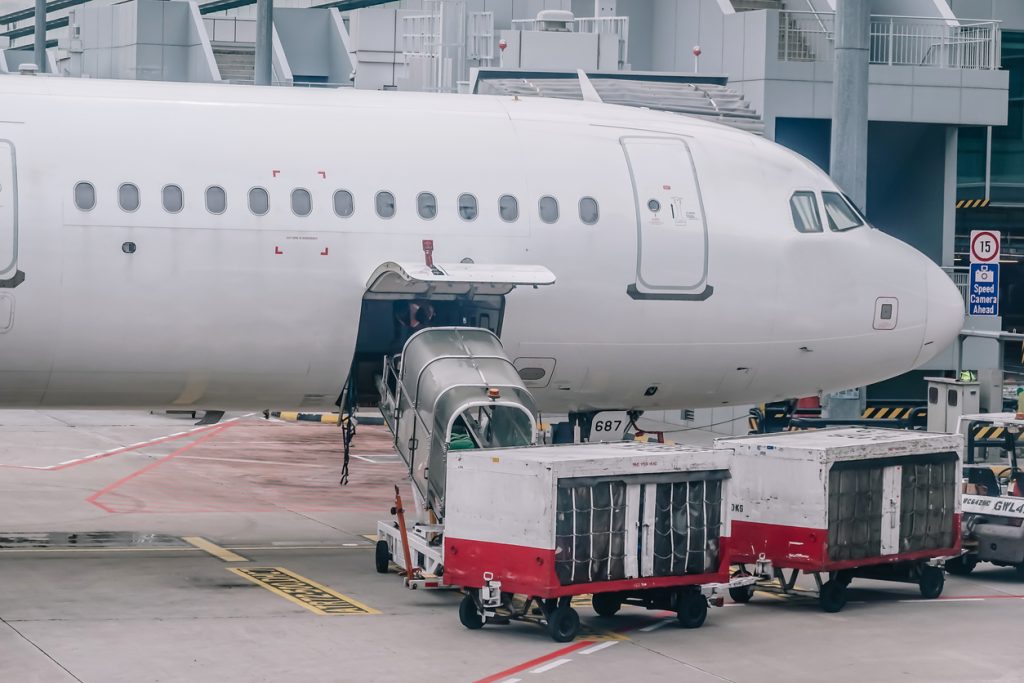
Ground logistics challenges for airlines Africa can affect almost every stage of an aircraft’s operation, from arrival at the airport to departure. Baggage, cargo, ground equipment, passenger movement, aircraft servicing, spare parts and road transportation all have to be coordinated within tight timeframes.
Ground handling is an integral part of airline operations, and IATA identifies safety, on-time performance and labour availability among the industry’s continuing challenges. (IATA)
For airlines operating across Africa, the challenge can become more complicated because infrastructure, service standards, equipment availability and logistics processes can vary considerably between airports.
Where Ground Logistics Problems Usually Start
An airline’s ground logistics chain involves much more than what happens around the aircraft.
It can include:
- Baggage collection and transfer
- Cargo acceptance and movement
- Aircraft servicing
- Ground Support Equipment
- Fuel and catering coordination
- Passenger transportation
- Aircraft towing and pushback
- Spare-parts movement
- Airport warehousing
- Customs and documentation
- Road transportation
- Crew and staff transportation
A delay in one activity can affect several others. For example, if baggage is not delivered to the aircraft on time, loading may be delayed and the aircraft’s departure can be affected.
Limited and Uneven Ground Infrastructure
One of the major ground logistics challenges for airlines Africa is the difference in infrastructure between airports.
Some major hubs have developed cargo facilities, modern terminals and a wider range of ground services. Other airports may have limited cargo facilities, fewer pieces of Ground Support Equipment or less capacity for specialised handling.
AFRAA says ground-handling standards vary widely across African airports and reports that passenger and cargo infrastructure can be inadequate, limited or in poor condition at some airports. It also identifies high handling costs as a concern for African airlines. (Afraa)
For an airline operating across multiple countries, this means ground logistics procedures that work efficiently at one airport may need to be adapted at another.
Ground Support Equipment Availability
GSE is essential for aircraft turnaround.
Aircraft tugs, baggage tractors, belt loaders, ground power units, passenger stairs, catering vehicles and other equipment must be available when required.
When equipment is unavailable or breaks down, other activities can be forced to wait.
IATA’s 2026 ground handling guidance highlights modern GSE as one of the priorities for safer and more resilient ground operations. IATA also reports that more than 29,000 aircraft ground-damage events were recorded in 2025, demonstrating the operational and financial importance of GSE safety. (IATA)
For airlines, the issue is therefore not simply having enough equipment. Equipment needs to be properly maintained, correctly positioned and operated by trained personnel.
Delays in Cargo and Customs Processes
Air cargo depends on coordination between airlines, freight forwarders, cargo terminals, customs authorities, warehouses and road transport providers.
Delays can occur when cargo documentation is incomplete, customs procedures take longer than expected or airport cargo facilities have limited capacity.
AFRAA identifies inadequate cargo processing, storage and movement infrastructure and cumbersome customs procedures among the challenges affecting air cargo in Africa. (Afraa)
This can be particularly problematic for time-sensitive cargo such as pharmaceuticals, fresh produce, spare parts and express shipments.
Aircraft Spare Parts and Maintenance Logistics
Airlines also depend on reliable logistics for aircraft components.
When a required component is unavailable locally, it may need to be sourced from another country or region. Customs procedures, transportation distances and limited regional distribution infrastructure can increase the time required to obtain the part.
A 2026 AFRAA MRO conference report identified parts availability as a major operational challenge for African carriers and noted that logistics bottlenecks, customs procedures and the absence of major regional logistics hubs can delay component sourcing. (Afraa)
For an aircraft awaiting a critical component, the logistics delay can become an aircraft availability problem rather than simply a shipping problem.
Workforce and Ground Handling Coordination
Ground logistics depends heavily on trained personnel.
Ramp agents, baggage handlers, load controllers, passenger service teams, equipment operators, cargo staff and supervisors all have different responsibilities.
A shortage of personnel or poor coordination can create delays even when the necessary equipment is available.
IATA continues to identify labour shortages as one of the challenges facing ground operations globally, alongside safety and on-time performance. (IATA)
Airlines therefore need ground service providers with sufficient staffing levels and clear procedures for coordinating different turnaround activities.
High Ground Handling and Airport Costs
Ground logistics costs can be a significant concern for airlines operating in Africa.
Charges may come from ground handling, cargo processing, airport facilities, equipment, transportation and other operational services.
AFRAA states that handling costs at African airports are high and that airport facility and related charges contribute to the continent’s high-cost aviation environment. (Afraa)
For airlines operating multiple routes, even relatively small cost differences at individual airports can become significant across a wider network.
Fragmented Logistics Networks
Another challenge is the fragmentation of logistics services.
An airline may work with one ground handler, another cargo operator, a separate trucking company and different customs processes depending on the country.
This can make it difficult to maintain consistent visibility from the aircraft to the final destination.
AFRAA has also highlighted fragmented logistics networks, limited cold-chain capacity and regulatory bottlenecks as factors affecting the competitiveness of African air cargo. (Afraa)
Better integration between airlines, airports, ground handlers and logistics companies can reduce unnecessary handovers and information gaps.
Digitalisation Can Improve Ground Logistics
Technology can help airlines address some of these challenges.
Digital systems can provide better visibility of:
- Aircraft turnaround activities
- Baggage status
- Cargo movements
- GSE availability
- Staff assignments
- Delivery schedules
- Warehouse inventory
- Flight changes
IATA reported in 2026 that fragmented data, manual processes and delayed information remain barriers to efficient ground handling, while greater digitalisation is one of the industry’s priorities. (IATA)
However, digital systems work best when different stakeholders can exchange information rather than operating isolated platforms.
How Airlines Can Reduce Ground Logistics Problems
Airlines can take several practical steps to improve ground logistics performance.
Standardise Ground Procedures
Using consistent procedures across stations can reduce operational variation and make training easier.
Monitor Ground Performance
Airlines can track turnaround times, baggage delays, GSE availability, cargo processing times and other indicators to identify recurring problems.
Improve Supplier Management
Ground handling and logistics contracts should establish clear service expectations, responsibilities and performance measures.
Plan for Equipment Failures
Backup equipment and contingency arrangements can prevent one failure from disrupting an entire turnaround.
Strengthen Cargo Connections
Airlines can work with cargo handlers, customs authorities, warehouses and road transport providers to reduce unnecessary delays between the aircraft and final destination.
How Travo.ng Can Support Airline Ground Logistics
Travo.ng is not a specialist aircraft ground handler and does not replace qualified airport operators responsible for ramp handling, aircraft pushback, baggage handling or other regulated airside functions.
Its role can support the wider travel and logistics chain surrounding airline operations.
For example, airline staff, aviation contractors and business travellers may require airport transfers, hotel reservations, vehicle hire and travel bookings. Companies moving personnel between airports and project locations may also need coordinated road transportation or relevant delivery logistics.
Travo.ng can support these requirements so that travel and ground transportation outside the specialist airside operation are coordinated alongside flight schedules.
Building More Reliable Airline Ground Logistics in Africa
Solving ground logistics challenges for airlines Africa requires more than purchasing new equipment. Airlines, airports, ground handlers, cargo operators, customs authorities and transport providers need to work as part of a connected logistics chain.
Infrastructure investment, reliable GSE, staff training, standardised procedures, better cargo processes and digital information sharing can all contribute to more predictable operations.
Africa’s aviation market is also expected to continue expanding. AFRAA’s September 2026 outlook projects average passenger traffic growth of 5.8% annually through 2045 and a more than doubling of the African aircraft fleet. (Afraa)
As traffic grows, efficient ground logistics will become increasingly important. Airlines that can coordinate aircraft turnaround, cargo, equipment, personnel and supporting transportation effectively will be better positioned to manage the operational demands of a growing aviation network.
