


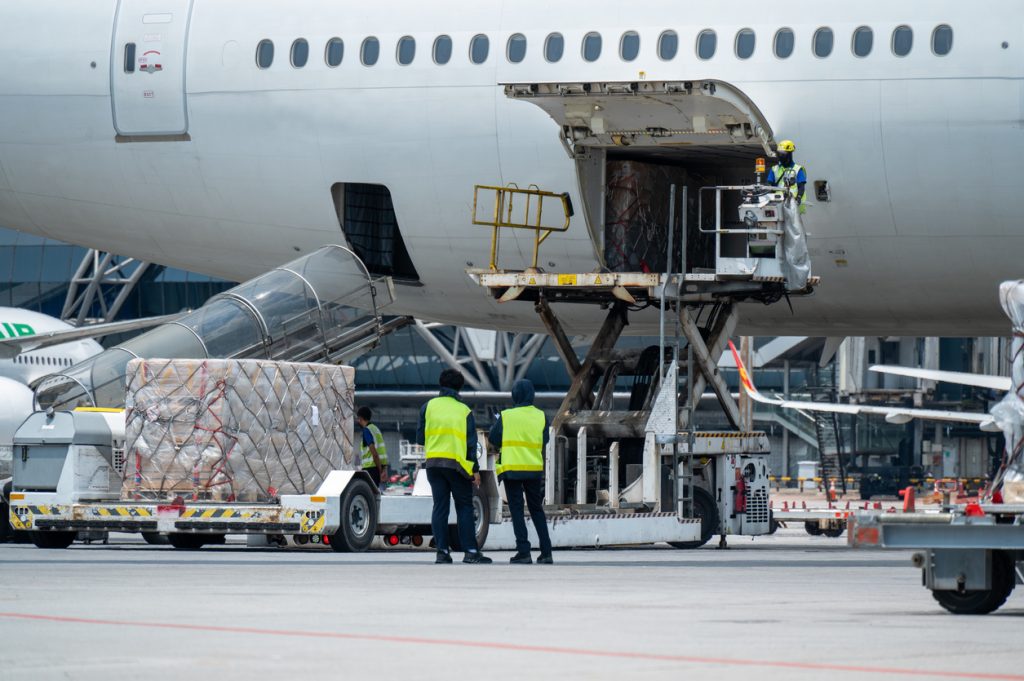
Aircraft logistics in Africa covers the movement of aircraft parts, maintenance equipment, cargo, personnel and other operational supplies between airports, warehouses, maintenance facilities and final destinations.
For airlines and aviation businesses, a logistics delay can become an operational problem very quickly. A spare part stuck in customs, a vehicle arriving late at an airport or equipment being sent to the wrong location can affect maintenance schedules and aircraft availability.
The need for more coordinated solutions is particularly important as African aviation develops regional MRO capabilities and stronger air cargo networks. Industry discussions in 2026 have highlighted parts availability, logistics inefficiencies and the absence of regional supply-chain hubs as continuing challenges for African MRO operations. (Afraa)
Aircraft Spare Parts Logistics
Aircraft spare parts are among the most time-sensitive shipments in aviation.
An aircraft waiting for a specific component may remain grounded until that part reaches the maintenance team. The required component may need to come from another African country, Europe, the Middle East, Asia or the manufacturer itself.
Aircraft parts logistics can include:
- Urgent transportation of aircraft components
- Airport-to-airport movement
- Customs and documentation coordination
- Secure storage and warehousing
- Delivery to MRO facilities
- Shipment tracking
- Alternative transportation when normal routes are disrupted
Having reliable logistics arrangements before an urgent requirement occurs can significantly reduce unnecessary waiting time.
MRO Logistics Across Africa
Maintenance, repair and overhaul operations depend heavily on supply-chain reliability.
MRO facilities need regular access to components, tools, technical equipment and consumables. As African airlines strengthen local maintenance capabilities, the supporting logistics network also needs to develop.
The first African MRO Conference in 2026 specifically identified supply-chain resilience, parts availability and regional logistics hubs as important areas for improving African aviation maintenance. (Afraa)
This makes logistics planning an important part of aircraft maintenance rather than something handled separately after a problem occurs.
Time-Critical Aircraft Logistics
Some aviation shipments cannot wait for standard delivery schedules.
Examples include aircraft-on-ground parts, urgent maintenance components, specialised tools and operational equipment needed for an immediate flight or maintenance requirement.
These shipments require:
- Rapid response
- Accurate shipment information
- Reliable transportation
- Customs preparation
- Real-time communication
- Contingency arrangements
A good logistics provider should also have alternative routes available when flights, roads, customs processes or airport operations create unexpected delays.
Air Cargo Logistics for Aircraft Operations
Aircraft logistics also involves the movement of commercial cargo.
Cargo may need to move from an airport to a warehouse, distribution centre or final customer immediately after arrival. This requires coordination between airlines, freight forwarders, handlers, customs agents, warehouse operators and road transport providers.
Specialised African air-cargo networks already provide access to dozens of airports across the continent, showing the importance of regional logistics knowledge when moving freight between major hubs and harder-to-reach destinations. (Aero Africa)
Airport-to-Warehouse Transportation
Getting cargo or aircraft equipment off the airport is only one part of the logistics process.
The next stage may involve transportation to a warehouse, MRO facility, company premises or another airport. In cities such as Lagos, Nairobi, Johannesburg and Accra, traffic and road conditions can make this stage just as important as the airfreight movement itself.
Logistics planning should therefore consider the complete route rather than focusing only on the flight.
For example, a shipment arriving at Lagos airport may require customs coordination, secure pickup and road transportation to an aviation facility or warehouse elsewhere in the Lagos area.
Customs and Aviation Documentation
Cross-border aircraft logistics can be slowed down by incomplete or incorrect documentation.
Aircraft components, technical equipment and other specialised goods may have specific import, export or customs requirements. When documentation is not prepared correctly, a shipment can remain at an airport while the aircraft or maintenance team waits.
Effective logistics planning should establish documentation requirements before the shipment leaves its origin and ensure that the receiving party is prepared for clearance and delivery.
Digital Tracking for Aircraft Logistics
Visibility is becoming increasingly important in aviation logistics.
A logistics team should be able to determine where a shipment is, whether it has cleared customs, who currently has custody of it and when delivery is expected.
Digital tracking can also reveal recurring problems. If aircraft components consistently spend several days waiting for clearance or transportation, the operator can use that information to redesign the logistics process.
Nigeria is also moving toward greater digitalisation of cargo information. The Federal Government announced plans for Advanced Cargo Information systems across Nigerian airports, with the stated objective of improving cargo processing, security and information visibility. (Aviation Authority Nigeria)
Regional Logistics Hubs
One of the longer-term opportunities for African aviation is the development of stronger regional logistics and distribution hubs.
Instead of relying heavily on suppliers and maintenance facilities outside the continent, airlines can benefit from strategically located warehouses and distribution centres that hold commonly required components closer to African operators.
This can reduce transportation distances and make urgent parts easier to access.
The development of regional MRO and logistics capacity is already receiving greater attention, with African industry stakeholders calling for stronger collaboration, technical skills and digital systems. (Afraa)
Ground Transportation for Aviation Teams
Aircraft logistics also involves people.
Engineers, maintenance teams, airline representatives, cargo personnel and other aviation professionals may need transportation between airports, hotels, offices, warehouses and maintenance facilities.
Poor coordination can create unnecessary delays even when the aircraft-related operation itself is properly organised.
Reliable airport transfers, vehicle hire and scheduled transportation can therefore form an important part of a wider aviation logistics plan.
How Travo.ng Can Support Aircraft-Related Logistics
Travo.ng can support the wider travel and transportation requirements surrounding aircraft and aviation operations without presenting itself as an aircraft maintenance company or specialist ground handling provider.
For example, an aviation company sending engineers to Lagos for a maintenance project may need flights, airport pickup, hotel accommodation and vehicle hire arranged around the project schedule. A business moving personnel between airports and operational locations may also need coordinated ground transportation.
Where appropriate, Travo.ng can support delivery and transportation requirements as part of wider logistics coordination. This allows aviation businesses and travelling personnel to organise the movement of people and relevant goods around their operations while keeping the travel and ground logistics process coordinated.
Building a Reliable Aircraft Logistics Strategy
Aircraft logistics solutions in Africa need to go beyond finding a transport provider when something goes wrong.
Airlines, MROs and aviation businesses should identify critical suppliers, transportation routes, customs requirements, storage locations and backup options in advance.
A strong strategy combines spare-parts logistics, cargo coordination, customs planning, warehousing, ground transportation, digital tracking and regional partnerships.
As African aviation and MRO capabilities continue to develop, reliable logistics will become increasingly important to keeping aircraft available and supporting efficient operations across the continent.
