


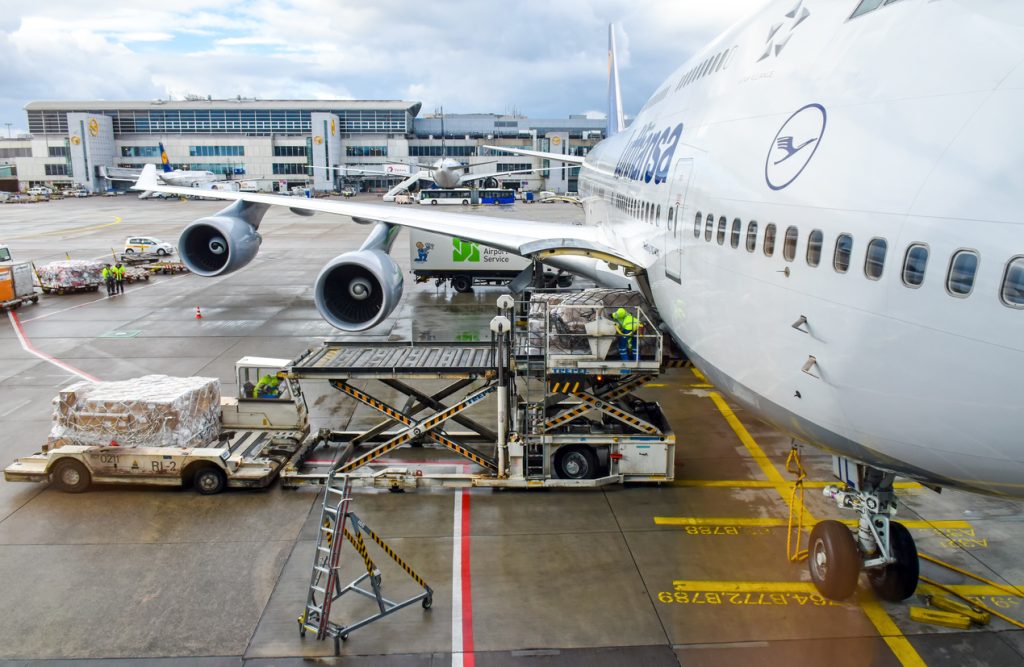
Aircraft handling and logistics in Africa involve much more than moving an aircraft from a parking stand to the runway. They cover the people, equipment, cargo, documents, vehicles, spare parts and coordination required to keep aircraft operations moving safely and efficiently.
From major hubs in Lagos, Addis Ababa, Nairobi, Johannesburg and Cairo to smaller regional airports, effective aircraft handling depends on strong coordination between airlines, airports, ground handlers, cargo operators, regulators and logistics providers. AFRAA notes that ground-handling standards vary significantly across African airports, with infrastructure limitations and high handling costs affecting operations in some markets. (Afraa)
What Aircraft Handling Involves at African Airports
Aircraft handling begins before an aircraft arrives at the parking stand and continues until it departs for its next destination.
Typical activities include:
- Aircraft marshalling and positioning
- Passenger boarding and disembarkation
- Baggage loading and unloading
- Cargo and mail handling
- Aircraft cleaning
- Refuelling coordination
- Catering support
- Ground power and other GSE services
- Pushback and towing
- Load control and documentation
- Ramp safety and aircraft movement coordination
These activities have to happen within a limited turnaround window. A delay in one activity can affect several others, particularly when an aircraft is operating a tight schedule.
IATA describes ground handling as an integral part of airline operations, with aircraft, ground support equipment and personnel operating in close proximity on busy ramps. (IATA)
Why Aircraft Handling Can Be Difficult in Africa
African aviation markets do not all operate under the same conditions. Differences in airport infrastructure, equipment availability, workforce capacity, regulations and logistics networks can make aircraft handling more complicated from one location to another.
Some airports may have modern facilities and established ground-handling companies, while others face limitations involving equipment, passenger facilities, cargo infrastructure or road access.
AFRAA has identified inadequate or limited passenger and cargo-handling infrastructure as one of the challenges affecting ground handling at some African airports. (Afraa)
For airlines operating across multiple countries, this means ground procedures and service quality can vary considerably between stations.
Ground Support Equipment and Aircraft Turnaround
Ground support equipment is central to aircraft handling. Depending on the aircraft and airport, operations may require baggage tractors, belt loaders, passenger stairs, ground power units, air-start units, pushback tractors, catering trucks and other specialist equipment.
When the right equipment is unavailable or poorly maintained, turnaround operations can slow down.
IATA’s current ground-operations priorities include modernising GSE, improving standards and increasing digitalisation to make ground handling safer, more efficient and more resilient. (IATA)
For African airports, equipment planning therefore needs to consider traffic volumes, aircraft types, weather conditions, maintenance capacity and the availability of replacement equipment.
Cargo Handling Is Part of Aircraft Logistics
Aircraft logistics also extends beyond the passenger terminal.
Air cargo may include perishables, pharmaceuticals, electronics, machinery, documents and other commercial goods. Each shipment requires appropriate documentation, handling, storage and transportation between the aircraft and its final destination.
Cargo logistics can become particularly challenging when airport warehouses have limited capacity or when customs and inland transportation processes create delays.
Africa’s air cargo market also continues to develop. IATA reported that African airlines recorded a 4.7% year-on-year increase in cargo demand in June 2026, while available cargo capacity declined by 7.1% during the same period. (IATA)
This makes efficient coordination between airports, airlines, cargo handlers, customs authorities, warehouses and road transport providers increasingly important.
Spare Parts and Aircraft Logistics
Aircraft operations sometimes require urgent movement of spare parts and technical equipment.
An airline may need to move a component from another city or country to an airport where an aircraft is waiting for maintenance. Delays can occur when parts are held up by customs, documentation problems, limited flights or weak last-mile transportation.
Effective aircraft logistics therefore requires more than air transportation. It may involve:
- International freight coordination
- Customs documentation
- Airport collection
- Secure storage
- Road transportation
- Urgent delivery
- Tracking and communication
- Coordination with maintenance teams
For airlines and aviation businesses, having reliable logistics partners available before an urgent requirement occurs can reduce unnecessary delays.
Safety and Standardisation Matter
Aircraft handling is highly dependent on procedures being followed consistently.
Different teams may be responsible for passenger handling, baggage, cargo, ramp operations, load control and equipment. Without clear communication and standard procedures, small mistakes can affect the wider turnaround.
IATA’s ground operations standards cover areas including aircraft handling, cargo and mail, load control, GSE management and ground-operations training. The organisation says standardisation can improve safety, training quality, operational efficiency and oversight. (IATA)
Training is equally important. Ground personnel need to understand aircraft-specific procedures, ramp safety, equipment operation, dangerous goods requirements and emergency procedures relevant to their roles.
Digital Tools Are Changing Aircraft Handling
Technology is increasingly being used to connect different parts of ground operations.
Digital systems can help teams share operational information, monitor equipment, coordinate turnaround activities and identify potential delays. Better data visibility can also help airlines and airport operators understand where time is being lost.
IATA’s Operational Portal, for example, provides airlines and ground-handling service providers with access to operational standards and tools for exchanging information. (IATA)
Artificial intelligence and automation are also becoming part of the conversation around future ground operations. IATA’s 2026 Ground Handling Conference focused specifically on how human expertise can work alongside AI and automation to improve ground operations. (IATA)
Technology, however, still depends on trained people, reliable infrastructure and properly implemented procedures.
How Travo.ng Can Support Aircraft Travel and Logistics
Travo.ng can support the wider travel and logistics requirements that surround aviation operations without replacing specialist airport ground handlers.
For example, an airline representative, aviation consultant, technical team or business traveller arriving in Nigeria may need airport pickup, accommodation, vehicle hire or coordinated transportation between locations. Travo.ng can help organise these travel requirements so that the person or team can focus on their aviation-related work.
For cargo and business logistics, transportation coordination and delivery support can also be useful when equipment, documents or other items need to move between airport locations and destinations within Nigeria.
This becomes particularly practical when an aviation operation involves people travelling between airports, hotels, offices, warehouses or project sites. Travo.ng provides the travel and logistics coordination around the operation rather than acting as an aircraft ground-handling company.
Improving Aircraft Handling and Logistics in Africa
Airlines and airport operators looking to improve aircraft handling should look at the complete operation rather than focusing on one activity.
Useful measures include:
- Maintaining reliable ground support equipment.
- Training and regularly assessing ground personnel.
- Standardising procedures across stations.
- Improving communication between airline and ground teams.
- Monitoring aircraft turnaround performance.
- Strengthening cargo and warehouse processes.
- Improving customs and documentation coordination.
- Using digital tools for operational visibility.
- Developing contingency plans for equipment or infrastructure failures.
- Building reliable logistics links between airports and surrounding cities.
The objective is not simply to make aircraft depart faster. Efficient aircraft handling must balance turnaround performance with safety, regulatory compliance, passenger service and cargo integrity.
The Future of Aircraft Handling and Logistics in Africa
As African aviation networks expand, aircraft handling and logistics will become increasingly connected to the wider transport and trade system.
Modern airports will need dependable ground equipment, skilled personnel, efficient cargo facilities, digital systems and stronger links to road and other transport networks. Airlines operating across multiple African markets will also need consistent procedures and reliable local partners.
The direction of the industry is already moving toward stronger standardisation, modern GSE and greater digitalisation. (IATA)
For businesses involved in aviation, the practical advantage will come from coordinating these different elements as one connected operation. Reliable aircraft handling gets the aircraft ready to fly, while effective logistics ensures the people, cargo, equipment and supporting services needed around that aircraft are where they need to be.
